


.png)

.png)
.png)
Table of Contents
Drug Abuse Outpatient Treatment Options in Warminster, Pennsylvania
For drug abuse outpatient in Warminster, PA, Rosewood Recovery provides a trusted Drug Abuse Rehab Warminster solution. Our outpatient programs, grounded in evidence-based practices recommended by SAMHSA, allow you to receive structured treatment while living at home. We offer three levels of care:
Partial Hospitalization Program (PHP) - This higher-intensity program includes daily therapy sessions and is ideal for individuals who need substantial structure and clinical support without overnight stays.
Intensive Outpatient Program (IOP) - Our intensive outpatient program addiction in Warminster strikes a balance between consistent therapy and the flexibility to maintain work, school, or family commitments. It serves those transitioning from residential care or with moderate support needs. Additionally, we address co-occurring substance abuse treatment in Pennsylvania through integrated care for dual diagnoses.
General Outpatient Program (OP) - The lowest-intensity level, OP features weekly sessions that reinforce coping skills and sustain long-term recovery.
Every program incorporates holistic and somatic therapies--such as yoga, mindfulness, and body-based techniques--to support whole-person healing alongside traditional modalities.
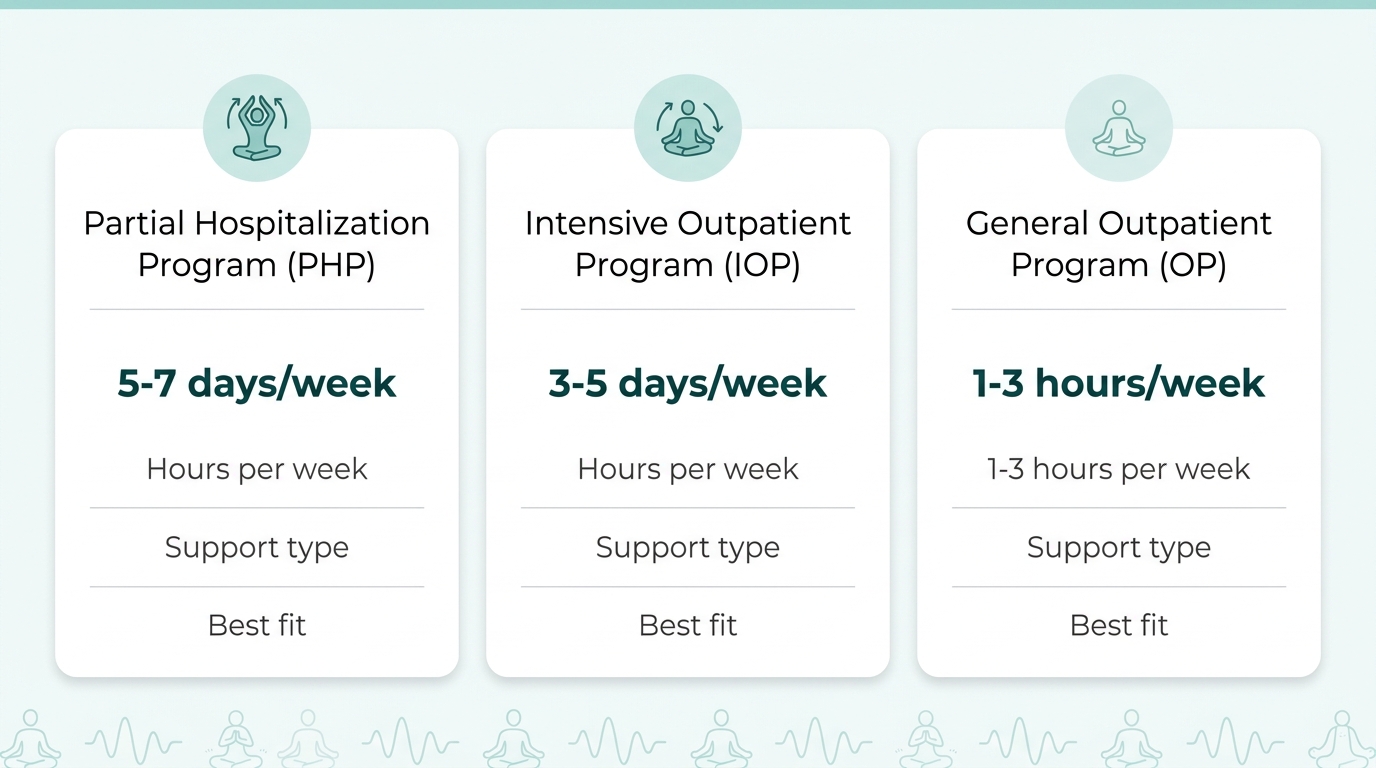
Outpatient treatment level comparison infographic design
Recovery Begins Here. When you're ready to begin your journey towards happiness and freedom, we encourage you to schedule a consult call. Our team will help determine the right level of care so you can start your treatment. Results may vary based on individual patient factors and circumstances. Please consult with a healthcare provider for professional advice regarding treatment options.
Outpatient Drug Abuse Treatment and Levels of Care in Warminster
Finding the right path to recovery starts with understanding your options. If you are looking for a drug abuse rehab Warminster, Rosewood Recovery offers a full continuum of outpatient care designed to meet you where you are. Outpatient treatment allows you to receive structured support while continuing to live at home, which can be essential for maintaining work, school, and family responsibilities. Our programs follow the nationally recognized guidelines from the American Society of Addiction Medicine, which define distinct levels of care based on the intensity of services provided.
What Are the Different Levels of Outpatient Care?
According to the American Society of Addiction Medicine (ASAM), outpatient drug abuse treatment is categorized into three main levels, each offering a different degree of structure and support. At Rosewood Recovery, we provide all three, making it simpler to find the right fit for outpatient substance abuse treatment in Warminster.
A Partial Hospitalization Program (PHP) is our most intensive non-residential option. This program typically requires 20 to 30 hours of participation per week and includes medical monitoring, individual therapy, and group sessions. PHP is often suitable for individuals who need a high level of support but do not require 24-hour supervision. An Intensive Outpatient Program (IOP) generally involves 9 to 20 hours of weekly treatment, placing a strong focus on relapse prevention strategies, group therapy, and family involvement. It is frequently used as a step-down from PHP or inpatient care. Finally, a General Outpatient Program (OP) offers 1 to 3 hours of support per week, centered on ongoing counseling and maintaining sobriety. This level is most appropriate for those with a stable recovery and a milder form of addiction.
The right level of care is a very personal decision, and understanding these basic structures is the first step. The process of narrowing down which path is best for you often begins with a clear view of how these options compare to one another.
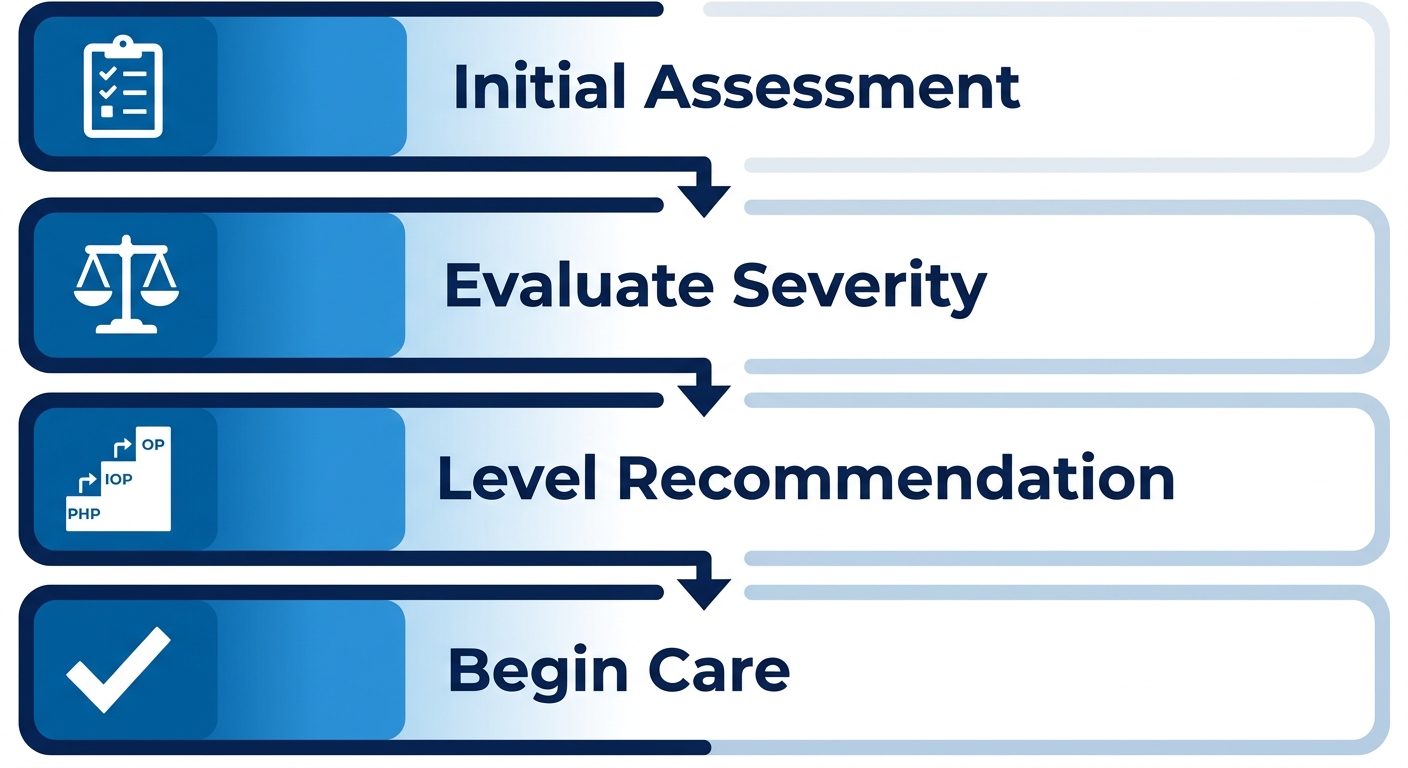
Guide to selecting outpatient care levels
Intensive Outpatient Programs vs. General Outpatient Services
The most significant distinctions between an intensive outpatient program addiction Warminster patients attend and a general outpatient service are the time commitment, therapeutic intensity, and clinical oversight. We know these differences can shape your daily life, so it helps to look at them side by side.
An IOP demands a greater time commitment, ranging from 9 to 20 hours per week compared to the 1 to 3 hours required by an OP. This increased schedule allows for a much higher therapeutic intensity, including more frequent individual and group therapy sessions. Clinical oversight is also more robust in an IOP, with regular medical check-ins forming a core part of the program. An IOP often suits individuals who face a moderate to high risk of relapse and need a structured environment to build a strong foundation. In contrast, a general OP is typically a better match for someone with a lower risk of relapse and a robust personal support system at home. The choice hinges on how much daily structure you need to maintain your recovery journey.
Determining the Right Level of Care for Your Needs
Deciding on the appropriate level of care is not a process you have to navigate alone. It involves honestly evaluating several personal factors, including the severity of the addiction, the presence of any co-occurring substance abuse treatment Pennsylvania residents might also require, your home environment, and your daily responsibilities.
During an initial assessment with our team at Rosewood Recovery, we guide you through questions designed to pinpoint the best starting point. We consider your previous treatment history, your current mental health, and your immediate support needs. Our goal is to create a safe, effective plan, whether that means beginning with the high structure of a PHP or the foundational support of an OP. If you are ready to take the next step, we encourage you to schedule a consult call with us. We can discuss your specific situation and help you start your treatment with a team that truly cares. Results may vary based on individual patient factors and circumstances, but your journey towards happiness and freedom can begin here.
Now that you have a clearer picture of the different levels of care, you may be curious about the specific therapeutic methods used within these programs. Our next section explores the holistic and somatic approaches we integrate to support your whole-person recovery.
The Benefits of Outpatient Drug Rehab for Your Lifestyle in Warminster
Beyond understanding what outpatient rehab involves, it's important to see how it fits your daily life. For those exploring drug abuse outpatient in Warminster, PA, our approach at Rosewood Recovery is built around the realities of work, family, and personal commitments. The flexibility that outpatient care provides can be the difference between delaying treatment and beginning your journey towards happiness and freedom right now.
Maintain Work and Family Life During Recovery
Our Drug Rehab Program Warminster is structured to move with your schedule, not against it. Whether you work a nine-to-five, attend classes, or manage family responsibilities, we offer morning, afternoon, and evening sessions so you never have to choose between your recovery and your daily responsibilities. Many clients continue living at home, seeing their children off to school, and showing up for work while they participate in treatment.
If you enroll in our intensive outpatient program for addiction in Warminster, you attend therapy several days a week, yet you're still free to maintain the roles that matter most to you. The ability to stay connected to your support network--your partner, your kids, your friends--strengthens motivation and creates a safety net that residential programs simply cannot replicate. By practicing new skills in your real environment from day one, you build confidence that your recovery can thrive long after formal sessions end.
Cost-Effective and Flexible Treatment Options
One of the most overlooked advantages of outpatient care is its financial accessibility. Inpatient and residential programs require you to pay for room and board, round-the-clock staffing, and facility overhead--expenses that can make quality care feel out of reach. Outpatient treatment eliminates those housing costs entirely, allowing your healthcare investment to focus directly on clinical services.
Insurance plans routinely cover outpatient addiction treatment, and many of our clients find that their out-of-pocket costs are significantly lower than they would be for a residential stay. Because you continue living at home, you can maintain employment and income while you heal, reducing the financial strain that often accompanies a prolonged absence from work. This makes it possible to receive high-quality, evidence-based care without sacrificing your family's financial stability.
Access to Evidence-Based Therapies While Living at Home
You do not have to put your life on hold to access world-class therapies. Our outpatient programs offer the same clinical depth you'd expect from a residential setting, including individual counseling, group therapy, and holistic modalities like somatic therapy and mindfulness. Whether you are addressing a primary substance use disorder or need co-occurring substance abuse treatment in Pennsylvania, your care plan is customized to your unique needs.
One of the greatest advantages of receiving therapy while living at home is the ability to practice new coping skills in real time. Instead of rehearsing strategies in a controlled environment, you apply them immediately--during a stressful workday, a difficult parenting moment, or a social trigger. This real-world practice accelerates mastery and helps solidify the behavioral changes that sustain long-term wellness. Our programs adhere to the quality standards set forth by the National Association of Addiction Treatment Providers (NAATP), so you can be confident you are receiving care backed by national best practices.
Now that you know the benefits of outpatient rehab, the next step is to see how our programs are structured to support your unique path. To start your treatment or schedule a consult call, reach out to our team today. Recovery Begins Here, and we are ready to walk with you every step of the way.
Individual results are not guaranteed and depend on many factors including commitment to treatment.
What to Expect During Outpatient Addiction Treatment in Warminster
Understanding what to expect from drug abuse outpatient in Warminster PA programs helps reduce anxiety and prepare you for success. At our center, we believe that knowing each step of the treatment process empowers you to focus fully on your recovery from day one. Our team guides every client through a clear, supportive pathway designed to meet your unique needs.
Your First Day: Intake and Assessment
Your journey begins with a free, confidential phone consultation where you discuss your history and current needs with a compassionate admissions coordinator. We listen carefully and answer any questions you have about starting treatment. Following this initial conversation, we schedule your clinical assessment at our Warminster facility. During the assessment, our clinical team evaluates your substance use patterns, mental health status, medical history, and any past treatment experiences, following guidelines established by the Substance Abuse and Mental Health Services Administration. We complete insurance verification upfront so you understand your coverage before making any commitment. Finally, we work collaboratively with you to develop an individualized treatment plan. Using the criteria developed by the American Society of Addiction Medicine, we determine the appropriate level of care--whether Partial Hospitalization, Intensive Outpatient, or General Outpatient--that matches your specific circumstances and recovery goals.
A Typical Day in an Outpatient Program
Once you begin drug abuse outpatient in Warminster PA services, a structured schedule provides the stability essential for recovery. In our Partial Hospitalization Program, days include five to six hours of programming featuring individual therapy, group therapy sessions, psychoeducation classes, a lunch break, and holistic activities such as yoga or meditation. Our intensive outpatient program addiction in Warminster offers three hours of daily programming, three to five days per week, with process groups, relapse prevention skill-building, and family therapy sessions integrated throughout the week. For General Outpatient care, clients attend one to two hours per week of individual counseling and skill-building groups. Every schedule is thoughtfully designed to build routine while allowing you to maintain work, school, or family responsibilities. This balance between structure and flexibility helps you practice recovery skills in real-world settings while receiving consistent clinical support.
Integrating Co-Occurring Mental Health Treatment
We address substance use and mental health conditions simultaneously using a dual diagnosis approach, recognizing that these challenges are deeply interconnected. Our co-occurring substance abuse treatment in Pennsylvania ensures that every therapy session addresses both conditions rather than treating them separately. Our integrated care includes evidence-based therapies such as Cognitive Behavioral Therapy for cognitive restructuring, Dialectical Behavior Therapy for emotional regulation, Eye Movement Desensitization and Reprocessing for trauma processing, and somatic therapy for strengthening the mind-body connection. For those experiencing anxiety alongside substance use, we integrate specialized approaches such as newtown square anxiety therapy. All our therapists receive training in integrated care, ensuring your treatment plan comprehensively supports your mental health and recovery simultaneously. Understanding what to expect helps you feel prepared, and we are ready to help you begin your journey towards happiness and freedom. Please note that results may vary based on individual patient factors and circumstances, and this information is for educational purposes and not a substitute for professional medical advice.
Choosing the Right Outpatient Program and Maximizing Your Recovery
Now that you understand the different levels of outpatient care at Rosewood Recovery, here's how to choose the right one and make the most of your experience. If you are searching for drug abuse outpatient Warminster PA services, understanding what to look for can make all the difference. The right program, combined with your active engagement, creates a foundation for lasting change.
Questions to Ask When Choosing an Outpatient Program
Making an informed choice starts with the right questions. Use these prompts when you speak with any treatment provider to ensure they meet high standards. The National Association of Addiction Treatment Providers (NAATP) emphasizes that ethical, evidence-based programs are transparent about their practices.
- Are staff members licensed and certified in addiction treatment? Verify the credentials of the clinical team.
- What therapeutic approaches do you use (CBT, DBT, EMDR, etc.)? Look for therapies tailored to your needs, including somatic and holistic options.
- How do you involve family members in the treatment process? Family support can be a powerful part of recovery.
- What does your discharge planning and aftercare support look like? A clear continuing-care plan is essential.
- Is the program accredited by a recognized body like the Joint Commission or CARF? Accreditation signals adherence to rigorous standards.
When evaluating an intensive outpatient program addiction in Warminster, these questions help you find a program that fits your life and recovery goals.
Maximizing Your Success in Outpatient Treatment
Active participation is the key that unlocks the full benefit of outpatient care. Whether you are seeking drug rehab Bristol PA options or exploring outpatient care close to home, showing up fully for yourself makes a measurable difference. Here are six specific ways to get the most from your treatment:
- Attend every scheduled session, even when you feel resistant. Consistency builds momentum.
- Speak honestly with your therapist and group members, even about difficult topics. Your openness deepens the work.
- Build a sober support network using 12-step meetings or SMART Recovery groups in the Warminster area.
- Communicate with your employer about your treatment schedule if needed, using FMLA or company policies to protect your time.
- Practice self-care daily: aim for 7-8 hours of sleep, 20 minutes of exercise, and three balanced meals.
- Celebrate small milestones and speak to your counselor if you feel a setback. Every win matters.
Your commitment transforms the therapeutic space. Active engagement can significantly improve your chances of lasting recovery, though results may vary based on individual patient factors and circumstances.
Building a Long-Term Recovery Plan
Recovery continues long after the program ends, and a solid plan prepares you for life ahead. Start by creating a written relapse prevention plan that identifies triggers, early warning signs, and coping strategies--include emergency contacts from your treatment team.
Continue with weekly therapy sessions or step down to biweekly as recommended. Rosewood Recovery's seamless step-down process and personalized discharge planning make this transition natural, whether you're moving from PHP to IOP or from IOP to independent living.
Engage in ongoing support groups such as AA or NA, and consider Rosewood Recovery's alumni program for community connection. For those managing co-occurring substance abuse treatment in Pennsylvania, aftercare that addresses both mental health and substance use is especially important. Recovery Begins Here--start your treatment today by scheduling a consult call with our team.
Take the Next Step in Your Recovery Journey
Now that you've learned about our treatment options, it's time to move forward. Recovery Begins Here. Let us help you take the first step toward a healthier, more fulfilling future.
As a proud member of the National Association of Addiction Treatment Providers, Rosewood Recovery adheres to the highest standards of clinical excellence and ethical conduct. We believe in a person-centered approach, offering compassionate care that respects your individuality. If you're looking for addiction treatment yardley, we invite you to take the next step.
For those researching drug abuse outpatient services in Warminster, PA, our Partial Hospitalization Program provides intensive daytime treatment with the flexibility to return home in the evening. Our intensive outpatient program addiction in Warminster delivers structured therapy and skill-building while accommodating work, school, or family obligations. No matter where you are in the recovery process, our continuum of care meets you at your current stage.
Whether you live in Newtown, Yardley, or anywhere in the surrounding area, our team is dedicated to making accessible, high-quality addiction treatment available to you. We'll take the time to understand your unique situation, answer any questions, and walk you through every step.
Schedule a consult call now to begin. Our admissions process is straightforward, and our compassionate team will listen without judgment. All calls are confidential, protected under HIPAA privacy regulations, and you can review our Privacy Policy for full details.
Start your treatment journey with Rosewood Recovery. Results may vary based on individual factors, and treatment outcomes depend on your engagement and commitment. Begin your journey towards happiness and freedom -- we're here to help every step of the way.


