


.png)

.png)
.png)
Table of Contents
Outpatient Rehab in Bristol, Pennsylvania: A Guide to Recovery
Outpatient rehab in Bristol, PA allows individuals to receive addiction treatment while living at home and continuing daily responsibilities. This flexible approach ensures you don't have to pause your life to get the support you deserve. Located in Bucks County, our Rosewood Recovery team is committed to providing accessible, evidence-based care for the local community.
According to the Substance Abuse and Mental Health Services Administration (SAMHSA), structured outpatient programs that follow national care standards can effectively support individuals in their recovery journey. Our outpatient rehab in Bristol programs are tailored to the community, integrating these evidence-based practices. Our intensive outpatient program in Bucks County offers a higher level of support for those stepping down from residential care or needing more structure. Meanwhile, our outpatient treatment in Bucks County provides the flexibility to maintain work and family obligations while attending therapy sessions. For those struggling with alcohol, our specialized Alcohol Rehab Bristol Pa program combines evidence-based therapies to address alcohol dependence and promote lasting change. Our caring team works closely with each client to develop an individualized plan that fits their unique needs.
Recovery Begins Here. To begin your journey towards happiness and freedom, we invite you to schedule a consult call or start your treatment today. Results may vary based on individual patient factors and circumstances.
Understanding Outpatient Rehab: How It Differs from Residential Care
After understanding the basics of addiction treatment, it's important to explore the most common settings: outpatient and residential. When exploring Bristol outpatient rehab options in the area, knowing how these programs differ can help you make an informed decision for your recovery journey.
Outpatient vs. Residential: Key Differences
According to SAMHSA, outpatient rehab allows individuals to live at home while attending structured therapy sessions during the day. Programs typically run 3 to 5 days per week, with sessions lasting 2 to 4 hours each. This flexibility is ideal for those who need to continue working, attending school, or caring for family while receiving treatment. Residential care, by contrast, requires a stay of 30 to 90 days in a facility that provides 24/7 medical and therapeutic support. The controlled environment removes triggers and offers round-the-clock supervision, which can be crucial for those with severe dependencies or unstable home situations.
Outpatient programs generally cost less and do not require a complete disruption of daily life, while residential treatment provides a higher level of structure and safety. Each approach serves different needs -- neither is universally better; they are simply different tools for different circumstances.
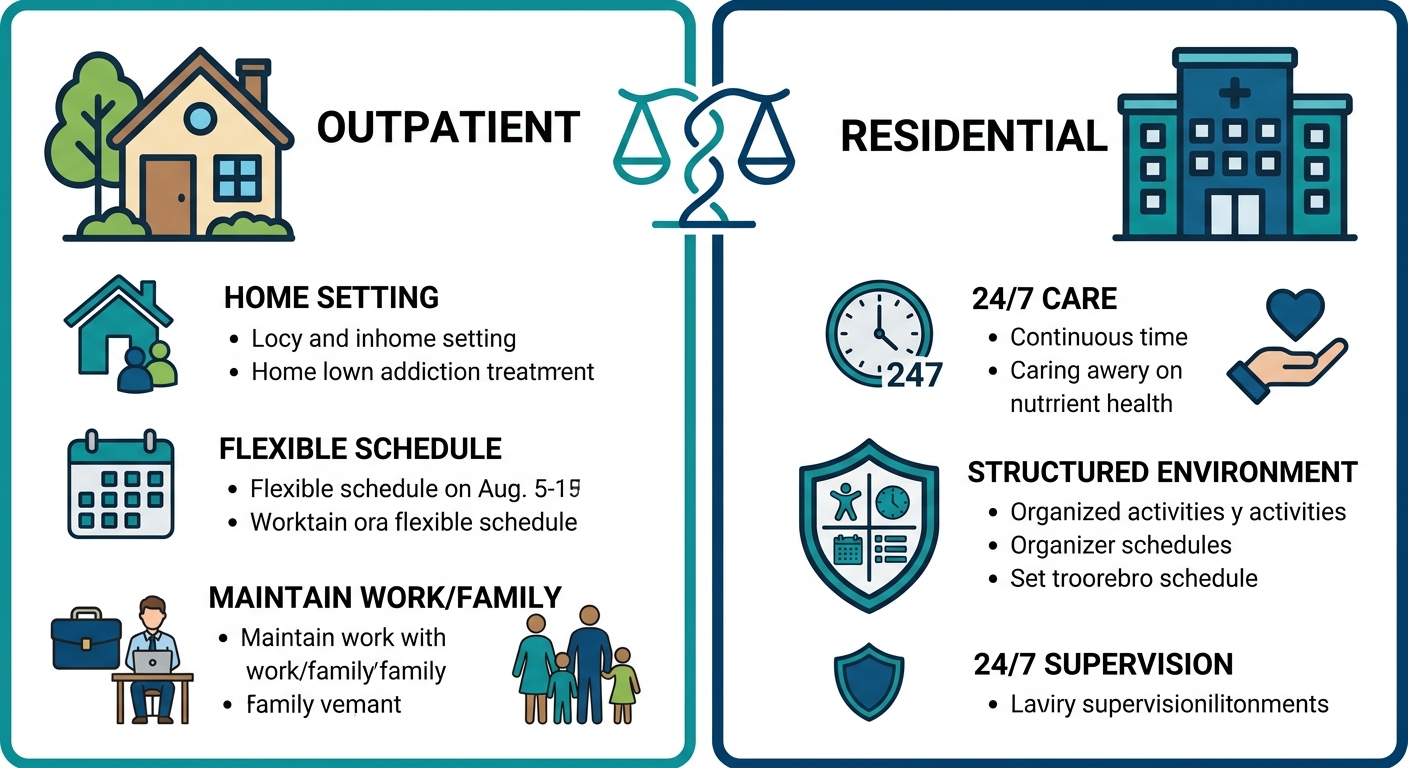
Outpatient vs residential treatment comparison
This visual summary highlights the core contrasts. With a clearer picture of the two models, the next step is determining which level of care fits your specific situation.
Is Outpatient Right for You? Determining Level of Care
Deciding on outpatient care depends on several key factors. You may be a good candidate if:
- You have a mild to moderate substance use disorder.
- You live in a stable, supportive home environment with family or friends who encourage recovery.
- You do not require medical detox or 24-hour medical monitoring.
A clinical assessment, often based on ASAM criteria, is essential to determine the appropriate level of care. SAMHSA guidelines recommend that individuals with severe dependence, a lack of a supportive home, or co-occurring psychiatric conditions that need 24/7 supervision consider residential treatment instead. For those who meet the criteria, an intensive outpatient program in Bucks County can provide the right balance of structure and flexibility. For those specifically in the Bristol area, we offer a comprehensive drug rehab Bristol PA program that aligns with this level of care.
Addressing Co-Occurring Conditions in Outpatient Settings
Many individuals struggling with addiction also face mental health challenges such as anxiety, depression, PTSD, or bipolar disorder. In Bucks County outpatient treatment settings, integrated dual-diagnosis care is a core component. Outpatient programs can deliver evidence-based therapies -- including cognitive behavioral therapy (CBT), dialectical behavior therapy (DBT), and trauma-informed care -- alongside addiction counseling.
This integrated approach often includes individual therapy, group sessions, and medication management, all coordinated within the same treatment plan. Programs in the Bristol area are designed to address both conditions simultaneously, helping clients build coping skills and emotional resilience without the need for residential placement. Through our programs, we work with each person to create a personalized pathway that treats the whole individual -- because real recovery addresses both mind and body. Individual results are not guaranteed and depend on many factors including commitment to treatment.
Now that you understand the differences, let's look at the specific outpatient programs we offer.
The Benefits of Outpatient Rehab for Your Recovery Journey
Outpatient rehab empowers you to recover while staying connected to daily life. Recovery Begins Here at Rosewood Recovery, we create flexible plans that fit your commitments. For those exploring outpatient rehab in Bristol, our approach blends expert care with real-world support--no need to pause your career or family.
Flexibility and Work-Life Balance
One of the greatest strengths of outpatient rehab is its ability to adapt to your schedule. Our programs offer evening and weekend sessions, so you can continue working, attend classes, or be present for your children without missing a beat. This real-world approach means you can immediately apply coping skills in the environments where you need them most. For those in alcohol recovery, our outpatient alcohol rehab Bristol PA offers the flexibility to balance treatment with daily responsibilities--helping you stay grounded in recovery while honoring your commitments. Rather than stepping away from your support network, you can lean on it during the healing process. This continuity makes the transition from treatment to everyday life smoother and more sustainable. We believe that treatment should strengthen, not disrupt, the life you're building. The ability to maintain your daily routine while receiving professional support fosters a sense of normalcy that is crucial for lasting recovery.
Insurance Coverage and Affordability
We understand that cost can feel like a barrier, but we're committed to making recovery affordable. Our intensive outpatient program in Bucks County is in-network with many major insurance plans, and typical out-of-pocket costs remain manageable. Our team will work closely with you to verify benefits and explore any financial assistance options that may apply. Insurance coverage for outpatient rehab in Pennsylvania is often more comprehensive than for inpatient care, which can reduce your financial burden. We believe that everyone deserves access to quality treatment without sacrificing their financial stability. From the moment you reach out, we'll help you navigate the financial aspects so you can focus on what matters: your recovery. We handle the paperwork and provide a clear explanation of your benefits upfront. Our goal is to eliminate financial stress so you can channel your energy into healing.
Access to Evidence-Based and Holistic Therapies
Effective recovery demands proven strategies. Our outpatient treatment in Bucks County draws on a rich toolkit of evidence-based and holistic therapies tailored to your unique needs. The Substance Abuse and Mental Health Services Administration (SAMHSA) underscores the value of treatments like Cognitive Behavioral Therapy (CBT), which can help you identify and reframe negative thought patterns. Dialectical Behavior Therapy (DBT) may support emotional regulation, while Eye Movement Desensitization and Reprocessing (EMDR) can aid in processing trauma. We also integrate somatic approaches that address the mind-body connection, promoting deep healing. We continuously adapt your treatment plan as you progress, ensuring that therapy remains relevant and effective. Results may vary based on individual patient factors and circumstances, and treatment outcomes depend on patient engagement and individual circumstances. What matters most is that you have a compassionate team walking alongside you, offering tools that can foster lasting change.
Ready to start your treatment? Begin your journey towards happiness and freedom--schedule a consult call with our team today.
How Outpatient Treatment Programs Work in Bristol and Bucks County
When you're trying to understand the path forward, knowing exactly what treatment looks like day-to-day can make all the difference. Recovery Begins Here--and for many adults in our area, the flexible structure of outpatient care is the foundation that makes healing achievable alongside life's daily responsibilities. If you're looking for Alcohol Rehab near me Bristol our outpatient programs provide flexible scheduling and evidence-based care so you don't have to choose between getting help and showing up for work or family.
A Typical Week in Outpatient Treatment
When someone enters a bristol outpatient rehab, they often wonder what their calendar will actually look like. In our Intensive Outpatient Program, clients typically meet three to five days each week, dedicating two to three hours per session to focused therapeutic work. A standard week blends group therapy sessions--where you connect with peers walking a similar path--with individual counseling that dives deeper into your personal goals. We also incorporate occasional family sessions to rebuild communication and trust, because we know addiction impacts the entire household. For those stepping down to our General Outpatient Program, the schedule lightens to just one or two sessions per week, offering continued support without overwhelming your routine. Every schedule is built with flexibility in mind, designed for real people in Bucks County juggling jobs, school, or parenting.
A typical IOP day may include:
- A check-in and mindfulness practice to ground yourself
- A 90-minute group therapy session focused on relapse prevention or emotional regulation
- A 45-minute individual counseling session
- One family or couples session added to the weekly rhythm
Duration and Structure of Programs
Our bucks county intensive outpatient program is structured around a clear, phased approach that helps you build momentum gradually. Most clients spend eight to twelve weeks in the IOP phase, where the Substance Abuse and Mental Health Services Administration (SAMHSA) defines the minimum commitment as nine or more hours of treatment per week. As you progress and build stability, we begin a step-down transition into our General Outpatient Program, which SAMHSA classifies as fewer than nine weekly hours. This move from IOP to OP isn't a sign that treatment is ending--it's a sign that you're internalizing the tools and are ready for more independence while still anchored to clinical support. The exact length of care is personalized; some individuals step down quickly, while others benefit from an extended timeline that reinforces their recovery before discharge. Throughout this process, you'll always know where you stand, because your primary therapist will review your progress and adjust the plan collaboratively.
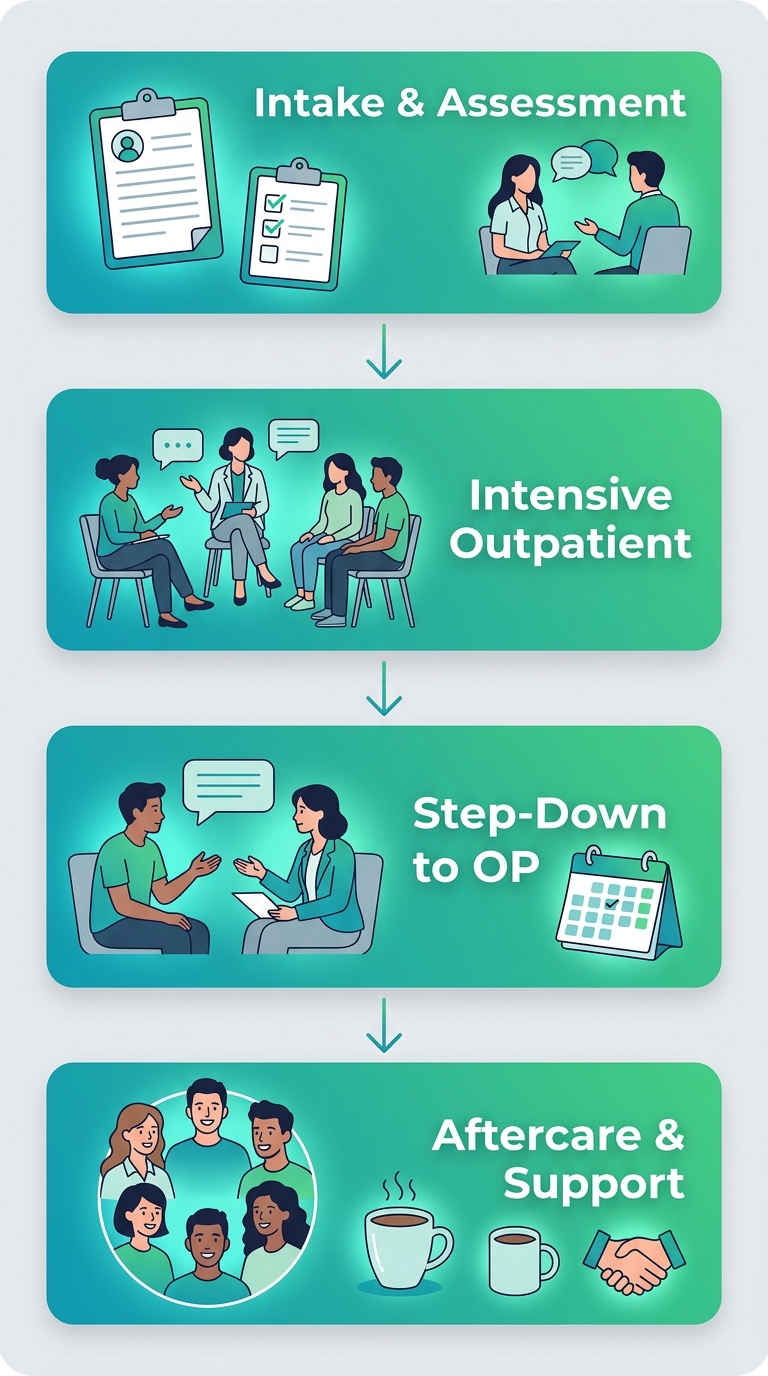
Outpatient treatment process from assessment to aftercare.
The journey through care phases gives you the structure to heal without having to put your life on hold. Every client in our bucks county outpatient treatment receives a roadmap, but how fast you travel it depends on your unique progress, engagement, and circumstances.
Therapies and Modalities Used in Outpatient Care
Effective outpatient care relies on a blend of proven clinical strategies and whole-person practices. SAMHSA recommends Cognitive-Behavioral Therapy (CBT) and Motivational Interviewing as evidence-based approaches, and we place both at the center of our group and individual work. CBT helps you identify the thought patterns driving substance use, while Motivational Interviewing strengthens your internal commitment to change. Beyond talk therapy, our programs near Bristol weave in holistic and somatic modalities that treat the nervous system--think yoga for embodiment, guided breathwork for stress resilience, and mindfulness for present-moment awareness. We never apply a one-size-fits-all formula; your treatment plan adapts as your needs evolve.
Common therapies incorporated into care:
- Cognitive-Behavioral Therapy (CBT)
- Motivational Interviewing
- Somatic experiencing and breathwork
- Trauma-informed yoga and mindfulness
- Family systems work
Ultimately, treatment is a personal journey. Results may vary based on individual patient factors and circumstances, and no single approach guarantees a specific outcome. Please consult with a healthcare provider for professional advice regarding treatment options. Understanding the structure is the first step--our team is ready to help you begin.
Choosing the Right Outpatient Rehab: Key Considerations
Now that you understand the basics of outpatient treatment, the next step is learning how to identify the program that truly fits your needs. With so many options available, knowing what to look for can make a big difference in your recovery experience. For someone searching for Bristol outpatient rehab, the decision comes down to evaluating quality, expertise, and whether the program's philosophy aligns with your personal goals. At Rosewood Recovery, we believe that informed choices lead to better outcomes, and we are here to help you navigate this important decision.
What to Look for in a Program: Accreditation and Fit
When researching Bucks County outpatient treatment, the first thing we encourage you to check is a program's accreditation. The Substance Abuse and Mental Health Services Administration (SAMHSA) sets national standards for behavioral health treatment, and their endorsement signals that a facility meets rigorous quality benchmarks. Look for programs that carry SAMHSA certification or accreditation from the Commission on Accreditation of Rehabilitation Facilities (CARF), as these indicate a commitment to evidence-based care and continuous improvement. Program fit goes beyond credentials, however. You will want to consider the treatment philosophy, whether the schedule accommodates your work or family obligations, and how conveniently located the center is if you live near Newtown, Yardley, or the greater Bucks County area. For those seeking addiction treatment Yardley our team offers accredited outpatient services designed with real life in mind. We also believe that a strong therapeutic alliance begins with feeling comfortable and understood, so pay attention to how staff members communicate during your initial call. A quality program will take the time to answer your questions thoroughly and help you feel at ease about beginning your journey towards happiness and freedom.
Evaluating Therapist Credentials and Clinical Expertise
An outpatient program is only as strong as the professionals who deliver its care, so verifying therapist credentials is a critical step. When exploring a Bucks County intensive outpatient program, ask about the licensure held by the clinical team. Credentials such as Licensed Professional Counselor (LPC), Licensed Clinical Social Worker (LCSW), or Certified Alcohol and Drug Counselor (CADC) demonstrate that a therapist has completed rigorous training and adheres to state regulatory standards. Beyond individual licenses, we recommend looking for a multidisciplinary team that includes not only therapists but also medical staff who can address the physical aspects of recovery. According to SAMHSA, comprehensive treatment that integrates both behavioral and medical expertise leads to more effective, whole-person care. At Rosewood Recovery, our clinical team collaborates daily to ensure that every client's treatment plan reflects current evidence-based approaches such as cognitive behavioral therapy and motivational interviewing, delivered by qualified professionals who genuinely care about your progress. This combination of credentials and compassionate teamwork creates a supportive environment where healing can take root. Please consult with a healthcare provider for professional advice regarding treatment options, as individual circumstances vary.
Integrating Holistic and Evidence-Based Care
The most effective outpatient programs do not force you to choose between clinical rigor and holistic wellness because they integrate both into a unified treatment experience. Evidence-based therapies like cognitive behavioral therapy (CBT), dialectical behavior therapy (DBT), and motivational interviewing form the backbone of addiction treatment, providing structured techniques to address thought patterns, regulate emotions, and strengthen motivation for change. Alongside these proven methods, holistic practices such as yoga, mindfulness meditation, and somatic experiencing offer powerful tools for reconnecting with your body and calming the nervous system. This integrated model recognizes that recovery involves mind, body, and spirit, and that long-term sobriety requires addressing the whole person rather than isolated symptoms. At Rosewood Recovery, Recovery Begins Here means exactly that: weaving together clinical excellence and holistic support so that each client receives well-rounded care tailored to their unique needs. This information is for educational purposes and not a substitute for professional medical advice. Results may vary based on individual patient factors and circumstances. Once you have identified these key considerations, the next natural step is reaching out. We invite you to schedule a consult call with our team to discuss your situation, ask questions, and start your treatment with a program that aligns with your goals, availability, and vision for a healthier life.
Individual results are not guaranteed and depend on many factors including commitment to treatment. HIPAA privacy practices apply to all communications and personal health information shared with our staff.
Recovery Begins Here
At Rosewood Recovery, we provide a safe, welcoming space where you can begin your journey towards happiness and freedom from substance use. Our doors are open to everyone in the community seeking a fresh start.
Our treatment team offers three levels of evidence-based care: a structured Partial Hospitalization Program, a flexible Intensive Outpatient Program, and supportive General Outpatient Program. These options follow guidelines established by the Substance Abuse and Mental Health Services Administration, the leading national authority for behavioral health standards. We differentiate our approach through holistic and somatic therapy, treating the whole person, not just the addiction.
We are proud to serve the Bucks County community from our Newtown location, providing accessible care for those searching for a Bristol outpatient rehab. Whether you need the depth of a Bucks County intensive outpatient program or the flexibility of Bucks County outpatient treatment, our dedicated team creates a personalized plan for you.
While our focus is on serving Bucks County, you can also review our Pittsburgh addiction treatment guide for insights on resources in other parts of Pennsylvania. Today, you can take the first step. Contact us to schedule a consult call and start your treatment in a confidential, judgment-free environment. Individual results may vary based on patient engagement and commitment.


