


.png)

.png)
.png)
Table of Contents
Finding the Right Drug and Alcohol Treatment Center in Philadelphia, Pennsylvania
Choosing among the many drug and alcohol treatment centers in Philadelphia is a vital first step toward lasting wellness. When searching for Drug Rehab in Philadelphia Pa, it is important to consider a facility's credentials and the depth of its programming to ensure you receive safe, effective care.
We encourage you to verify a center's accreditation, such as CARF or JCAHO, which serves as a mark of quality and clinical safety. It is equally valuable to find a program offering a full continuum of care. Access to Partial Hospitalization, Intensive Outpatient, and General Outpatient levels allows for a flexible, step-down approach that adjusts as your needs change. We also know that healing involves the whole person, so holistic and somatic therapy options can be a powerful complement to traditional, evidence-based methods. Many individuals also benefit from specialized support such as co-occurring disorder treatment for dual-diagnosis care and medication assisted treatment to help manage withdrawal symptoms.
The Substance Abuse and Mental Health Services Administration (SAMHSA) offers a free, confidential, 24/7 National Helpline at 1-800-662-HELP (4357), connecting you with local resources and support groups. As you explore your options, we invite you to schedule a consult call to discuss your situation with our team. Recovery Begins Here, and we are ready to help you begin your journey towards happiness and freedom. Results may vary based on individual patient factors and circumstances.
Understanding the Levels of Care at Philadelphia Treatment Centers
To help you choose the right path, it's important to understand the levels of care available at quality drug and alcohol treatment centers in Philadelphia. Finding the appropriate intensity of treatment is the first step on the journey. At Rosewood Recovery, we believe Recovery Begins Here, and guiding you through these options is our privilege.
Inpatient vs. Outpatient: Which Level of Care Is Right for You?
The primary distinction is between residential inpatient care and outpatient treatment. Inpatient or residential programs provide 24/7 live-in supervision, offering a highly structured and immersive environment. This level is often best suited for individuals with severe substance use disorders, unstable living situations, or those who have struggled with relapse in other programs. These settings remove you from everyday triggers to focus entirely on healing. For those who do not require around-the-clock supervision, Outpatient Drug rehab Philadelphia provides essential flexibility. Our outpatient programs allow you to live at home and maintain work or family responsibilities while attending scheduled therapy sessions. This path offers a balance of structured support and real-world application of new coping skills.
Partial Hospitalization and Intensive Outpatient Programs Explained
We offer a full continuum of care that bridges inpatient and general outpatient services. A Partial Hospitalization Program (PHP) is the most intensive option outside of a residential facility. It is a structured day treatment, often attended five to seven days per week. You would spend full days in therapy at our Bucks County center, engaging in individual and group sessions before returning home each evening. An Intensive Outpatient Program (IOP) is a step down in intensity, typically requiring attendance three to five days per week for a few hours each day. The focus during IOP is heavily on group therapy and individual counseling to reinforce healthy behaviors. Both of these programs can incorporate medication assisted treatment when clinically appropriate, helping to manage cravings and support a safer recovery.
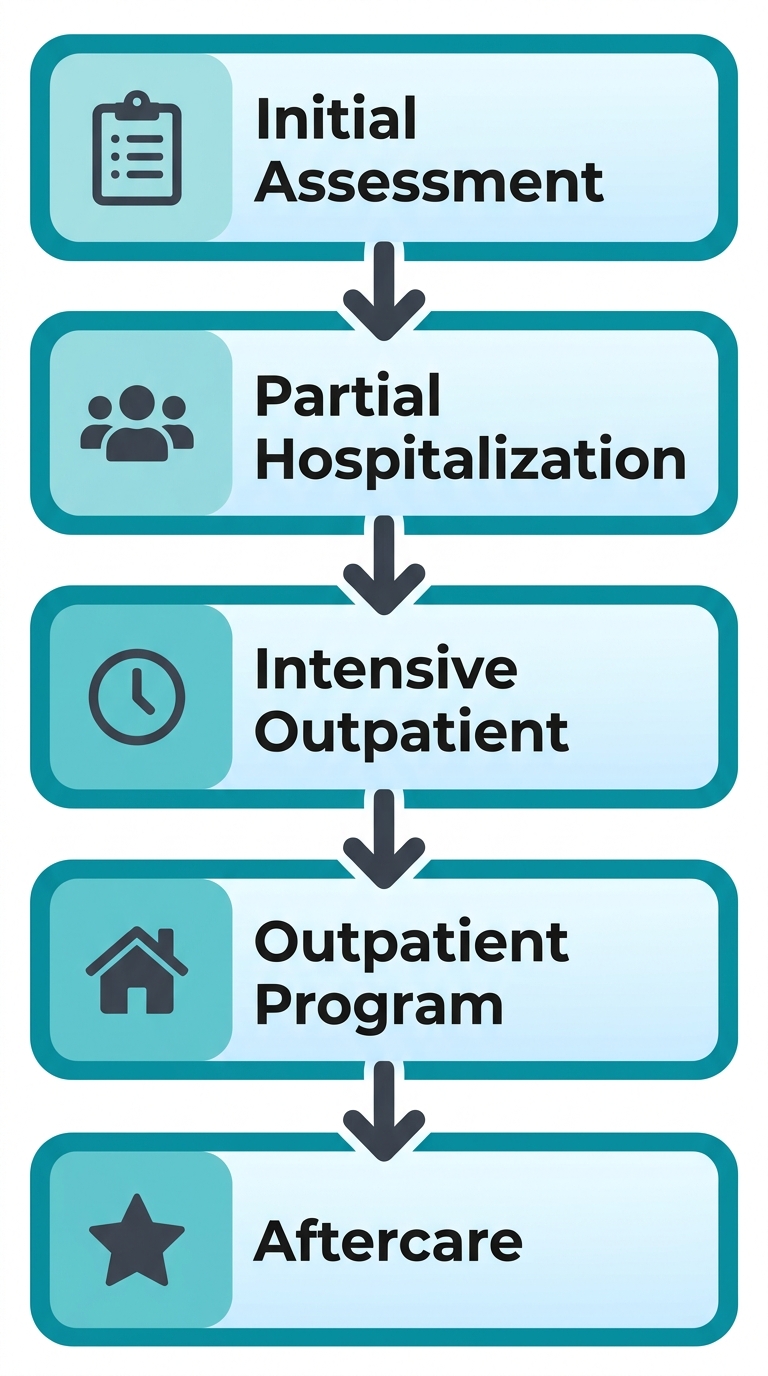
Continuum of care from assessment to aftercare
What to Expect During the Initial Assessment and Intake
Your journey with us begins with a comprehensive and compassionate initial assessment, during which our qualified staff will ask about your medical history, substance use, and mental health. This evaluation, which often follows established criteria like those from the American Society of Addiction Medicine (ASAM), is designed to understand your unique situation thoroughly. A key part of this screening is to identify any co-occurring disorder treatment needs, as addressing both mental health and substance use together is vital for lasting well-being. Based on this detailed intake, we provide a personalized recommendation for the right level of care, which might include a discussion about medication assisted treatment. This process ensures your treatment plan is not a one-size-fits-all solution but a tailored path designed to help you begin your journey towards happiness and freedom. If you are ready to start your treatment, schedule a consult call with our team today.
Disclaimer: Results may vary based on individual patient factors and circumstances. The information provided here is for educational purposes and is not a substitute for professional medical advice.
The Benefits of Professional Addiction Treatment Programs in Philadelphia
Choosing professional support is a critical step toward lasting recovery, and the Substance Abuse and Mental Health Services Administration (SAMHSA) emphasizes that structured programs give individuals the best chance to rebuild their lives. For those exploring drug and alcohol treatment centers in Philadelphia, a comprehensive approach can make the difference between a temporary pause and real, enduring change. At our Rosewood Recovery addiction treatment center, we believe Recovery Begins Here--and we back that belief with evidence-based care that puts your whole health first.
Evidence-Based Therapies and Holistic Care
Effective addiction treatment starts with therapies that have been rigorously tested and proven to work. We use modalities like CBT (Cognitive Behavioral Therapy), DBT (Dialectical Behavior Therapy), and EMDR (Eye Movement Desensitization and Reprocessing) to help clients identify and rewire the thought patterns and past experiences that fuel substance use. These approaches give you practical tools to manage cravings, regulate emotions, and build healthier coping strategies.
At Rosewood Recovery, we complement these clinical methods with holistic practices that support healing on every level. Our programs include yoga, meditation, and somatic therapy--gentle, body-centered techniques that help release stored stress and trauma. This blend of science and whole-person care creates a resilient foundation for recovery, because when your mind, body, and spirit work together, lasting wellness becomes possible.
Treating Co-Occurring Disorders for Lasting Recovery
Many people who struggle with addiction also face mental health conditions such as depression, anxiety, or PTSD. When both issues are present, it is called a co-occurring disorder. Without integrated treatment, one condition can easily reignite the other, making sustainable sobriety extremely difficult. Effective co-occurring disorder treatment addresses the full picture--not just the substance use--so that underlying emotional pain is healed at the same time.
Our dual-diagnosis program is built on the understanding that mental health and addiction are deeply intertwined. We design every treatment plan to manage both challenges simultaneously, using therapeutic techniques that stabilize mood, reduce intrusive symptoms, and strengthen relapse-prevention skills. While results may vary based on individual patient factors and circumstances, this coordinated approach is associated with better long-term outcomes and a more stable path forward.
The Role of Medication-Assisted Treatment in Addiction Recovery
Medication assisted treatment (MAT) is an evidence-based strategy that pairs FDA-approved medications with counseling and behavioral therapies. Medications such as buprenorphine, methadone, and naltrexone work by normalizing brain chemistry, blocking the euphoric effects of substances, and relieving physiological cravings. MAT does not replace recovery work--it complements it, giving clients the steadiness they need to fully participate in therapy and daily life.
When integrated into a broader treatment plan, MAT has been shown to reduce the risk of relapse and support long-term stability. At Rosewood Recovery, we offer MAT as part of a personalized continuum of care, and we encourage open conversations with our clinical team about whether it is appropriate for your situation. Please consult with a healthcare provider for professional advice regarding treatment options.
These benefits are just the beginning. Our programs are designed to deliver them effectively and compassionately. Begin your journey towards happiness and freedom with Rosewood Recovery.
This information is for educational purposes and is not a substitute for professional medical advice. Treatment outcomes depend on patient engagement and individual circumstances.
How Drug and Alcohol Treatment Programs Work in Philadelphia, Pennsylvania
In Philadelphia, Pennsylvania, structured treatment programs typically follow a clear, step-by-step process designed to meet each person's unique needs. At Rosewood Recovery, we believe that understanding how care unfolds helps reduce uncertainty and builds hope. Many drug and alcohol treatment centers in Philadelphia follow an evidence-based framework that guides individuals through assessment, active treatment, and long-term aftercare. We invite you to learn more about the journey and discover how you can begin your journey towards happiness and freedom.
Recovery Begins Here at our Pennsylvania centers, where our team provides compassionate support from the very first phone call. Whether you are seeking help for yourself or a loved one, knowing what to expect can make the first step feel more manageable. The following subsections walk through each phase of care so you can approach treatment with greater clarity and confidence.
Step One: The Initial Assessment and Personalized Plan
The first phase at any reputable recovery program in Philadelphia involves a thorough clinical assessment. When you arrive, our licensed clinicians conduct a comprehensive medical evaluation and a detailed substance use history. This intake process also includes a mental health screening, which is essential because many individuals benefit from co-occurring disorder treatment that addresses both addiction and underlying conditions like anxiety or depression. The information gathered allows us to design a truly personalized treatment plan and recommend an appropriate level of care. Depending on your clinical needs, we may suggest our Partial Hospitalization Program, an Intensive Outpatient Program, or if a lower level of support is right for you, a transition into outpatient addiction treatment Pennsylvania. Each plan is unique--no two paths are identical--and the goal is to match you with services that best support lasting change.
Daily Life in Treatment: Therapy and Activities
Once the initial assessment is complete, clients step into a structured daily schedule that balances clinical work with holistic healing. A typical day in our Philadelphia-area programs includes an individual therapy session, often using proven modalities like cognitive behavioral therapy or dialectical behavior therapy, followed by group counseling where peers share experiences and build mutual support. Family programming helps rebuild trust and improve communication among loved ones, and skill-building workshops focus on practical tools such as relapse prevention and coping strategies. For some clients, medication assisted treatment is offered under careful medical supervision as part of an integrated approach for opioid or alcohol use disorders. We also incorporate holistic activities that nurture the whole person--yoga, meditation, and somatic therapy are common offerings in many Philadelphia treatment facilities. This blend of evidence-based practice and wellness-centered care creates a supportive environment where healing can take root.
Transitioning to Aftercare and Ongoing Support
Recovery does not end when an initial program is completed, which is why discharge planning begins early in the treatment process. Our team works closely with each client to develop a continuum of care that gradually steps down in intensity. After completing a higher level of programming, individuals may continue their recovery through lower levels of outpatient support, sober living homes, alumni groups, and ongoing individual or group therapy. The aftercare phase is designed to help people apply the skills they have learned in real-world settings while maintaining connection to a supportive recovery community. Many drug and alcohol treatment centers in Philadelphia emphasize these extended services because sustained engagement can significantly improve long-term outcomes. At Rosewood Recovery, we remain committed to your progress well beyond the initial treatment episode, recognizing that results vary based on individual engagement and circumstances. With a full continuum of care available, individuals can move through treatment at their own pace, supported every step of the way. To explore how our programs can assist you or a loved one, we encourage you to schedule a consult call with our dedicated team today.
Best Practices for Selecting a Treatment Center in Philadelphia
Once you understand program types, use a checklist to evaluate drug and alcohol treatment centers in Philadelphia. When searching for mental health treatment Pennsylvania providers, we recommend focusing on the criteria below.
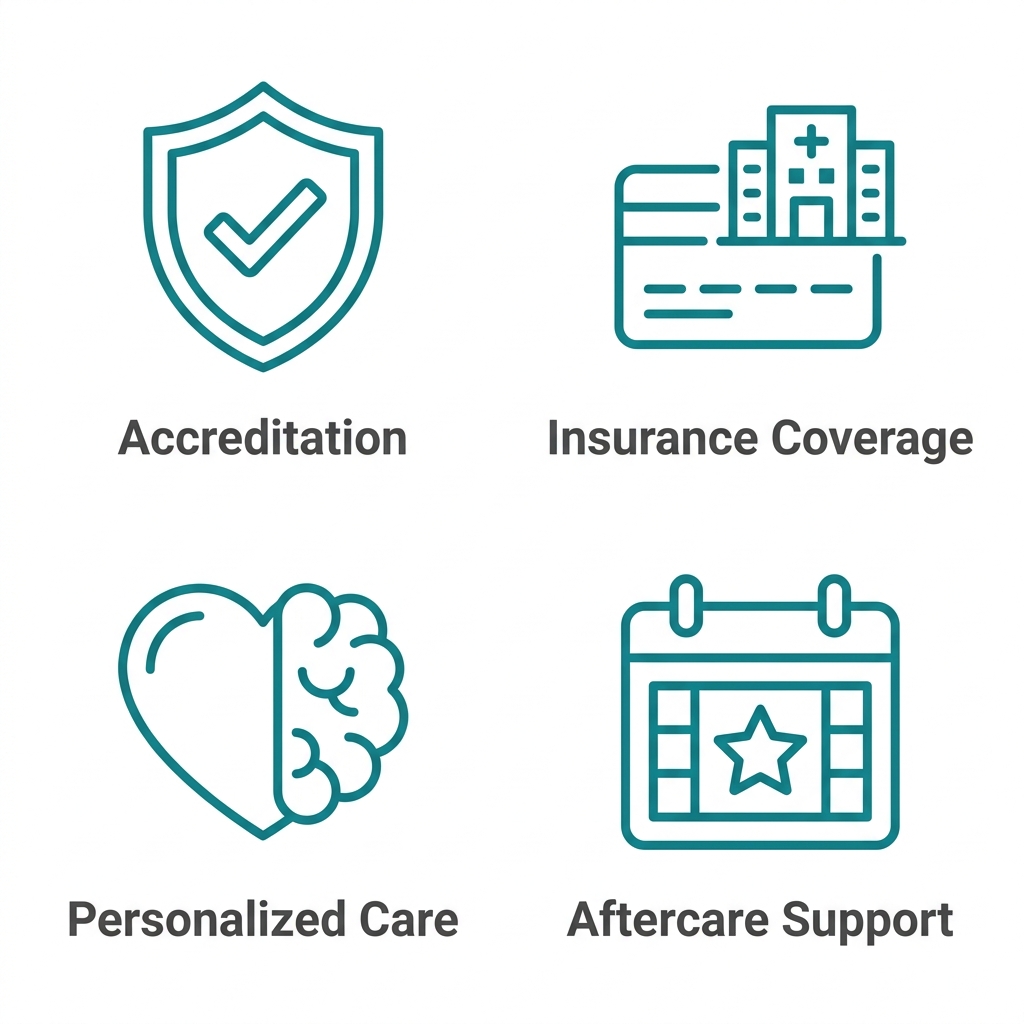
Icon set showing key factors for selecting a treatment center
Checking Accreditation and Staff Credentials
Start by verifying that any facility you consider holds accreditation from nationally recognized bodies such as the Commission on Accreditation of Rehabilitation Facilities (CARF) or the Joint Commission. You can search each organization's online directory to confirm a center's status.
Next, review the credentials of the clinical team:
- Look for Licensed Clinical Social Workers (LCSWs), Licensed Professional Counselors (LPCs), and a Medical Director who is an MD or DO with board certification in addiction medicine.
- Read at least three recent patient reviews on Google or Healthgrades.
This due diligence helps ensure you choose a qualified treatment partner. We encourage you to ask about staff training during your initial call.
Understanding Insurance Coverage and Payment Options
Before committing to a program, call your insurance provider and ask three crucial questions:
- Is my plan covered for outpatient levels of care, such as Partial Hospitalization (PHP), Intensive Outpatient (IOP), or General Outpatient (OP)?
- What is my deductible and copay?
- Are out-of-network providers covered?
Many drug and alcohol treatment centers in Philadelphia accept Pennsylvania Medicaid as well as private plans like Highmark, Aetna, and Cigna. Additionally, ask whether medication assisted treatment services are included in your benefits--this can make a significant difference in your recovery plan.
If you are unsure where to begin, the Substance Abuse and Mental Health Services Administration (SAMHSA) National Helpline offers free, confidential guidance 24/7 at 1-800-662-HELP (4357). They can clarify coverage options and connect you with local resources tailored to your needs.
Evaluating Treatment Philosophies and Personalized Care
During a phone consultation, ask pointed questions to understand how a center tailors its approach:
- "Do you offer individualized treatment plans that address my co-occurring mental health condition?" The right center will integrate co-occurring disorder treatment into your program, not treat it as an afterthought.
- "What therapy modalities do you use?" Look for evidence-based approaches such as Cognitive Behavioral Therapy (CBT), Eye Movement Desensitization and Reprocessing (EMDR), and holistic options.
- "Is medication assisted treatment available if needed?" This ensures you have access to all clinically appropriate tools.
By choosing a center that personalizes care to your unique situation, you set the stage for more meaningful progress. Personalized care truly makes a difference in your recovery journey.
The Role of Aftercare and Relapse Prevention
Strong aftercare dramatically reduces the risk of relapse. Before completing a program, ask about:
- Frequency of follow-up sessions
- Availability of alumni support groups
- A written relapse prevention plan created with your treatment team
The SAMHSA Helpline can also connect you with ongoing support resources after treatment ends. These resources, including 12-step meetings and sober living referrals, help you maintain your progress.
Recovery Begins Here. Armed with these criteria, you are ready to explore treatment options that match your needs--call our team to begin your journey towards happiness and freedom.
This information is for educational purposes and not a substitute for professional medical advice.
Taking the First Step Toward Recovery in Philadelphia
Reaching out for help is the most courageous step you can take -- and at Rosewood Recovery, Recovery Begins Here. If you're looking for drug and alcohol treatment centers in Philadelphia, our compassionate team makes the first call easy with a free, confidential consultation to discuss your needs.
We offer a full continuum of care. Whether you need the structure of a Partial Hospitalization Program (PHP), the flexibility of an Intensive Outpatient Program (IOP), or a General Outpatient Program (OP), we tailor every plan. Our approach integrates co-occurring disorder treatment and medication assisted treatment when clinically appropriate, so your whole health is supported. As part of our holistic philosophy, we offer newtown square anxiety therapy to help you begin your journey towards happiness and freedom.
If you need immediate support, the confidential SAMHSA National Helpline is available 24/7 at 1-800-662-4357 for local Philadelphia-area referrals. When you're ready to schedule a consult call, we'll help you start your treatment in a safe, welcoming environment.
Disclaimer: Results may vary based on individual patient factors and circumstances. Please consult with a healthcare provider for professional advice regarding treatment options. This information is for educational purposes and not a substitute for professional medical advice.


