


.png)

.png)
.png)
Table of Contents
Outpatient Drug Rehab in Philadelphia: A Flexible Path to Healing
For those seeking a more flexible approach to recovery, outpatient drug rehab in Philadelphia offers structured therapy while you continue living at home and managing daily responsibilities. Our Drug Rehab in Philadelphia PA programs at Rosewood Recovery give you the freedom to work, attend school, or care for family while receiving evidence-based care.
Rosewood Recovery offers both a General Outpatient Program (OP) and an Intensive Outpatient Program (IOP) in the Philadelphia area, with a focus on holistic and somatic therapies. Our OP suits those with stable home environments, while the IOP provides a structured multi-day schedule with group and individual therapy. The intensive outpatient program in Philadelphia is ideal for clients stepping down from a higher level of care or those needing robust support without residential treatment. According to SAMHSA, outpatient treatment is an evidence-based option for many substance use disorders. For those with co-occurring mental health conditions, our team delivers co-occurring disorder treatment in Philadelphia, addressing anxiety, depression, or trauma alongside addiction. Recovery begins here: we encourage you to schedule a consult call and begin your journey towards happiness and freedom. (Individual results may vary based on patient commitment and circumstances.)
What Outpatient Drug Rehab in Philadelphia Offers
Now, let's explore what outpatient drug rehab in Philadelphia specifically offers. At our Drug and Alcohol Treatment Centers in Philadelphia, we provide structured programs that help you begin your journey towards happiness and freedom while maintaining daily responsibilities. Outpatient drug treatment in Philadelphia allows you to receive clinical care without overnight stays, making it accessible for those with strong support systems and less severe withdrawal risks.
Differences Between Outpatient and Inpatient Care
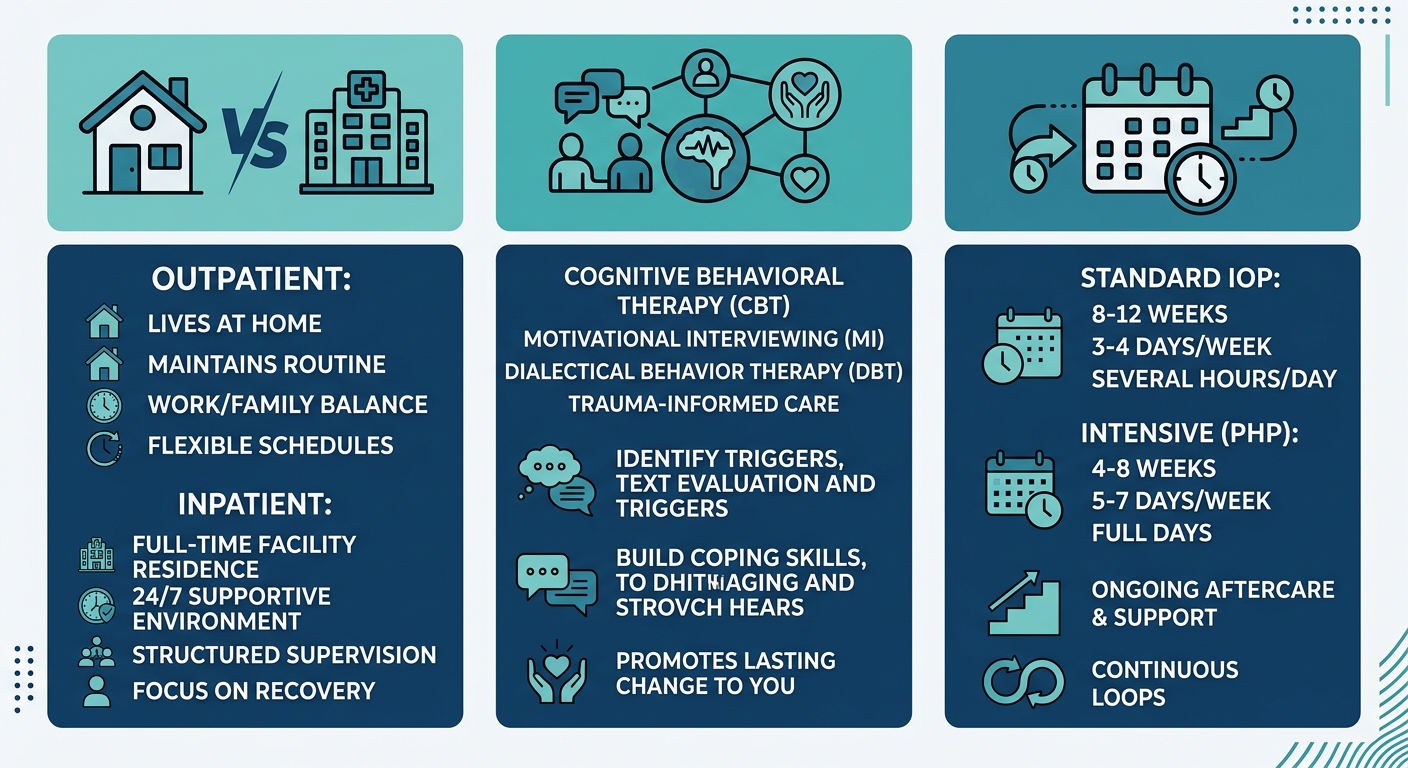
Understanding the differences between outpatient and inpatient care helps you choose the right level of treatment. Inpatient programs provide 24/7 supervision in a live-in environment, ideal for individuals with severe substance use disorders, unstable living situations, or significant withdrawal risks. Outpatient care allows scheduled treatment sessions during the day or evening while returning home at night. According to the American Society of Addiction Medicine (ASAM), patient placement criteria help clinicians determine the most appropriate level of care based on medical stability, psychological functioning, and recovery environment.
Within outpatient care, two primary levels of structure are available. A Partial Hospitalization Program (PHP) provides the highest outpatient support, involving five to six hours of therapy per day, five days a week. An intensive outpatient program in Philadelphia typically includes nine to twelve hours of weekly therapy across three to five days. The Substance Abuse and Mental Health Services Administration (SAMHSA) recognizes these as part of a comprehensive continuum of care. At Rosewood Recovery, we meet you where you are, matching care intensity to your specific needs.
Therapy Options and Co-Occurring Disorder Treatment
Philadelphia outpatient rehab programs integrate evidence-based therapies to address substance use and underlying psychological factors. Cognitive Behavioral Therapy (CBT) helps identify and change negative thought patterns that drive substance use, while Dialectical Behavior Therapy (DBT) builds emotional regulation and distress tolerance skills. Motivational interviewing strengthens internal commitment to change. These therapies are delivered through individual counseling and group sessions, fostering a supportive recovery community.
For those facing both addiction and mental health challenges, co-occurring disorder treatment in Philadelphia provides integrated care that addresses both conditions simultaneously. ASAM research emphasizes that treating co-occurring disorders together produces better outcomes than separate treatment. Our clinical team is trained in this coordinated approach, and we incorporate yoga, art therapy, and mindfulness through our Holistic and Somatic Therapy offerings. Every treatment plan is tailored to your unique needs and the factors driving your substance use.
Key aspects of outpatient rehab in Philadelphia
Typical Duration and Flexibility of Outpatient Programs
The duration of outpatient rehab depends on your progress and clinical needs. An intensive outpatient program in Philadelphia typically lasts eight to twelve weeks with sessions three to five times weekly. General outpatient programs often extend beyond twelve weeks, providing continued support during the transition to independent living. SAMHSA guidelines associate longer treatment durations with better outcomes, and we regularly assess your progress to adjust care accordingly.
Flexibility is a defining advantage of outpatient care. We offer daytime and evening sessions so you can maintain work, school, or family obligations during treatment. Part-time scheduling lets you attend therapy in the morning before work or in the evening after commitments. Recovery Begins Here at Rosewood Recovery, and we make it possible to start your treatment without putting your life on hold. Results may vary based on individual patient factors and circumstances. This information is for educational purposes and not a substitute for professional medical advice. To take the next step, schedule a consult call with our team and discover how our programs support lasting wellness.
Key Benefits of Choosing Outpatient Drug Rehab in Philadelphia
Now that we've introduced what outpatient drug rehab in Philadelphia involves, let's explore the key benefits that make this option especially effective for many Philadelphians. Choosing the right drug rehab in Philadelphia PA means finding a program that fits your lifestyle while delivering the clinical support you need.
Maintaining Work, School, and Family Responsibilities
Flexibility stands out as a key advantage of outpatient treatment. We design our intensive outpatient program in Philadelphia around your existing commitments, offering morning and evening sessions that accommodate work schedules, classes, and family obligations. You can attend therapy in the morning and still make it to work by nine, or join an evening group after the kids are in bed.
This structure is central to how outpatient drug rehab in Philadelphia works -- you practice coping skills immediately in real-world situations. When you face a trigger during your commute or navigate a stressful interaction at work, you process that experience in your next session with guidance from our clinical team. According to the American Society of Addiction Medicine, outpatient treatment levels provide structured support while allowing individuals to remain engaged in their communities. Recovery Begins Here when you apply what you learn in the very environment where you need it most.
Comprehensive Care for Addiction and Mental Health
Effective treatment addresses the whole person, not just substance use. Our co-occurring disorder treatment in Philadelphia integrates care for depression, anxiety, trauma, and other mental health conditions alongside addiction therapy. We use a dual-diagnosis approach that recognizes how these conditions fuel one another, treating them together rather than in isolation.
Holistic and somatic therapies complement our clinical work. Yoga sessions help clients reconnect with their bodies, meditation builds emotional regulation skills, and trauma-informed care creates a safe space for processing difficult experiences. These approaches work alongside individual counseling and group therapy to form a complete treatment plan. The ASAM criteria emphasize that person-centered care plans should address all co-occurring conditions for the best possible outcomes. When you begin your journey towards happiness and freedom with us, you receive care that treats the root causes of addiction, not just the symptoms.
Building a Support Network and Aftercare Planning
Early recovery can feel isolating, but you do not have to go through it alone. Group therapy sessions connect you with others in the Philadelphia area who understand what you are facing, creating bonds that reduce isolation and build accountability. Family sessions help repair relationships and educate loved ones on healthy ways to support your recovery.
We prioritize aftercare planning from the very start of treatment. Before you complete your program, our team works with you to develop relapse prevention strategies, identify local community resources, and connect you with ongoing alumni support. This continuing care ensures that the foundation you build in treatment extends well beyond your final session. Results may vary based on individual patient factors and circumstances, but we are committed to helping you create a network that sustains long-term recovery. To start your treatment in a supportive environment, we encourage you to schedule a consult call with our team.
These benefits demonstrate why outpatient rehab provides a practical and comprehensive path to recovery. In the following section, we will detail the specific programs we offer to meet your needs.
How Outpatient Drug Rehab in Philadelphia Works
Choosing to seek help is a powerful first step. At Rosewood Recovery, we believe that Recovery Begins Here, and we are dedicated to guiding you through a structured, supportive outpatient drug rehab in the Philadelphia area. Our process is designed with a clear path forward, so you and your family always know what to expect.
Initial Assessment and Personalized Program Placement
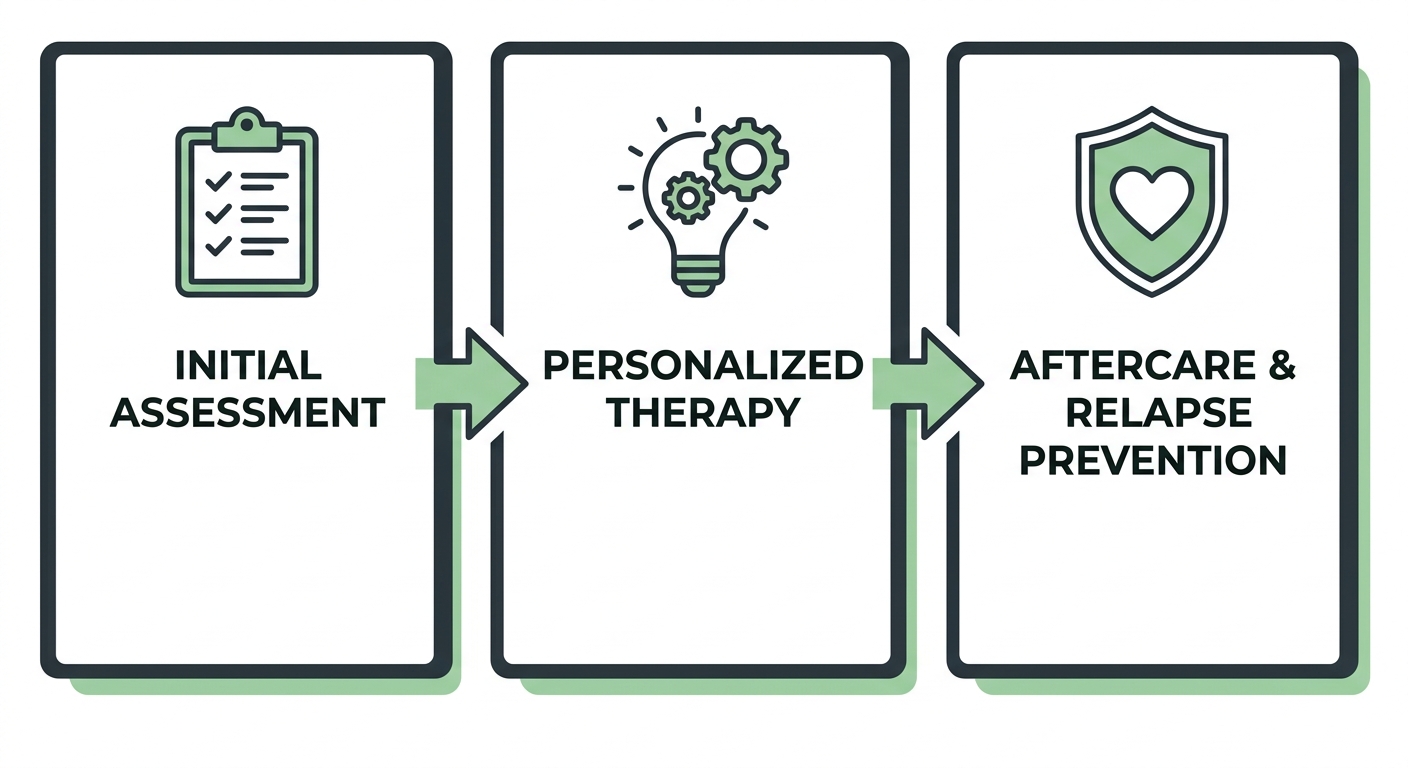
Your journey begins with a comprehensive, no-cost clinical evaluation at our Newtown center, which serves the greater Philadelphia region. This initial assessment involves a thorough medical evaluation, a psychiatric evaluation, and a detailed psychosocial assessment to understand your complete health picture. By listening to your story, we can identify the underlying factors of addiction and any co-occurring mental health conditions.
Information from this assessment allows our clinical team to determine the appropriate level of care using the criteria established by the American Society of Addiction Medicine. Like other philadelphia addiction treatment centers, we use this standard to identify whether you are best suited for a Partial Hospitalization Program (PHP), an intensive outpatient program in Philadelphia, or a General Outpatient Program (OP). Once placed, you are immediately paired with a dedicated care coordinator who remains your personal guide throughout the entire treatment experience.
Outpatient drug rehab process flow diagram
Evidence-Based Therapies and Holistic Modalities
Following your assessment, your care team builds a personalized treatment plan that integrates evidence-based clinical therapies with holistic wellness practices. Core therapeutic sessions form the backbone of treatment and include Cognitive Behavioral Therapy (CBT) to reshape negative thought patterns, Dialectical Behavior Therapy (DBT) for emotional regulation, and Eye Movement Desensitization and Reprocessing (EMDR) for processing trauma. Our clinicians also utilize motivational interviewing to strengthen your internal commitment to change.
Complementing these methods, we offer holistic modalities like yoga, mindfulness meditation, art therapy, and Somatic Experiencing to heal the mind-body connection. This balanced approach is vital for treating co-occurring conditions in Philadelphia, where anxiety and depression often exist alongside substance use. Specialized therapy groups provide a safe space to address these interconnected issues, helping you build resilience and learn coping skills in a community setting.
Aftercare and Relapse Prevention Strategies
Once active treatment concludes, aftercare begins to ensure you have a solid foundation for long-term wellness. The transition starts with collaborative discharge planning with your care coordinator to identify continued support resources. We work with you to develop practical relapse prevention skills, helping you recognize personal triggers and create effective response strategies.
Your alumni experience includes ongoing encouragement through continued group therapy sessions and a vibrant alumni program that keeps you connected to our recovery community. We understand that outpatient drug rehab in the Philadelphia area is just the start; our team provides community connections and check-ins so you never feel alone after completing a program. We invite you to begin your journey towards happiness and freedom--schedule a consult call with our admissions team today to start your treatment.
Results may vary based on individual patient factors and circumstances. Treatment outcomes depend on patient engagement and individual circumstances. Individual results are not guaranteed and depend on many factors including commitment to treatment.
Choosing the Right Outpatient Rehab in Philadelphia: Best Practices
Now that you understand the outpatient model, selecting the right program involves evaluating levels of care, understanding insurance and payment options, and prioritizing treatment for co-occurring conditions. Finding a quality outpatient drug rehab in Philadelphia begins with recognizing what best fits your recovery needs and daily life.
Evaluating Program Levels: PHP, IOP, and OP
Outpatient care is not one-size-fits-all. According to the Substance Abuse and Mental Health Services Administration, programs align with ASAM criteria to match clinical intensity to individual needs. A Partial Hospitalization Program typically requires 5 to 7 days per week with 6+ hours of daily therapy, making it suitable for those stepping down from detox or at high relapse risk. An intensive outpatient program in Philadelphia usually involves 3 to 5 days per week and around 3 hours per session, providing substantial structure while leaving room for work or school. General Outpatient Programming reduces to 1 or 2 weekly sessions of about an hour each, ideal for long-term maintenance and ongoing support. We recommend asking facilities about the balance of group and individual therapy, and whether the schedule can flex around your commitments. At Rosewood Recovery, we offer all three levels to help you step through care at a pace that respects your recovery journey.
Understanding Insurance and Payment Options
Cost should never stand between you and treatment. Start by calling your insurance provider to confirm coverage for outpatient services and ask for a clear estimate of any out-of-pocket costs. Many reputable programs, including ours, have a dedicated admissions team that can verify your benefits and explain sliding-scale fees or payment plans. This process is a strong sign of a quality provider--if a facility volunteers to handle insurance verification, it often reflects ethical, patient-centered practices encouraged by organizations like the National Association of Addiction Treatment Providers. We encourage you to view finances as a solvable piece of the puzzle, not a barrier. To get personalized guidance on what your plan covers, schedule a consult call with our team; we can walk you through the options so you can start your treatment with clarity and confidence. Please note that individual results vary, and the information here is for educational purposes.
Prioritizing Co-Occurring Disorder Treatment
Addiction rarely travels alone; depression, anxiety, or trauma frequently accompany substance use disorders. SAMHSA data shows that integrated treatment for co-occurring conditions leads to better outcomes, making dual diagnosis care a vital consideration. When touring facilities, ask two key questions: Do you have a psychiatrist on staff? and How do you integrate mental health and addiction treatment? The answers reveal whether a program can truly address root causes rather than symptoms alone. For those seeking comprehensive co-occurring disorder treatment in Philadelphia, evidence-based modalities like cognitive behavioral therapy, dialectical behavior therapy, and somatic therapy can be transformative. In our region, if you are looking for a drug abuse rehab program Richboro PA, Rosewood Recovery combines these therapies within a holistic framework. By evaluating these factors, you can find a program that aligns with your recovery goals--let's explore how Rosewood Recovery can support your journey.
Take the Next Step Toward Recovery in Philadelphia
Now that you understand our approach and the programs we offer, finding compassionate and effective care starts right here. If you're ready to leave substance use behind, Rosewood Recovery provides outpatient drug rehab in Philadelphia that meets you where you are in your journey. Our continuum of care includes a Partial Hospitalization Program (PHP), an Intensive Outpatient Program (IOP), and a General Outpatient Program (OP), all designed to offer the right level of structure and support.
Our intensive outpatient program in Philadelphia is built for those who need robust clinical support while maintaining work, school, or family commitments. For individuals facing both addiction and mental health challenges, we offer co-occurring disorder treatment in Philadelphia that integrates holistic and somatic therapy into a personalized, evidence-based care plan. We also provide specialized depression treatment Philadelphia PA for those with co-occurring conditions, ensuring all aspects of your well-being are addressed. As a proud member of the National Association of Addiction Treatment Providers (NAATP), we are dedicated to the highest ethical and clinical standards.
Recovery Begins Here. Take the first step and schedule a consult call today to begin your journey towards happiness and freedom. Our team is ready to answer your questions and help you start your treatment at our Philadelphia-area program, serving individuals across Pennsylvania. This information is for educational purposes and not a substitute for professional medical advice. Results may vary based on individual patient factors and circumstances.


