


.png)

.png)
.png)
Table of Contents
Depression Counseling in Bristol, Pennsylvania and Addiction Recovery
Depression often walks hand in hand with substance use disorder, which is why we focus on integrated care. If you are seeking bristol depression counseling as part of your recovery journey, you will find compassionate support designed to address both conditions simultaneously. According to the Substance Abuse and Mental Health Services Administration (SAMHSA), depression is one of the most common mental health conditions, and treating it can significantly improve recovery outcomes.
Our Depression Therapy Bristol Pa program is designed to help you manage depressive symptoms while building a foundation for lasting sobriety. We offer evidence-based approaches as part of our outpatient levels of care, allowing you to receive the support you need without stepping away from your daily responsibilities. For those exploring broader options, bucks county depression therapy resources are also integrated into our treatment philosophy.
Our approach to bristol mental health counseling combines individual therapy, group support, and holistic wellness practices. We understand that untreated depression can undermine recovery efforts, so our team creates a safe space where healing can truly begin. Recovery Begins Here, and you can begin your journey towards happiness and freedom today. We invite you to schedule a consult call to learn how our depression counseling fits into your personalized treatment plan.
Understanding Depression Counseling for Co-Occurring Conditions
For many individuals, persistent feelings of sadness or hopelessness are more than just a rough patch. They can be a sign of a deeper clinical issue, especially when linked with substance use. In Bristol depression counseling provides a vital pathway for addressing these intertwined challenges. At Rosewood Recovery, we believe that healing is possible when we treat the whole person, not just isolated symptoms, and our approach is designed to help you begin your journey towards happiness and freedom.
What Is Depression Counseling?
Depression counseling is a structured therapeutic approach designed to address the deep-seated symptoms of depression that often fuel, or are fueled by, addiction. According to the Substance Abuse and Mental Health Services Administration (SAMHSA), depression affects over 20 million people in the United States, and its impact on daily life can be debilitating. Unlike general talk therapy, which may explore a wide range of life issues, specialized counseling zeroes in on the negative thought patterns, low motivation, and emotional pain that can lead individuals to self-medicate with drugs or alcohol. For residents near Newtown seeking specialized care, our Depression Counselling Bristol services offer a focused, evidence-based path to managing these complex feelings. As part of our commitment to accessible bucks county depression therapy, we integrate this crucial mental health component directly into our broader addiction treatment framework.
Depression and Substance Use: The Co-Occurring Connection
The relationship between depression and substance use is a classic example of a co-occurring disorder, where each condition worsens the other in a vicious, bidirectional cycle. Government health data from SAMHSA indicates that individuals may turn to substances to temporarily escape the persistent sadness, fatigue, and loss of interest that characterize depression. Conversely, the neurochemical impact of prolonged substance use can deepen depressive episodes, creating a spiral that feels impossible to break alone. In Bristol depression counseling that ignores one side of this equation often falls short. We understand the critical need for integrated treatment that tackles both issues simultaneously, because addressing only the addiction leaves the underlying emotional pain untreated, significantly increasing the risk of relapse.
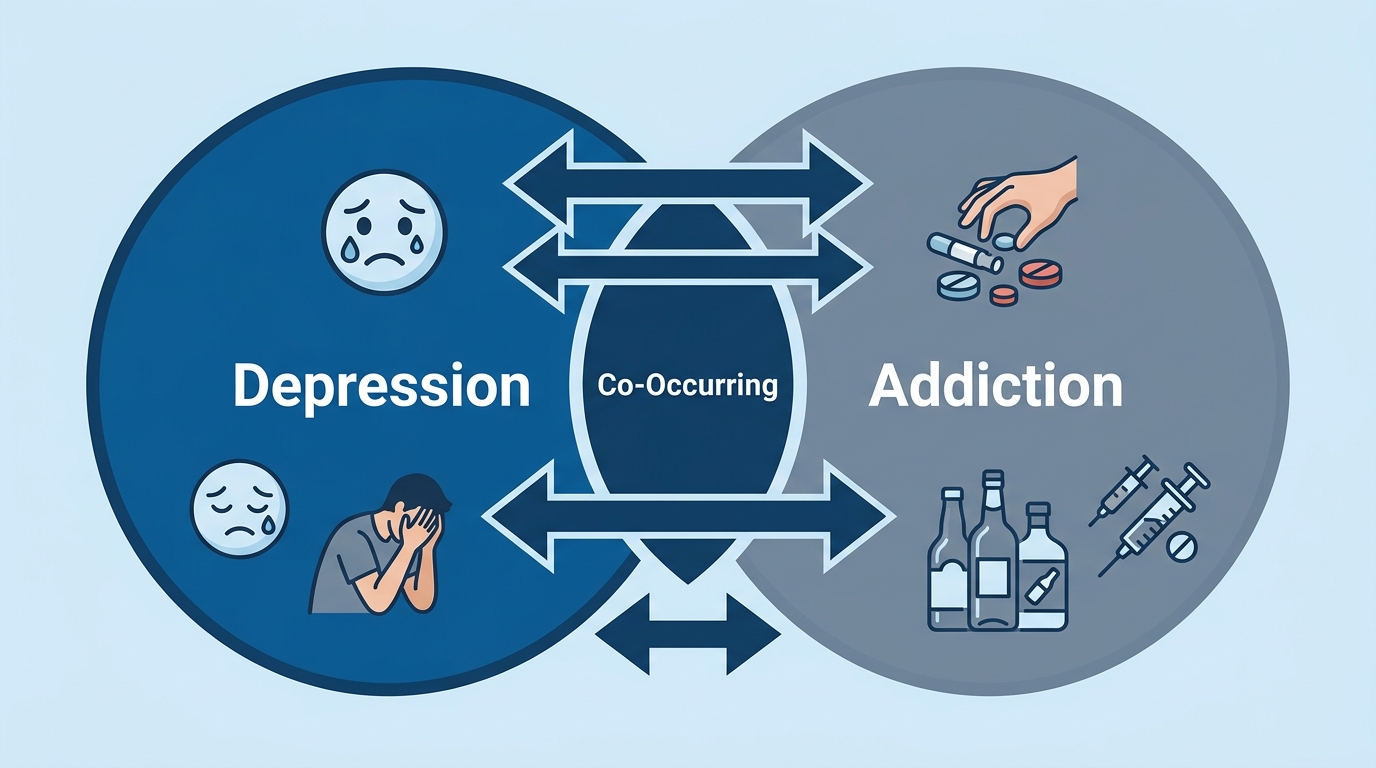
Bidirectional relationship between depression and substance use disorders illustrated.
Recognizing this interplay is the first step. Our Partial Hospitalization, Intensive Outpatient, and General Outpatient Programs are all structured with the understanding that a substance use disorder rarely exists in isolation. This information is for educational purposes and not a substitute for professional medical advice, but knowing how one condition drives the other can empower you to seek a form of help that truly addresses the root causes of your suffering.
Evidence-Based Therapies for Dual Diagnosis
Treating co-occurring depression and addiction requires a sophisticated clinical approach, and we rely on several proven, evidence-based therapies. Cognitive Behavioral Therapy (CBT) serves as a first-line treatment, helping individuals identify and restructure the distorted negative thought patterns that drive both depressive inertia and compulsive substance use. Dialectical Behavior Therapy (DBT) is another cornerstone, teaching critical skills for emotional regulation and distress tolerance, which are essential for navigating triggers and preventing relapse. Additionally, motivational interviewing is often employed as a brief, focused intervention to help resolve ambivalence and strengthen an individual's commitment to change, which is especially valuable in the early stages of recovery. For anyone exploring bristol mental health counseling options, this blend of therapies in a holistic setting can provide a comprehensive toolset for managing symptoms. Results may vary based on individual patient factors and circumstances, but our team is dedicated to finding the right combination of therapies to support your unique path to wellness.
Recovery Begins Here. To learn more about how these therapies can support your recovery, schedule a consult call today and start your treatment with a team that understands the nuanced link between mental health and addiction. Individual results are not guaranteed and depend on many factors including commitment to treatment.
Benefits of Integrated Depression Counseling for Recovery
When someone is struggling with addiction, it's rarely just about the substance. For many in our community, untreated depression plays a significant role in their journey toward substance use. At Rosewood Recovery, we believe that for patients seeking bristol depression counseling, addressing both conditions simultaneously is the most effective path to lasting recovery. This integrated approach moves beyond surface-level treatment to create meaningful, sustainable change.
Treating the Root Causes of Addiction
Depression often contributes to the cycle of addiction by driving individuals to self-medicate with drugs or alcohol. According to the Substance Abuse and Mental Health Services Administration (SAMHSA), depression affects more than 20 million people in the United States, and co-occurring mental health conditions are extremely common among those with substance use disorders. When someone turns to substances to numb feelings of sadness, hopelessness, or emptiness, they are not solving the problem; they are temporarily masking it.
In our programs, we recognize that bucks county depression therapy must go hand in hand with addiction treatment. By using evidence-based talk therapy and holistic approaches, we help patients understand the connection between their emotional pain and their substance use. Rather than treating addiction in isolation, we equip individuals with healthier coping strategies to manage depressive symptoms. This foundational work is essential because if the root cause remains unaddressed, the risk of returning to substance use remains high. Our team focuses on building these skills so each person can begin their journey towards happiness and freedom with a stronger, more resilient mindset.
Improved Treatment Outcomes
Research consistently shows that individuals who receive integrated care for co-occurring disorders have significantly better treatment engagement and retention. According to government health data from SAMHSA, treating depression concurrently with addiction is associated with reduced relapse rates and more positive long-term outcomes. When a patient's mental health is stabilized, they are far more capable of fully participating in their recovery plan.
Patients who combine depression counseling with treatment at a drug rehab bristol pa often show higher commitment to their recovery plan. We see this every day: when the fog of depression lifts, our clients rediscover their motivation and hope. This is why we integrate mental health support into every level of care we offer. Combined mental health support leads to deeper engagement in group therapy and a greater willingness to embrace the lifestyle changes necessary for sobriety. It is important to remember that individual results are not guaranteed, but the clinical evidence for this dual approach is strong and forms the bedrock of our treatment philosophy.
Support for the Whole Family
Addiction and depression do not happen in a vacuum; they affect the entire family system. That is why comprehensive depression counseling must include family therapy and education. The Substance Abuse and Mental Health Services Administration (SAMHSA) highlights family support as a critical factor in effective treatment and sustained recovery. When loved ones understand the nature of both depression and addiction, they become powerful allies in the healing process.
For those engaged in bristol mental health counseling, our programs offer dedicated family therapy sessions. These sessions provide a safe space for open communication, helping to repair trust and establish healthy boundaries. We also provide family education workshops, guided by resources from SAMHSA, that explain the genetic, environmental, and psychological factors behind these conditions. This knowledge reduces stigma and equips families to create a supportive home environment. By healing together, we build a stronger foundation for lasting recovery for everyone involved.
Understanding these benefits is the first step. This integrated approach sets the stage for exploring treatment options like our Partial Hospitalization Program. Recovery Begins Here, and we are ready to help you take the next step; contact us to schedule a consult call and start your treatment today.
How Depression Counseling in Bristol, Pennsylvania Works Alongside Addiction Treatment
When someone struggles with both depression and substance use, finding integrated care is essential. Depression counseling in Bristol, Pennsylvania at Rosewood Recovery brings these two pieces together through a coordinated treatment approach. For those outside the immediate Bristol area, we also provide depression treatment Philadelphia PA with the same evidence-based clinical model. At Rosewood Recovery, we use a structured, evidence-based process to ensure depression counseling works hand-in-hand with addiction treatment, because addressing one condition while ignoring the other rarely leads to lasting results.
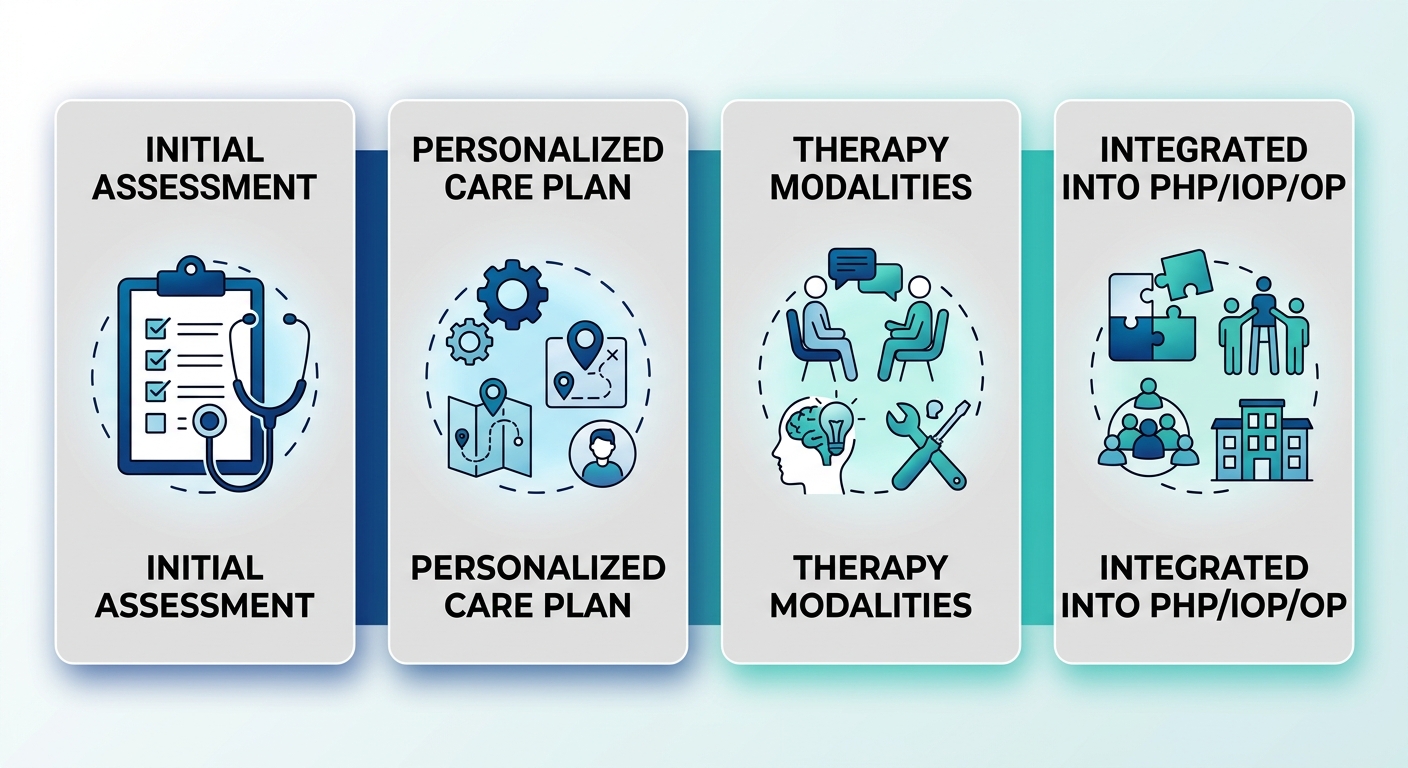
Depression counseling process integrated with addiction treatment
Initial Assessment and Personalized Care Planning
The journey begins with a thorough clinical assessment designed to understand each person's unique situation. Our intake team conducts a dual-diagnosis evaluation using validated screening tools, including the PHQ-9 for depression severity and the AUDIT or DAST for substance use patterns. According to SAMHSA, depression affects more than 20 million people in the United States and frequently co-occurs with substance use disorders. This makes accurate, early identification critical for effective treatment planning.
After the assessment, our clinical team creates a personalized care plan tailored to the individual's needs. The plan specifies session frequency, typically two to three times per week initially, with adjustments made based on progress and symptom monitoring. We involve each person in every step of planning, ensuring goals reflect what matters most to them. A dedicated case manager coordinates communication, and family involvement is encouraged when appropriate and with client consent. All shared information is protected under HIPAA privacy regulations.
Therapeutic Modalities Used in Depression Counseling
Rosewood Recovery uses several evidence-based therapeutic modalities to address depression and addiction together. Cognitive Behavioral Therapy (CBT) serves as the primary modality, helping individuals identify and reframe negative thought patterns that often drive both depressive episodes and substance use. SAMHSA identifies CBT and other talk therapies as standard, effective treatments for depression that provide tools to manage symptoms in recovery.
Dialectical Behavior Therapy (DBT) builds on this by teaching practical skills for emotional regulation and distress tolerance. For many clients, difficult emotions trigger the urge to use substances, and DBT provides healthier alternatives. For those whose depression is rooted in trauma, we offer Eye Movement Desensitization and Reprocessing (EMDR), which processes traumatic memories without extensive verbal recounting. Somatic therapy offers a holistic option, focusing on how the body stores stress and releasing tension through guided physical awareness. Bucks County depression therapy through Rosewood Recovery emphasizes this personalized matching process to ensure meaningful engagement.
Integrating Counseling with PHP, IOP, and OP Levels of Care
Depression counseling fits seamlessly into every level of our care continuum. At the Partial Hospitalization Program (PHP) level, counseling occurs daily with individual and group sessions, providing structured clinical support and regular contact with case managers and psychiatric oversight throughout the week.
For the Intensive Outpatient Program (IOP), sessions take place three to four times per week, allowing flexibility while maintaining substantial therapeutic contact. The General Outpatient Program (OP) offers weekly sessions for those with a solid recovery foundation ready for greater independence. Across all levels, we maintain consistent communication between therapists, case managers, and family members with appropriate consent and privacy protections. This information is for educational purposes and not a substitute for professional medical advice. Results may vary based on individual patient factors and circumstances. This integrated foundation sets the stage for lasting recovery. If you are ready to begin your journey towards happiness and freedom, schedule a consult call to learn more about our Bristol mental health counseling services.
Best Practices for Choosing Depression Counseling in Bristol, Pennsylvania
Now that you understand the types of counseling available, here are best practices to help you choose the right provider. Finding the right depression counseling in Bristol can feel overwhelming, but approaching the process with clear questions and realistic expectations makes all the difference. At Rosewood Recovery, we believe informed choices lead to better outcomes.
Questions to Ask When Choosing a Counselor
Before committing to a provider, asking the right questions helps ensure a strong therapeutic fit. We recommend these essential inquiries:
- Are you licensed to practice in Pennsylvania? Verify the counselor holds an active state license and has experience treating depression specifically.
- How do you approach co-occurring conditions? If you are managing anxiety or substance use alongside depression, confirm the provider has dual-diagnosis experience.
- What therapeutic modalities do you use? Ask about approaches like cognitive behavioral therapy or whether they offer the kind of depression therapy Levittown residents often prefer, such as structured, evidence-based care.
- Do you offer sliding scale fees or accept my insurance? Understanding costs upfront keeps treatment accessible and reduces stress.
- What does a typical treatment timeline look like? While results vary based on individual patient factors and circumstances, a clear roadmap provides reassurance.
These questions build trust and transparency. A qualified provider welcomes them as a sign of your commitment to recovery.
What to Expect from Your First Sessions
The first session is a safe, non-judgmental space where you can share your story without pressure. Your counselor will ask about your symptoms, personal history, and what you hope to achieve. Rapport-building is the priority. Feeling comfortable and heard matters more than covering every detail in one sitting.
By the second or third session, you and your counselor will begin collaborating on treatment goals tailored to your needs. This is when practical coping strategies are introduced, giving you tools to manage difficult emotions between appointments. You might explore grounding techniques, thought-reframing exercises, or lifestyle adjustments that support mental health. Please consult with a healthcare provider for professional advice regarding treatment options, and remember that treatment outcomes depend on patient engagement and individual circumstances. The early phase is about laying a strong foundation, and progress often unfolds gradually as trust deepens.
Building a Long-Term Support Network
Sustained recovery extends beyond one-on-one counseling. A robust support network with community resources, aftercare planning, and family involvement makes a real difference. NAMI Bucks County offers peer-led support groups that provide connection and understanding. The Substance Abuse and Mental Health Services Administration (SAMHSA) emphasizes that family support is a critical factor in effective treatment, and family therapy can foster a healthier home environment.
After initial treatment, aftercare plans may involve transitioning from a partial hospitalization program to intensive outpatient or general outpatient care. This step-down approach maintains momentum while returning to daily responsibilities. The SAMHSA National Helpline at 1-800-662-HELP provides free, confidential 24/7 referrals to local treatment facilities and support groups. Whether seeking ongoing mental health counseling in Bristol or exploring depression therapy in Bucks County, a comprehensive network reinforces your progress. Recovery Begins Here, and we invite you to schedule a consult call to begin your journey towards happiness and freedom.
Moving Forward with Depression Counseling in Bristol, Pennsylvania
As you consider Bristol depression counseling, take the next step with confidence. At Rosewood Recovery, our team understands that reaching out can feel challenging, and we are here to make the process as supportive and straightforward as possible.
We offer a full continuum of care that includes a Partial Hospitalization Program, an Intensive Outpatient Program, and general outpatient services, making Bucks County depression therapy accessible for every stage of the healing journey. Our Bristol mental health counseling integrates holistic and somatic therapy, which helps address both mental health and any co-occurring substance use concerns. The Substance Abuse and Mental Health Services Administration confirms that depression is a treatable condition, and a combination of therapy, medication, and healthy lifestyle habits forms the foundation of effective care.
In addition to our core services, we also provide family therapy bethlehem pa addiction support for loved ones navigating the recovery process together. For immediate help at any time, the SAMHSA National Helpline offers a 24/7, free, and confidential service at 1-800-662-HELP (4357). When you feel ready, please reach out to schedule a consult call with our caring team and start your treatment. We invite you to begin your journey towards happiness and freedom.
Individual results are not guaranteed and depend on many factors including commitment to treatment.


