


.png)

.png)
.png)
Table of Contents
Anxiety Treatment Options in Newtown, Pennsylvania
For those seeking anxiety treatment in Newtown, PA, Rosewood Recovery provides accessible, comprehensive care right here in Bucks County. Our Newtown facility offers a supportive environment where healing and personal growth are the focus. We know that each person's path to wellness is unique, and our programs are designed to meet you where you are.
Our approach combines evidence-based anxiety therapy with holistic, somatic practices to address anxiety at its source. Whether you benefit from the intensive support of our Partial Hospitalization Program or the flexibility of our Intensive Outpatient and General Outpatient services, each level of care includes proven modalities like cognitive behavioral therapy (CBT) and mindfulness techniques. We specialize in generalized anxiety disorder treatment, tailoring interventions to reduce worry, build coping skills, and foster resilience. Our anxiety treatment in Newtown, PA is grounded in methods the National Institutes of Health recognizes as effective for anxiety disorders. Our Anxiety Counseling Newtown services let you engage in therapy on a schedule that fits your life, with a caring team committed to your progress.
Recovery Begins Here. We invite you to schedule a consult call and begin your journey towards happiness and freedom. Our dedicated professionals are ready to answer your questions and help you start your treatment today.
This information is for educational purposes and not a substitute for professional medical advice. Results may vary.
Understanding Anxiety Disorders and Evidence-Based Treatments
To better understand what treatments are available for anxiety, it's helpful to first understand the conditions themselves. Our team at Rosewood Recovery believes in an educational foundation as part of beginning your journey towards happiness and freedom. Here, we'll explore common anxiety disorders and evidence-based therapies that can be effective for many individuals seeking anxiety treatment Newtown PA. Please note, this information is for educational purposes and not a substitute for professional medical advice.
Types of Anxiety Disorders
Anxiety disorders are among the most common mental health conditions, affecting millions of adults in the United States. According to the National Institutes of Health, generalized anxiety disorder (GAD) affects about 3.1% of US adults in a given year. GAD involves persistent, excessive worry about various aspects of daily life, often accompanied by restlessness and sleep disturbances. Panic disorder is characterized by sudden, intense episodes of fear and discomfort known as panic attacks, which can include heart palpitations and shortness of breath. Social anxiety disorder triggers overwhelming fear in social situations involving potential scrutiny, while specific phobias involve extreme, irrational fear of particular objects or scenarios. Our personalized approach to generalized anxiety disorder treatment helps address each condition's unique challenges, guiding individuals toward effective management.
Evidence-Based Treatment Modalities
At Rosewood Recovery, our clinical team utilizes evidence-based anxiety therapy designed to help reduce symptoms and improve daily functioning. Cognitive Behavioral Therapy (CBT) is one of the most researched and widely used modalities. It works by helping individuals identify and change negative thought patterns that fuel anxiety, replacing them with more balanced and constructive thinking. Dialectical Behavior Therapy (DBT), another cornerstone of effective treatment, combines the principles of mindfulness with emotional regulation strategies. This approach teaches practical skills for tolerating distress and navigating intense emotions without resorting to avoidance. Government health data increasingly supports these first-line treatments for anxiety disorders. In our Newtown programs, these modalities are integrated into individualized treatment plans that meet you where you are, supporting tangible progress in your mental health journey.
Outpatient Therapy Options in Newtown, Pennsylvania
For those seeking Newtown Square Anxiety Therapy, our outpatient programs provide flexible care tailored to your needs. At our Newtown, Pennsylvania location, we offer a Partial Hospitalization Program (PHP), which delivers structured, intensive daily treatment while allowing you to return home in the evenings. Our Intensive Outpatient Program (IOP) offers a step-down level of care with scheduled therapy sessions that accommodate work or school commitments. The General Outpatient Program (OP) provides continued support with less frequent visits, ideal for those maintaining long-term wellness. Each level of care can be tailored for anxiety treatment Newtown PA, incorporating holistic modalities alongside CBT and DBT. Our team understands that recovery is a personal path, and we are here to help you navigate it--because Recovery Begins Here. Results may vary based on individual patient factors and circumstances. Now that you understand the types of anxiety and evidence-based therapies, let's explore how our programs can be tailored for you.
Benefits of Integrated Anxiety and Substance Use Treatment
Recovery Begins Here. At Rosewood Recovery, we understand that lasting healing requires addressing the whole person. For anyone seeking anxiety treatment in Newtown PA, our integrated model treats co-occurring anxiety and substance use simultaneously -- an approach supported by the National Institutes of Health that studies show can significantly reduce the risk of relapse for both conditions.
Integrated Treatment for Co-Occurring Conditions
Treating anxiety and substance use disorders separately often leaves root issues unaddressed. Our integrated model ensures that both conditions receive equal clinical attention from day one. When someone enters our program for generalized anxiety disorder treatment, our team simultaneously addresses substance use patterns that may be fueling their distress. This concurrent approach is backed by research from the National Institutes of Health, which demonstrates that integrated care can lead to more stable, long-term recovery. For those exploring anxiety treatment in Newtown PA, we bring together individual counseling, group therapy, and holistic practices like somatic therapy to heal mind and body together. By targeting the connections between anxiety and addictive behaviors, we help you build coping skills that serve you well beyond treatment.
Personalized Care Plans for Bucks County Residents
Every person's journey is unique, which is why we craft personalized care plans for each Bucks County resident we serve. Your experience begins with a thorough initial assessment where we explore your history, symptoms, and personal goals. From that evaluation, we build a plan that may include evidence-based anxiety therapy, group support, and holistic activities designed around your needs. Because recovery is dynamic, we continuously monitor your progress and adjust your care plan accordingly. For residents of Newtown and those seeking anxiety treatment Yardley, Rosewood Recovery brings compassionate, integrated care close to home.
Long-Term Outcomes and Sustained Recovery
Recovery is a gradual process, and we encourage clients to view their progress through meaningful milestones rather than a fixed timeline. While therapy duration varies, many individuals engage in our program for several months, moving through phases of stabilization, intensive skill-building, and aftercare planning. Our holistic and somatic therapy offerings help address the physical manifestations of anxiety, fostering a deeper mind-body connection that supports long-term wellness. As clients learn to manage triggers and build resilience, they often discover a renewed sense of purpose and strength. At Rosewood Recovery, we believe anyone can begin their journey towards happiness and freedom.
It's important to understand that results may vary based on individual patient factors and circumstances. The outcome of treatment depends on many variables, including personal commitment and the complexity of each case. If you're ready to start your treatment, we invite you to schedule a consult call with our caring team.
The Anxiety Treatment Process at Rosewood Recovery
Now that you understand the importance of seeking treatment, let's walk through what the journey at Rosewood Recovery looks like. At our Newtown, Pennsylvania facility, Recovery Begins Here, with a structured, evidence-based process personalized to your needs. From your first phone call to ongoing support, we guide you every step of the way.
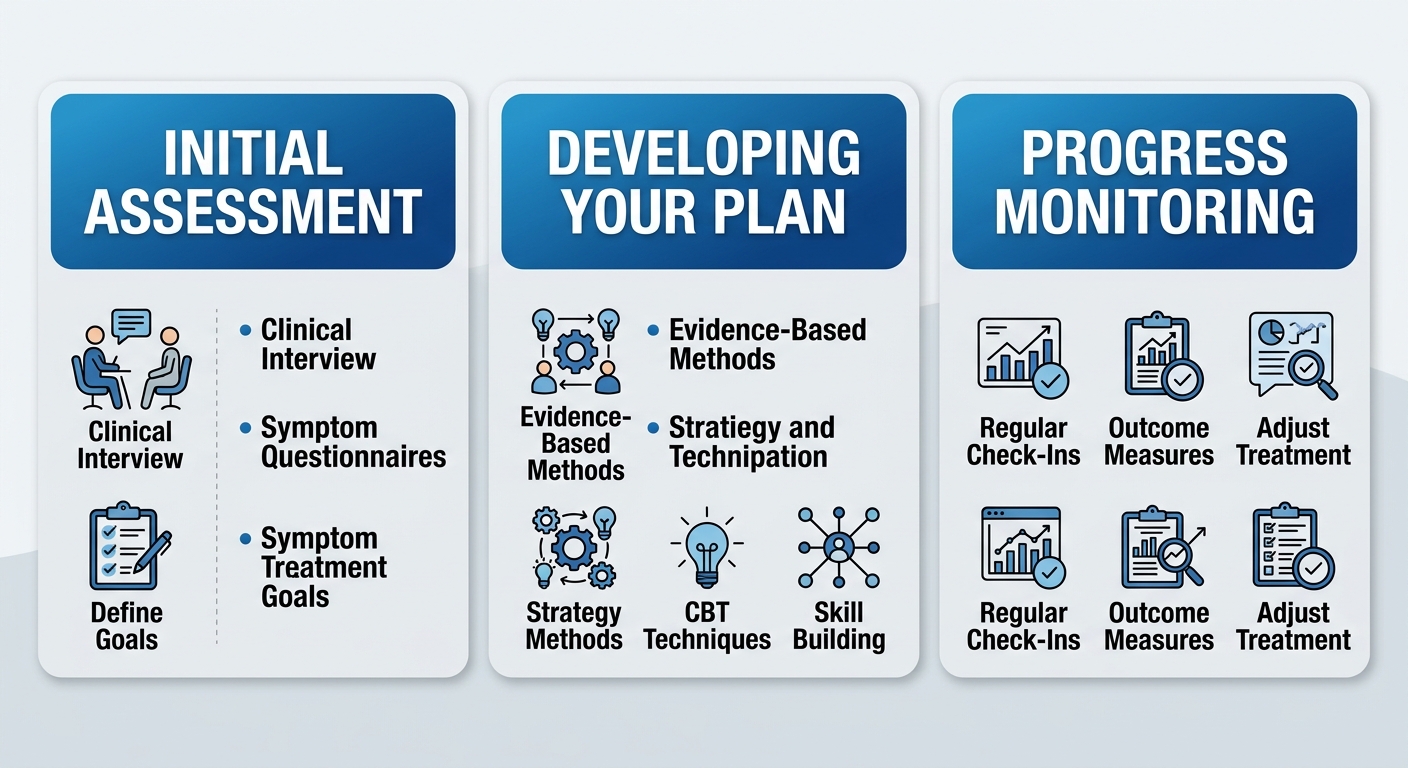
The anxiety treatment process at Rosewood Recovery in three stages.
Initial Assessment and Evaluation
When you begin anxiety treatment in Newtown, PA, your first step is a comprehensive initial assessment. We conduct a thorough clinical interview to understand your anxiety history and triggers, and we use standardized screening tools like the GAD-7 and PHQ-9 to get an objective baseline. Then we'll work with you to identify your personal treatment goals, whether that's reducing panic attacks or simply feeling more in control.
The evaluation is confidential and conducted in a supportive environment. We ask about your medical history, past therapy experiences, and any co-occurring concerns so that we can build a complete picture. This thorough assessment lays the foundation for a truly personalized treatment plan.
Developing Your Treatment Plan
Once assessment is complete, we collaborate to create your individualized treatment plan. Using evidence-based modalities like CBT, DBT, and holistic approaches, we tailor care. Whether you need generalized anxiety disorder treatment or help with panic, your plan integrates proven therapies. The National Institutes of Health recognizes CBT as highly effective for anxiety.
Our Newtown Square anxiety therapy program is tailored to you. Depending on your needs, you may join partial hospitalization (PHP), intensive outpatient (IOP), or general outpatient (OP) care. Each level offers structure while developing real-world skills, and we adjust as you progress.
Progress Monitoring and Adjustments
Throughout your evidence-based anxiety therapy, we monitor your progress regularly. You'll meet weekly with your primary therapist, and the full treatment team conducts in-depth reviews at key milestones. We also re-administer validated self-report measures like the GAD-7 to track changes in symptom severity.
Your treatment plan is dynamic. If certain strategies aren't working or new issues arise, we make collaborative adjustments. There is no fixed timeline; we move at your pace, with every adjustment aimed at helping you regain control and resilience. All progress information is kept confidential under HIPAA privacy protections.
Your journey towards happiness and freedom starts with a single step, reach out to us to schedule a consult call and start your treatment today. Our dedicated team is ready to answer your questions and guide you forward.
This information is for educational purposes and not a substitute for professional medical advice. We protect your privacy in accordance with HIPAA regulations.
Best Practices for Anxiety Treatment Success
Beyond choosing the right program, success in any healing journey depends heavily on the daily habits and support structures you build around it. When pursuing anxiety treatment in Newtown, PA, we've seen that incorporating a few key practices can truly make a difference. We believe that Recovery Begins Here, and it starts by empowering you with practical, effective strategies to begin your journey towards happiness and freedom.
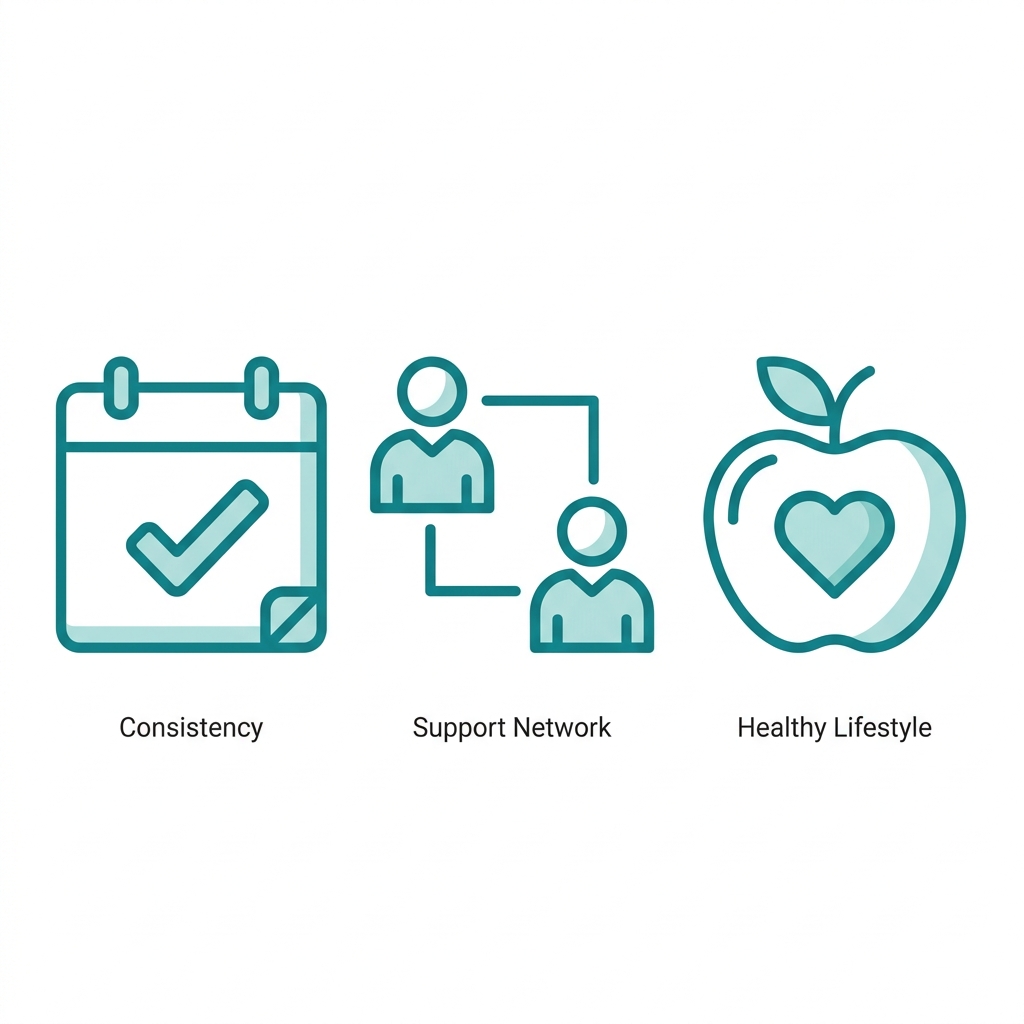
Icon set for anxiety treatment best practices: consistency, support network, and healthy lifestyle.
Consistency and Engagement
Active and regular participation in your care plan is one of the strongest predictors of positive results. For those in generalized anxiety disorder treatment, we've found that attending every scheduled therapy session is critical, as even a single missed appointment can sometimes disrupt the momentum of progress. We recommend setting a specific, non-negotiable time for your weekly therapy and using phone reminders to build a lasting routine.
Our team also emphasizes the importance of completing all between-session assignments and, for those in our PHP and IOP programs, arriving on time and fully engaged. This deep level of involvement helps you process experiences in real time. For those in Pennsylvania, seeking local support like counseling for anxiety morrisville can provide the consistent professional guidance needed for progress. Your dedication to the process is what transforms therapeutic insights into real-world change.
Building a Support Network
Recovery does not happen in isolation, and building a strong support network is a vital practice. We encourage you to involve a trusted family member or friend by inviting them to occasional family therapy sessions, as their understanding can be a powerful asset. According to the National Institutes of Health, strong social connections can significantly reduce feelings of isolation and the risk of relapse.
We also suggest exploring community resources to broaden your circle of encouragement. Organizations like NAMI, local mental health associations in Pennsylvania, and various faith-based groups offer groups where you can connect with others who share similar experiences. Knowing you are not alone can make challenging days feel more manageable and reinforces your commitment to healing.
Healthy Lifestyle Integration
The connection between body and mind is undeniable, and complementing evidence-based anxiety therapy with healthy habits can enhance your overall well-being. A powerful starting point is integrating about 30 minutes of moderate exercise, five days a week. Just as important, we recommend nourishing your body with a balanced, Mediterranean-style diet and prioritizing a consistent sleep schedule of 7 to 9 hours each night, as quality rest is crucial for emotional regulation.
To further anchor your mind, we suggest simple mindfulness techniques, like a daily ten-minute meditation or a brief breathing exercise. Our holistic and somatic therapy offerings are specifically designed to help you build this mind-body connection in a structured way. By weaving these practices into your daily life, you create a foundation that supports and extends the benefits of your professional care, though we must note that results may vary based on individual patient factors and circumstances. This information is for educational purposes and is not a substitute for professional medical advice. We are here to guide you through these best practices and invite you to schedule a consult call to start your path with us.
Taking the Next Step Toward Anxiety Relief
Now that you understand the options available, it's time to take the next step. If you are considering anxiety treatment in Newtown PA, taking action can feel overwhelming but also empowering. Our team at Rosewood Recovery is here to guide you toward relief with compassionate, evidence-based care.
We offer a full continuum of care tailored to your needs, including a Partial Hospitalization Program, Intensive Outpatient Program, and General Outpatient Program. Our programs provide effective generalized anxiety disorder treatment and address a range of anxiety conditions through evidence-based anxiety therapy. Research from the National Institutes of Health confirms that evidence-based therapy is effective for anxiety disorders, and we integrate holistic and somatic therapy to support your whole well-being. For those seeking local care, our Bucks County treatment resources connect you with the anxiety relief approach that fits your life.
Take the first step toward reclaiming your peace of mind. We invite you to schedule a consult call and begin your journey towards happiness and freedom with our dedicated team. Individual results vary based on patient engagement and circumstances, but with professional support, meaningful change is possible.


