


.png)

.png)
.png)
Table of Contents
Addiction Treatment Options in Newtown Square, Pennsylvania
For residents of Newtown Square seeking quality care, our Addiction Treatment Center Newtown Pa provides comprehensive newtown square addiction treatment tailored to individual needs. Recovery Begins Here with a commitment to whole-person healing and lasting sobriety. Our evidence-based programs help individuals begin a journey towards happiness and freedom.
According to SAMHSA guidelines, our Partial Hospitalization Program (PHP) offers structured daily therapeutic sessions while allowing a return home in the evenings. The Intensive Outpatient Program (IOP) provides several hours of therapy per week and serves as a flexible step-down from higher levels of care. For those with mild substance use disorders or who are transitioning after more intensive treatment, our General Outpatient Program (OP) delivers ongoing support. Each program delivers evidence-based substance use disorder treatment.
Residents seeking newtown square addiction treatment will find that our holistic and somatic therapy approach incorporates yoga, mindfulness, and body-centered techniques, setting Rosewood Recovery apart as an integrative care provider. We specialize in co-occurring disorder treatment, addressing underlying mental health issues alongside addiction. This integrated care is available to residents of Newtown Square and surrounding Pennsylvania communities.
Our team is ready to help you choose the right path. Schedule a consult call today to start your treatment. Individual results are not guaranteed and depend on many factors including commitment to treatment.
Understanding Substance Use and Co-Occurring Disorder Treatment
To understand how we help our clients, let's explore what substance use disorder treatment entails. At Rosewood Recovery, our programs are designed to support whole-person healing. For those seeking Addiction Counseling Newtown PA or evaluating care options, understanding the evidence-based framework that guides care in Newtown Square addiction treatment is essential.
What Is Substance Use Disorder Treatment?
Substance use disorder treatment is a structured process designed to help individuals overcome addiction and rebuild their lives. At Rosewood Recovery, we begin with a thorough assessment to understand each person's unique needs. For some, medical detox provides a safe environment to manage withdrawal symptoms. Core treatment then includes evidence-based therapies such as cognitive behavioral therapy (CBT) and dialectical behavior therapy (DBT), which address the thought patterns and behaviors underlying addiction. Medication-assisted treatment (MAT) may also be integrated to reduce cravings and support recovery. Group and individual counseling sessions build coping skills, while aftercare planning ensures ongoing support once intensive treatment ends. According to the Substance Abuse and Mental Health Services Administration (SAMHSA), effective, individualized care considers each person's circumstances, so we tailor every aspect of the journey because no two paths to recovery are the same.
Understanding Co-Occurring Disorder Treatment
Co-occurring disorder treatment, sometimes called dual diagnosis treatment, addresses substance use and mental health conditions at the same time. Many individuals facing addiction also experience depression, anxiety, PTSD, or other mental health challenges. Treating only one condition while ignoring the other often leads to incomplete healing and higher relapse risk. That is why integrated treatment models are recommended by SAMHSA. In our programs, we simultaneously target both the addiction and the underlying mental health concern. Our clinicians use evidence-based modalities like trauma-informed therapy, psychiatric support, and medication management to stabilize mood while addressing cravings. Group therapy sessions may explore how mental health symptoms trigger substance use, and skill-building workshops teach healthy coping strategies. For example, a person who uses alcohol to numb social anxiety might receive both exposure therapy and relapse prevention skills. This integration ensures that progress in one area reinforces the other, rather than one condition undermining recovery. Our aftercare planning also accounts for mental health support, connecting clients with psychiatric services and peer support groups to maintain their hard-won stability. Ultimately, integrated care often leads to better long-term recovery outcomes, because it fosters resilience and whole-person wellness. We see this every day in our clients, and it's a cornerstone of the Recovery Begins Here philosophy.
Can You Treat Mental Health and Substance Abuse at the Same Time?
Yes, mental health and substance abuse can be treated at the same time. Dual diagnosis treatment makes this possible. At Rosewood Recovery, our programs address both conditions simultaneously through an integrated model. This means that while you receive therapy to manage cravings and build sobriety skills, you also have support for depression, anxiety, or other mental health issues. Evidence-based therapies like CBT and DBT target underlying thought patterns that fuel both addiction and emotional distress. Coordinated psychiatric care can include medication management if needed, ensuring that all aspects of your health are considered. Research shows that treating co-occurring disorders together often leads to lower relapse rates and more lasting recovery than treating them separately. By addressing the root psychological factors driving substance use, individuals gain stronger coping mechanisms and a deeper understanding of their triggers. This holistic approach respects that mental health and addiction are deeply intertwined and that healing one without the other can leave a person vulnerable. Our integrated aftercare planning continues to support both aspects, connecting clients with community resources and ongoing therapy to maintain progress. However, individual results vary based on personal circumstances and commitment; not everyone experiences the same outcome. If you're ready to begin your journey towards happiness and freedom, we encourage you to schedule a consult call and start your treatment with a team that truly believes Recovery Begins Here.
Benefits of Integrated Addiction and Mental Health Treatment
These integrated approaches yield significant benefits for individuals facing co-occurring disorders.
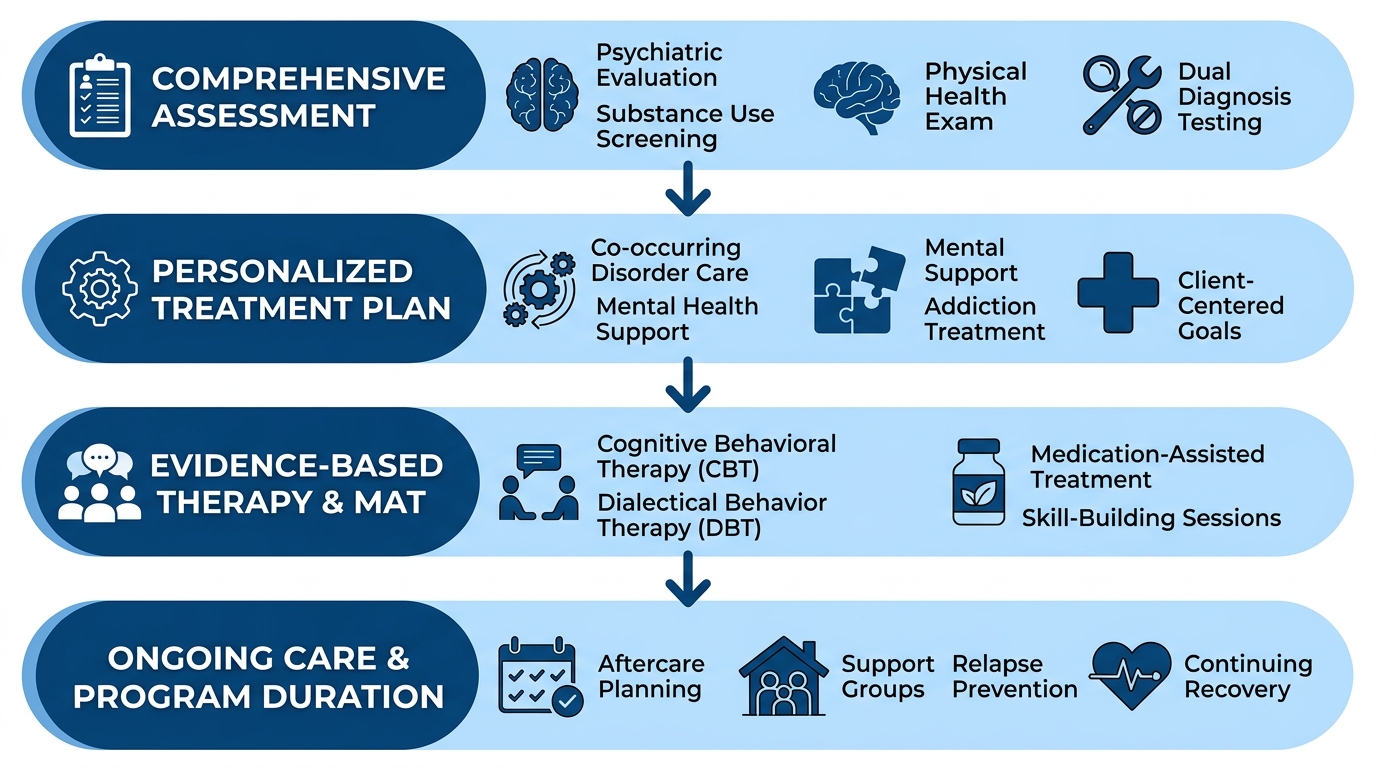
Four-stage dual diagnosis treatment process flow
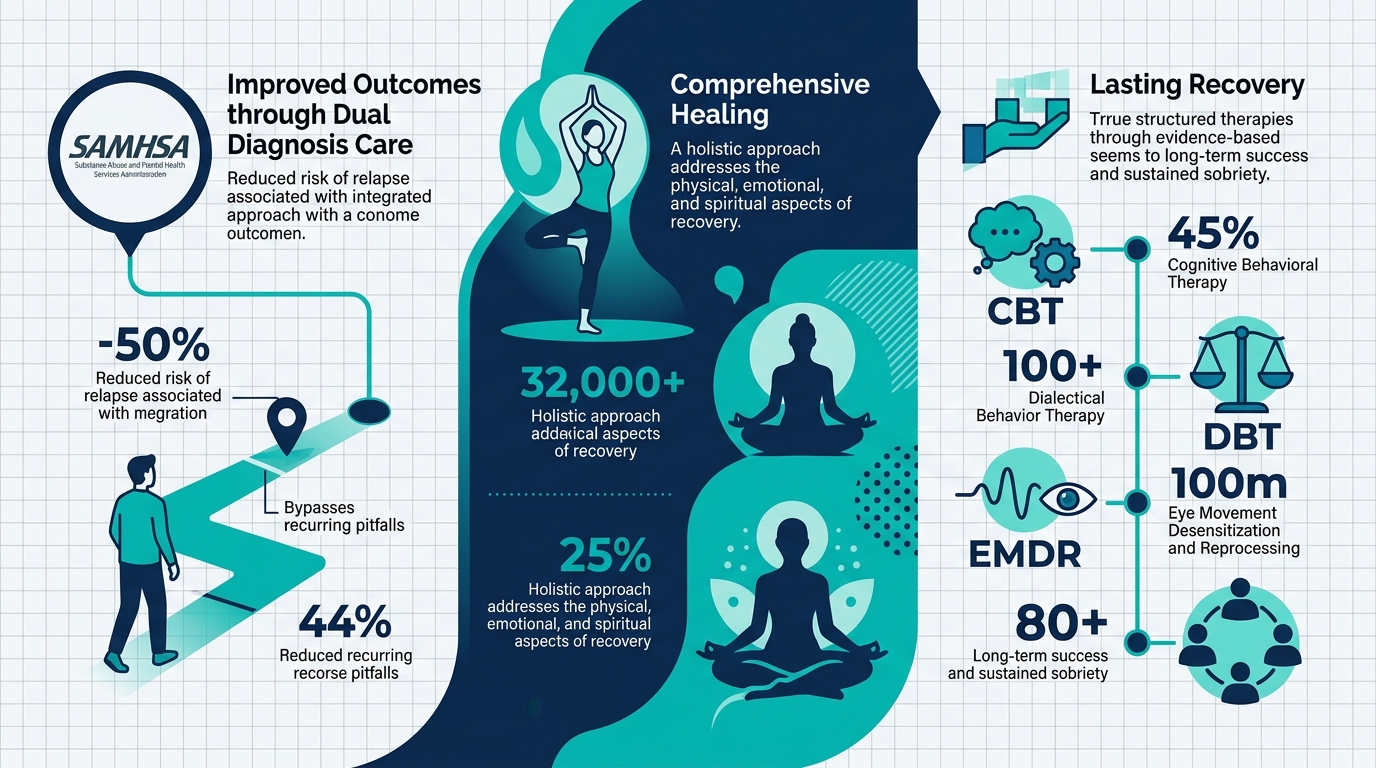
Benefits of integrated addiction and mental health treatment infographic
Improved Outcomes Through Dual Diagnosis Care
Integrated newtown square addiction treatment addresses both substance use and mental health disorders, offering a unified path to recovery. According to the Substance Abuse and Mental Health Services Administration (SAMHSA), individuals who receive integrated treatment for co-occurring disorders experience reduced relapse rates and greater mental health stability than those who undergo sequential or parallel treatment. This research underscores why co-occurring disorder treatment in Newtown, Pennsylvania, forms the foundation of our approach. At Rosewood Recovery, we provide dual diagnosis care within structured Partial Hospitalization and Intensive Outpatient programs, ensuring each client receives comprehensive support from the very start of their journey. Our clinical team integrates mental health therapies with addiction counseling to address the root causes of substance use, which may reduce relapse risk and improve long-term wellbeing. By treating both conditions simultaneously, we help clients build resilience and coping skills that sustain recovery over time.
Comprehensive Healing for Mind and Body
At Rosewood Recovery, we believe true healing extends beyond symptom management. Our holistic approach to substance use disorder treatment in Newtown addresses the physical, emotional, and spiritual dimensions of recovery. We incorporate somatic therapies such as yoga, breathwork, and mindfulness practices to help release trauma stored in the body. These modalities complement traditional counseling by fostering self-awareness and reducing stress, which can be vital in preventing relapse. Clients also benefit from nutritional guidance, creative expression, and recreational activities that support overall wellness. By weaving these holistic elements into our Partial Hospitalization and Intensive Outpatient programs, we nurture the whole person and cultivate a foundation for sustainable sobriety. Our compassionate team guides each client through personalized healing plans, ensuring that every aspect of their well-being is addressed, so they can reclaim a life of purpose and fulfillment.
Lasting Recovery Through Evidence-Based Modalities
Our Partial Hospitalization and Intensive Outpatient programs for alcohol rehab newtown incorporate evidence-based modalities to ensure lasting recovery. Clients participate in cognitive-behavioral therapy (CBT), dialectical behavior therapy (DBT), and eye movement desensitization and reprocessing (EMDR) to address thought patterns, emotional regulation, and trauma. Group therapy sessions, complemented by individual counseling, build sober support networks and interpersonal skills. Our center in Newtown, Pennsylvania offers a structured PHP that provides over six hours of therapeutic programming daily, five to seven days a week, while our IOP delivers three hours of therapy, three to five days a week, allowing clients to balance treatment with daily responsibilities. This tiered approach ensures that each person receives the right intensity of care, supporting long-term sobriety and an improved quality of life.
These benefits are realized through our structured Partial Hospitalization and Intensive Outpatient programs, which we explore in the next section.
Recovery Begins Here.
This information is for educational purposes and not a substitute for professional medical advice. Results may vary based on individual patient factors.
How Dual Diagnosis and Evidence-Based Treatment Programs Work
At Rosewood Recovery, we know that effective Newtown Square addiction treatment must address both substance use and mental health together. Recovery Begins Here with a structured, evidence-based approach designed to help you begin your journey towards happiness and freedom. Our programs follow an integrated process that treats the whole person, not just the symptoms.
Benefits of integrated addiction and mental health treatment infographic
Four-stage dual diagnosis treatment process flow
The Assessment and Personalized Treatment Plan
Everything starts with a thorough assessment to understand your unique needs. Our clinical team evaluates substance use patterns, mental health symptoms, medical history, and personal goals. This helps us identify any co-occurring conditions like depression, anxiety, or trauma that may be fueling addictive behaviors. According to the Substance Abuse and Mental Health Services Administration (SAMHSA), integrated screening for co-occurring disorders is a foundational practice for effective care. From this evaluation we develop a personalized treatment plan that addresses both substance use and mental health simultaneously, not separately. The plan also determines the most appropriate level of care, whether that's a Partial Hospitalization Program (PHP), Intensive Outpatient Program (IOP), or general outpatient services. For those seeking treatment for co-occurring conditions in Pennsylvania, this dual-focus approach lays the groundwork for lasting recovery.
Common Therapy Modalities and Medication-Assisted Treatment
Evidence-based therapies are the core of every treatment plan. We commonly use Cognitive Behavioral Therapy (CBT) to help you identify and change unhealthy thought patterns, and Dialectical Behavior Therapy (DBT) to build emotional regulation and distress tolerance skills. You'll participate in individual therapy for focused, one-on-one work and group therapy for peer support and shared learning. SAMHSA guidelines recognize these modalities as best practices for integrated care. When appropriate, medication-assisted treatment (MAT) is also integrated and carefully managed by our medical professionals to ease withdrawal symptoms and reduce cravings. We provide mental health therapy Newtown residents trust, seamlessly woven together with substance use disorder treatment to create a cohesive healing experience.
Typical Program Duration and Levels of Care
Program length depends on your progress and the severity of your conditions, but we generally structure care to step down over time. Partial Hospitalization Program (PHP) typically lasts several weeks, with daily structured sessions that give you intensive support while you still return home at night. Intensive Outpatient Program (IOP) then offers a longer, more flexible schedule--ideal if you're transitioning from PHP or balancing treatment with work or family. General outpatient continues with fewer weekly sessions to reinforce the skills you've learned. Factors like motivation, support system, and how both substance use and mental health symptoms respond to treatment all influence duration. If you feel ready to start your treatment, you can schedule a consult call to discuss which program fits your situation. Understanding how our program is structured is the first step. Next, we'll talk about how to begin your journey towards happiness and freedom.
This information is for educational purposes and not a substitute for professional medical advice.
Choosing the Right Addiction Treatment Center in Newtown Square
Once you understand the different levels of care available, the next step is choosing the right center for your unique needs. When it comes to Newtown Square addiction treatment, selecting a provider that aligns with your recovery goals can profoundly shape your journey. We're here to help you navigate this decision with confidence.
- Accreditation: Look for programs accredited by CARF or The Joint Commission. SAMHSA guidelines emphasize these as quality baselines, ensuring your care meets rigorous safety and ethical standards.
- Evidence-Based Modalities: The most effective substance use disorder treatment uses proven therapies like CBT, DBT, EMDR, and holistic approaches. Our center integrates these to address the mind, body, and spirit.
- Continuum of Care: Quality centers offer multiple levels--PHP, IOP, and OP--so you can transition seamlessly. For those needing flexibility, a drug outpatient Newtown PA program provides structured support while accommodating work or family commitments.
- Qualified Clinical Staff: Verify that clinicians hold licenses (LCSW, LPC, MD) and have addiction-specific experience. Our multidisciplinary team brings both expertise and compassion to your care.
- Holistic & Dual Diagnosis Integration: Many individuals benefit from co-occurring disorder treatment that addresses underlying mental health conditions alongside substance use. Holistic options like yoga and mindfulness can enhance your healing.
- Location & Accessibility: Choose a center close to home or in a setting that feels safe and supportive. Being near loved ones can strengthen your recovery network.
Insurance Coverage and Financial Considerations
To verify your coverage for substance use disorder treatment, start by calling the number on the back of your insurance card or speaking with our admissions team. We'll review your benefits confidentially and explain what your plan covers, helping you avoid surprise expenses. This step takes just a few minutes and gives you clarity before you commit.
Many insurers commonly accepted by Pennsylvania treatment centers include Highmark, Aetna, Cigna, and UnitedHealthcare. While coverage varies by plan, most policies now include behavioral health benefits. Let us check your policy's specifics so you know exactly what to expect.
If you are uninsured or your plan doesn't fully cover treatment, we offer self-pay options and sliding-scale fees based on financial need. Our goal is to remove financial barriers so you can focus on healing.
Questions to Ask Before Choosing a Treatment Provider
- What levels of care do you offer? A quality center should provide a full continuum--from PHP to outpatient--so you receive the right intensity at the right time.
- How do you handle co-occurring disorders? Integrated co-occurring disorder treatment that addresses mental health and addiction simultaneously leads to better outcomes.
- What does a typical day look like? Understanding the daily schedule helps you prepare for the commitment and see if the program fits your lifestyle.
- What are the credentials of your clinical staff? Staff should include licensed professionals (LCSW, LPC, MD) with addiction treatment experience.
- Do you offer family support programs? Family involvement can strengthen recovery; ask about therapy or educational sessions for loved ones.
- What aftercare planning is provided? A strong discharge plan with ongoing support reduces the risk of relapse and keeps you connected.
- Is your program accredited? Accreditation by CARF or The Joint Commission is a reliable sign of quality and safety.
Be cautious of any center that guarantees specific outcomes or success rates, as recovery is deeply personal and influenced by many factors.
Recovery Begins Here. Schedule a consult call today to start your treatment and begin your journey towards happiness and freedom.
Results may vary based on individual patient factors and circumstances. This information is for educational purposes and not a substitute for professional medical advice.
Begin Your Addiction Treatment Journey at Rosewood Recovery
Now that you understand the importance of treatment, let's walk through how to begin your journey. Recovery Begins Here, and Rosewood Recovery's compassionate team is ready to guide you. Our continuum of care includes Partial Hospitalization, Intensive Outpatient, and General Outpatient programs designed to meet a variety of needs. Whether you are seeking substance use disorder treatment or help managing co-occurring conditions, we provide care tailored to you. Our holistic and somatic therapy approach addresses the whole person, and for those experiencing depression, our depression treatment Philadelphia PA complements a comprehensive recovery plan. If you're looking for addiction treatment in Newtown Square, our welcoming facility offers a safe space to begin this important work. Take the first step today and schedule a consult call with a member of our dedicated team. We're ready to help you begin your journey towards happiness and freedom. According to the Substance Abuse and Mental Health Services Administration (SAMHSA), reaching out for help is a vital part of the recovery process. Results may vary based on individual patient factors and circumstances. In the next section, we'll detail our Partial Hospitalization Program and how it can fit into your recovery plan.


