


.png)

.png)
.png)
Table of Contents
A Complete Guide to Drug Abuse Treatment Options in Langhorne, Pennsylvania
Recovery Begins Here in Langhorne. When searching for a Substance Abuse Rehab Program Langhorne Pa, it's important to understand the levels of care available. As a drug abuse treatment center in Langhorne PA, Rosewood Recovery provides a continuum of care tailored to your needs.
- Partial Hospitalization Program (PHP): A structured daytime option for those transitioning from inpatient care, PHP provides comprehensive addiction treatment in Langhorne. This program includes co-occurring mental health treatment in Langhorne PA, addressing both substance use and underlying conditions with a full day of therapeutic activities, then returning home each evening.
- Intensive Outpatient Program (IOP): Our IOP, a trusted Bucks County drug and alcohol rehab, lets you live at home while attending therapy several days per week. Holistic and somatic therapies, including mind-body practices, support your recovery. This level is appropriate for those stepping down from PHP or needing intensive support with flexibility.
- General Outpatient Program (OP): For mild-to-moderate substance use, our General Outpatient Program (OP) provides flexible, evidence-based care that fits your schedule. You'll benefit from holistic therapies and counseling in Langhorne, allowing you to maintain work and family commitments while building a solid recovery foundation.
All our programs align with SAMHSA guidelines for evidence-based care; the SAMHSA National Helpline (1-800-662-HELP) offers 24/7 support. Treatment outcomes depend on individual factors; consult a healthcare provider for personalized advice. To begin your journey towards happiness and freedom, schedule a consult call today.
Recovery Begins Here. Finding the right support is the first and most important step, and understanding how treatment works can make that decision clearer. For families and individuals looking for a drug abuse treatment center langhorne pa, knowing what sets effective care apart makes all the difference. Rosewood Recovery provides evidence-based programs designed to support lasting change, serving as a trusted bucks county drug and alcohol rehab resource for those ready to begin their healing journey.
The Role of Evidence-Based Approaches in Addiction Recovery
Evidence-based treatment means therapies and interventions that have been scientifically researched and proven effective in addressing substance use disorders. According to the Substance Abuse and Mental Health Services Administration (SAMHSA), effective care must be grounded in data-driven practices rather than one-size-fits-all solutions. These methods include cognitive-behavioral therapy, medication-assisted treatment, and motivational interviewing, all of which are incorporated into clinical protocols. As a dedicated Drug Abuse Counseling Center Langhorne Pa, we follow these validated protocols to give our clients the best possible foundation for recovery. Our care plans adapt as science evolves, ensuring that each person in Langhorne, Pennsylvania receives treatment backed by current research.
Levels of Care: PHP, IOP, and General Outpatient
Every recovery journey is unique, which is why our drug abuse treatment center langhorne pa offers a full continuum of care designed to meet clients where they are. The Partial Hospitalization Program (PHP) provides the highest level of daily clinical support while allowing clients to return home in the evenings--an ideal fit for those needing structure without residential placement. The Intensive Outpatient Program (IOP) serves as a step-down option with fewer weekly hours, creating more flexibility for work, school, or family responsibilities. General Outpatient programming represents the least intensive level, offering continued therapeutic support for clients maintaining long-term stability. By moving through these structured levels, individuals can begin your journey towards happiness and freedom at a pace that matches their personal healing process. Each phase in Langhorne, Pennsylvania reinforces the coping skills and community connections essential for sustained wellness.
How Dual Diagnosis Programs Address Co-Occurring Conditions
Many individuals facing substance use challenges also live with mental health conditions like anxiety, depression, or trauma. Our approach to healing acknowledges this reality through integrated dual diagnosis care. Rather than treating addiction and mental health separately, we provide co-occurring mental health treatment langhorne pa that addresses both elements simultaneously within a unified clinical framework. This integrated model allows our team to identify the underlying connections between symptoms and substance use, creating a more complete recovery plan. For residents of Bucks County, having access to coordinated care improves long-term outcomes and reduces the risk of relapse because the full picture of a person's health is finally being seen and treated. We believe that lasting recovery depends on treating the whole person, not just isolated symptoms.
Results may vary based on individual patient factors and circumstances. This information is for educational purposes and not a substitute for professional medical advice. To learn more about which program fits your needs, schedule a consult call today.
Key Benefits of Professional Drug Abuse Treatment in Langhorne, Pennsylvania
When exploring options for a substance abuse rehab program Langhorne PA, understanding the key benefits of professional treatment can guide your decision. At Rosewood Recovery, our approach is built on three key benefits that set our programs apart in the Langhorne area. As a trusted drug abuse treatment center in Langhorne, PA, we focus on delivering care that truly makes a difference.
Low Staff-to-Client Ratios and Personalized Care
In any reputable program, the ratio of staff to clients plays a pivotal role in treatment success. At Rosewood Recovery, we intentionally keep group sizes small to ensure you receive the focused attention you deserve. This allows our clinical team to build genuine therapeutic relationships and truly understand your unique history, triggers, and goals. Individualized care means more frequent one-on-one therapy sessions, where we can tailor evidence-based strategies to your needs. A personalized treatment plan--developed through ongoing assessment--adapts as you progress, promoting deeper engagement and better outcomes. While individual results are not guaranteed and depend on many factors including commitment to treatment, this level of dedicated support significantly enhances the recovery experience. For personalized addiction care in Langhorne, our doors are open.
Holistic and Somatic Therapies for Whole-Person Healing
True healing extends beyond symptoms to address the underlying mind-body connection. At Rosewood Recovery, we integrate evidence-based clinical therapies--such as cognitive behavioral therapy (CBT) and, when appropriate, eye movement desensitization and reprocessing (EMDR)--with holistic practices like mindfulness, yoga, and somatic experiencing. This combination is especially beneficial for individuals needing co-occurring mental health treatment in Langhorne, PA, as it targets both substance use and any concurrent mental health conditions. By engaging the body's felt sense and promoting present-moment awareness, our clients often find it easier to regulate emotions and reduce cravings. Our group and individual sessions offer a safe environment to explore these techniques. Individual results are not guaranteed and depend on many factors including commitment to treatment, but this whole-person approach cultivates the self-awareness needed to sustain recovery long after formal treatment ends. To learn more about holistic addiction care, reach out to our team.
Structured Continuum of Care for Sustained Recovery
Recovery isn't a straight line--it requires different levels of support over time. Rosewood Recovery's step-down continuum includes a Partial Hospitalization Program (PHP), an Intensive Outpatient Program (IOP), and a General Outpatient Program (OP). This structure allows clients to transition from high-intensity care to more independence while staying connected to therapeutic resources. As a trusted Bucks County drug and alcohol rehab, we tailor each phase to meet your unique needs. According to CARF, the leading accrediting body for rehabilitation facilities, a well-structured continuum of care reduces relapse risk and fosters lasting stability. At Rosewood Recovery, our programs in Langhorne and across Bucks County are designed with these high standards in mind. Individual results are not guaranteed and depend on many factors including commitment to treatment, yet a continuous care path greatly improves your chances. It's time to begin your journey towards happiness and freedom. Schedule a consult call today.
How Drug Abuse Treatment Programs Work in Langhorne, Pennsylvania
When researching a drug abuse treatment center in Langhorne, PA, you want to know what to expect from the moment you reach out. At Rosewood Recovery, we believe transparency is key to helping you feel safe and supported. Our Langhorne rehab program follows a structured, compassionate path from your first call through every stage of care. From the initial clinical assessment to the daily rhythm of therapy, you'll understand how we tailor treatment to your unique needs. Recovery Begins Here -- and we're ready to walk alongside you.
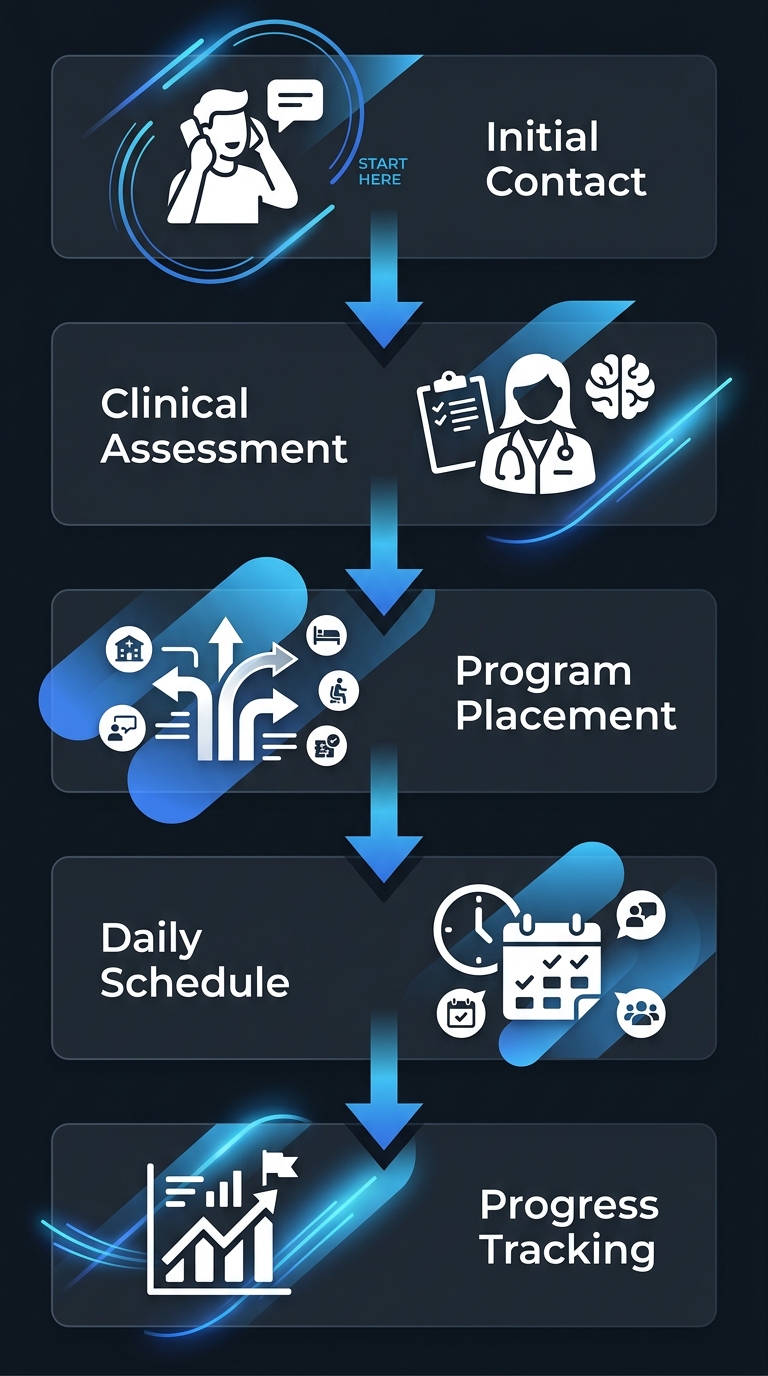
Five-step process for drug abuse treatment programs in Langhorne, Pennsylvania
Let's take a closer look at each stage.
The Assessment and Admission Process
As a leading Bucks County drug and alcohol rehab, we've designed our admissions experience to be welcoming and thorough. The process begins with your initial contact -- a phone call or online inquiry where a caring admissions specialist listens to your story and answers your immediate questions. Next comes a comprehensive clinical assessment. Our licensed clinicians conduct a full biopsychosocial evaluation, review your medical history, and screen for any co-occurring mental health concerns. This in-depth look allows us to see the whole you, not just the addiction. Based on the assessment findings, our team collaborates with you to recommend the right level of care: Partial Hospitalization Program (PHP), Intensive Outpatient Program (IOP), or General Outpatient Program (OP). Every recommendation is made with your personal needs and recovery goals in mind.
What to Expect in PHP and IOP Programs
Once placed, your days gain a supportive rhythm that blends therapy, skill-building, and wellness. In our PHP, you can expect around five hours of clinical programming each day. A typical schedule might include group therapy sessions that build coping strategies, individual therapy to work through personal challenges, and holistic sessions like yoga or meditation that nourish body and mind. Lunch is provided, creating a natural, communal break. Our IOP offers a flexible but focused structure: roughly three hours of therapy, available morning or evening, three to five days a week. You'll still participate in group and individual sessions, but with the freedom to live at home and meet work or family obligations. Throughout both levels, our team weaves in holistic and somatic therapies that help you reconnect with yourself and build resilience.
Duration and Progress Tracking in Dual Diagnosis Treatment
For those needing co-occurring mental health treatment in Langhorne, PA, dual diagnosis care addresses substance use and mental health challenges at the same time. Typically, PHP lasts two to four weeks and IOP continues for four to eight weeks, with extensions possible when they support your progress. Of course, every journey is unique -- individual timelines vary and are not guaranteed. Progress is tracked through regular check-ins with your primary therapist, periodic milestone reviews, and ongoing feedback from the clinical team. When needed, we adjust your care plan to keep you moving forward. Our programs are CARF-accredited, reflecting national standards for client-centered, outcome-driven care. Please keep in mind that individual results are not guaranteed and depend on many factors including your commitment to treatment. Knowing what to expect helps you take the next step confidently -- schedule a consult call to begin your journey towards happiness and freedom.
Choosing a Licensed Drug Abuse Treatment Center in Bucks County
Factors to Consider When Selecting a Treatment Center
Now that you understand the treatment options available, let's explore how to choose the right licensed center for your needs in Bucks County. When searching for a drug abuse treatment center in Langhorne PA, it's crucial to evaluate several key criteria. A reputable facility must hold valid state licensure from Pennsylvania's Department of Drug and Alcohol Programs and ideally national accreditation from CARF International. According to the Substance Abuse and Mental Health Services Administration (SAMHSA), you can use their treatment locator to verify a program's licensing and find nearby options. When evaluating any drug abuse treatment center in Langhorne PA, confirm it holds both state licensure and CARF accreditation. When considering an addiction treatment clinic Langhorne PA, ensure it offers evidence-based modalities such as Partial Hospitalization (PHP), Intensive Outpatient (IOP), and Outpatient (OP) programs. These evidence-based approaches, including cognitive behavioral therapy (CBT) and dialectical behavior therapy (DBT), form the foundation of effective care. At Rosewood Recovery, our team includes licensed therapists and medical staff who integrate holistic and somatic therapies into personalized plans. If you need care that addresses co-occurring mental health treatment in Langhorne PA, seek a center with robust dual-diagnosis capabilities. CARF accreditation further assures rigorous standards for patient safety and continuous quality improvement.
Understanding Insurance Coverage and Payment Options
Verifying your insurance benefits is a critical step before beginning treatment. Most health plans provide some level of coverage for substance use disorder services, but details can vary widely. We recommend you contact your insurance provider directly to understand your benefits for PHP, IOP, and OP programs. To assist you, here are key coverage points to discuss:
- Confirm that your plan covers PHP, IOP, and general outpatient levels of care.
- Ask about your deductible, copay, and coinsurance amounts for behavioral health services.
- If you're researching a Bucks County drug and alcohol rehab, verify the facility's network status to avoid surprise charges.
- Inquire about preauthorization requirements and any limits on the number of covered sessions.
Our team at Rosewood Recovery can provide a no-cost benefits verification to help you navigate these details and start your treatment with clarity.
Questions to Ask During Your Consultation Call
When speaking with a treatment center, asking the right questions can help you evaluate program quality. Consider these essential inquiries:
- What accreditations and state licenses do you hold? Seek CARF accreditation and Pennsylvania DDAP licensure.
- What is the staff-to-patient ratio? A lower ratio supports more individualized care.
- How do you address co-occurring mental health conditions? Integrated treatment is key for lasting recovery.
- What evidence-based therapies do you use? Look for CBT, DBT, and medication-assisted options.
- What is the typical treatment duration? Know the expected timeline to plan your commitment.
- How do you incorporate holistic or somatic therapies? These can enhance overall wellness.
During a consult call with Rosewood Recovery, our team will answer these questions and help you begin your journey towards happiness and freedom. Ready to begin your journey? Recovery Begins Here -- start your treatment by scheduling a consult call with our team. Please note that results may vary based on individual patient factors and circumstances.
Begin Your Journey Towards Happiness and Freedom
Begin your journey towards happiness and freedom. Located in Langhorne, PA, our team at Rosewood Recovery provides compassionate, evidence-based care to individuals throughout Bucks County. We offer a full continuum of treatment options, including Partial Hospitalization (PHP), Intensive Outpatient (IOP), and General Outpatient (OP) programs, meeting you exactly where you are. We begin with a confidential assessment and create individualized treatment plans that coordinate clinical care with family involvement and community resources to support long-term recovery and wellness and connect you with ongoing aftercare options.
As a leading drug abuse treatment center in Langhorne, PA, we integrate holistic and somatic therapy into every treatment plan. Our comprehensive co-occurring mental health treatment in Langhorne, PA ensures dual-diagnosis needs are addressed, while our Bucks County drug and alcohol rehab programs follow evidence-based practices endorsed by the Substance Abuse and Mental Health Services Administration (SAMHSA).
Take the next step and schedule a confidential consult call with our drug rehab langhorne pa team today. Your privacy is protected under HIPAA; learn more in our Privacy Policy. Results may vary based on individual patient factors and circumstances.


