


.png)

.png)
.png)
Table of Contents
Making Informed Choices for Drug Rehab in Bucks County
Making an informed choice about drug rehab in Bucks County means looking beyond names and websites. When exploring Bucks County addiction treatment options, using SAMHSA's free treatment locator helps you find verified providers. This resource connects you with licensed facilities that meet federal standards, so you can narrow your search before visiting.
The American Society of Addiction Medicine (ASAM) defines levels of care to match treatment intensity with individual needs. For those needing 24/7 support, inpatient drug rehab in Pennsylvania may be appropriate, while outpatient drug rehab in Bucks County offers flexibility. Verifying accreditation and evidence-based practices helps you choose a program tailored to your specific clinical situation. Understanding these levels of care is the first step; next we'll explore specific programs available.
1. Understand Your Treatment Options
Now that you've decided to seek help, understanding your options is a vital next step. When researching Drug Rehab In Bucks County Pa, learning about the formal levels of care can empower you to make a confident, informed choice. The American Society of Addiction Medicine (ASAM) defines a continuum of care, providing a widely recognized benchmark for treatment intensity. These levels, used to match care to an individual's specific needs, range from early intervention and general outpatient services to medically managed intensive inpatient care.
ASAM's criteria highlight three key levels relevant to many people taking their first step. Level 1 encompasses general outpatient programs for those with mild conditions and strong external support. Level 2 includes intensive outpatient (IOP) and partial hospitalization programs (PHP), which offer structured therapy blocks while you continue living at home. Level 3 covers residential and inpatient treatment, providing 24/7 supervised care in a live-in facility. Admission to residential or inpatient drug rehab in Pennsylvania depends on a multidimensional assessment, including the severity of the addiction and any co-occurring conditions.
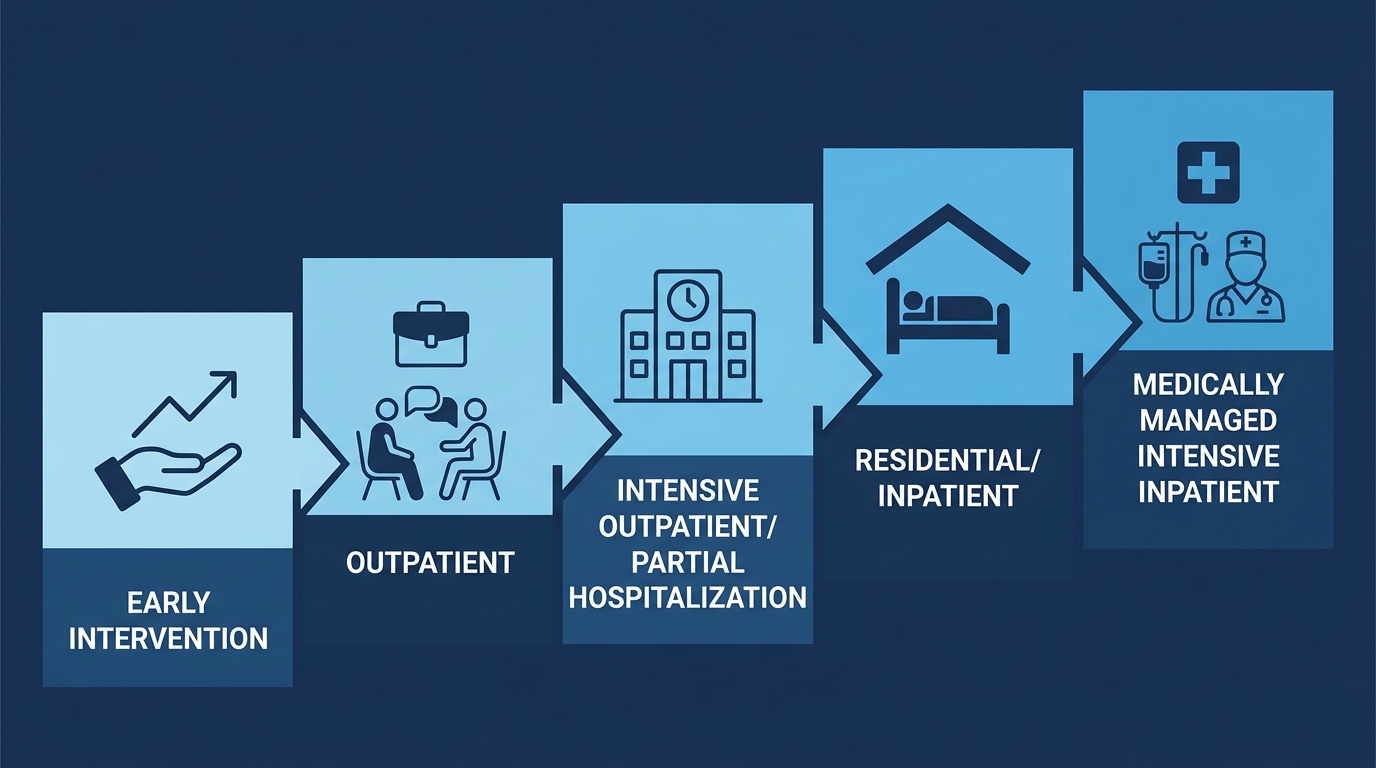
ASAM levels of care in addiction treatment continuum
Treatment is never a one-size-fits-all solution. The right level of care increases the likelihood of successful recovery. A clinical assessment, often available when you schedule a consult call, is the best way to determine whether an outpatient program in Bucks County or a higher level of care is the correct starting point for your journey towards happiness and freedom. At Rosewood Recovery, we provide outpatient, IOP, and PHP services with a holistic, somatic approach, allowing you to start your treatment while maintaining daily responsibilities.
This information is for educational purposes and not a substitute for professional medical advice. Treatment outcomes depend on patient engagement and individual circumstances.
2. Explore Inpatient Rehab Benefits
For anyone seeking drug rehab in Bucks County, including those looking into drug rehab Bristol PA, inpatient treatment provides an immersive, 24/7 supervised environment that addresses both physical and emotional needs. Away from everyday triggers, individuals follow a structured daily schedule combining individual therapy, group counseling, and holistic activities like yoga or meditation, allowing for deep, focused healing.
According to SAMHSA, round-the-clock professional support can significantly reduce the risks associated with early recovery. Inpatient drug rehab in Pennsylvania often includes medical detox as part of a full continuum of care, with stays typically lasting 30 to 90 days. The supportive community of peers and experienced clinicians helps reinforce coping skills, while somatic and holistic therapies work to address underlying trauma. Many individuals later transition to outpatient drug rehab in Bucks County to maintain their progress.
We believe recovery begins here, with a clear understanding of your options and the confidence that help is available when you're ready to take the next step.
3. Embrace Outpatient Rehab Flexibility
After higher-intensity care or if you need a program that bends around your daily life, outpatient rehab offers critical flexibility. If you're exploring drug rehab in Bucks County, that flexibility is often the deciding factor. At Rosewood Recovery, we provide both Intensive Outpatient (IOP) and General Outpatient (OP) programs, each tailored to different time commitments and clinical needs. Based on ASAM criteria outlined by SAMHSA, IOP typically involves 9-12 hours of structured therapy per week, while general outpatient averages 1-3 hours.
The comparison below breaks down the key differences:
| Feature | Intensive Outpatient (IOP) | General Outpatient (OP) |
|---|---|---|
| Hours per week | 9-12 hours (typically 3-5 sessions) | 1-3 hours (1-2 sessions) |
| Evening sessions available | Yes, many programs offer evening slots | Often daytime only, some offer evenings |
| Best for | Transitioning from inpatient or needing structured support while working/studying | Mild to moderate substance use; stable living environment |
| Clinical intensity | High - includes group therapy, individual sessions, psychoeducation | Low to moderate - often check-in sessions |
Understanding these differences helps you make an informed choice. Both paths lead to the same goal: long-term recovery. Our outpatient drug rehab in Bucks County offers two distinct routes--each equally valid for different needs. Whether you need higher structure or a lighter schedule, our tailored Outpatient Drug Therapy in Bucks County meets you where you are. Schedule a consult call to learn which program fits your life.
4. Address Co-Occurring Conditions
When someone struggles with both a substance use disorder and a mental health challenge like anxiety or depression, this is known as having co-occurring conditions or a dual diagnosis. Effective care means both issues are treated together, rather than separately, which is essential for finding lasting stability in any drug rehab in Bucks County.
The Substance Abuse and Mental Health Services Administration (SAMHSA) emphasizes that integrated treatment leads to better outcomes for individuals facing a dual diagnosis. Similarly, the American Society of Addiction Medicine (ASAM) provides clinical criteria that serve as the professional standard for assessing and managing these complex needs. These guidelines shape how we approach care at Rosewood Recovery, where we weave mental health support into every level of our programming.
Whether you enter our Partial Hospitalization Program, step down to an Intensive Outpatient Program, or connect with general outpatient services here in Pennsylvania, your personal treatment plan will address both addiction and any underlying mental health needs concurrently. Our holistic and somatic therapy methods are designed to treat the whole person, not just the symptoms. Individual results are not guaranteed and depend on many factors including commitment to treatment. Recovery Begins Here, with compassionate, integrated support tailored to you.
5. Navigate Insurance with Confidence
Navigating insurance doesn't have to be a barrier to finding drug rehab in Bucks County. Rosewood Recovery accepts most major insurance plans and offers free benefit verification.
- First, contact us with your insurance information. We then verify your benefits and explain your coverage.
- Finally, we discuss any out-of-pocket costs upfront. If you're looking for drug rehab Morrisville PA, we can confirm your insurance coverage quickly.
In-network providers have lower negotiated rates, which usually reduce your out-of-pocket costs. Out-of-network care often costs more, but we'll explain how your plan applies to our programs, including inpatient drug rehab in Pennsylvania and outpatient drug rehab in Bucks County.
Federal laws like the Mental Health Parity and Addiction Equity Act require that substance use disorder benefits be no more restrictive than medical/surgical benefits. The ACA also includes these services as essential health benefits, according to SAMHSA. Our admissions team walks you through your plan so you know exactly what's covered before you begin.
This information is for educational purposes, not professional medical advice. Schedule a consult call to verify your insurance and start your treatment with confidence.
6. Select the Ideal Rehab Program
Choosing the right drug rehab in Bucks County can feel overwhelming, but a few key factors can help you narrow down your options. According to the National Association of Addiction Treatment Providers (NAATP), accreditation ensures a program meets rigorous ethical and clinical standards. Look for a provider that offers a full continuum of care--partial hospitalization (PHP), intensive outpatient (IOP), and general outpatient (OP)--so you can step down as your progress allows. Personalized treatment approaches, like holistic and somatic therapy, can address the underlying causes of substance use and support lasting change. While inpatient drug rehab in Pennsylvania offers immersive support, our outpatient drug rehab in Bucks County combines structure with the flexibility of living at home. At Rosewood Recovery, we provide multiple evidence-based programs in Pennsylvania, including our partial hospitalization program and intensive outpatient program in Newtown, all grounded in a holistic, somatic philosophy. Our compassionate team tailors care to your unique needs, meeting you where you are on your recovery journey. Recovery Begins Here -- schedule a consult call to start your treatment and begin your journey towards happiness and freedom. Results may vary based on individual patient factors and circumstances.
7. Prepare for a Smooth Intake
Once you have chosen a program, preparing for intake ensures a smooth start. When you come for drug rehab in Bucks County, our intake team follows SAMHSA guidelines to conduct a thorough assessment. Whether you're entering outpatient drug rehab in Bucks County or a residential treatment program in Pennsylvania, the prep steps are similar.
- Bring essential documents: a valid photo ID, insurance card, medical history records, and a current medication list.
- Prepare questions about treatment: ask about therapy approaches, the daily schedule, and how family can be involved.
- Mentally prepare by setting realistic expectations and discussing any fears with our admissions team. Arrange time off work or family care in advance.
- During intake, you'll complete a medical and psychological evaluation. Being honest about your substance use history and any co-occurring conditions helps us create an effective, personalized treatment plan.
- Remember, your confidentiality is protected under HIPAA and SAMHSA guidelines, so you can share openly. While outcomes vary, we are dedicated to supporting your unique recovery path.
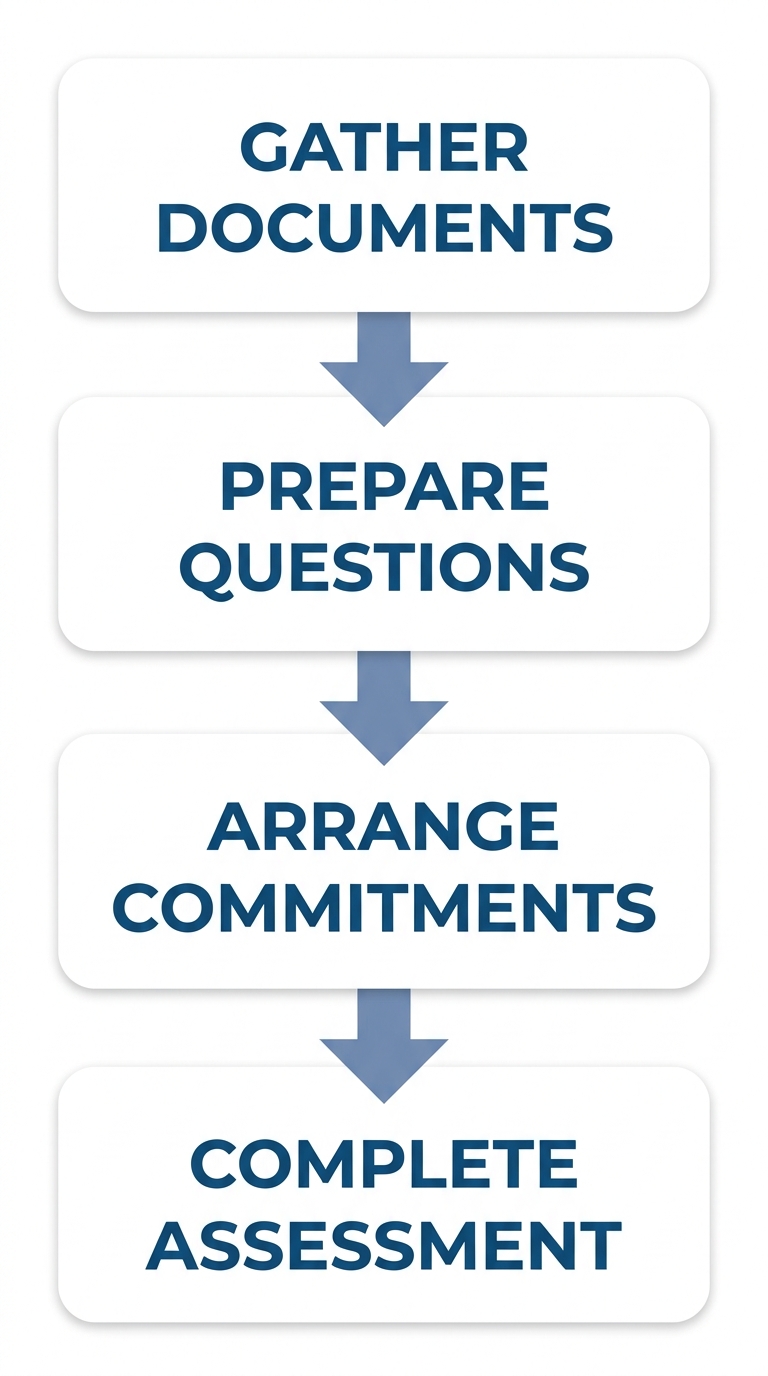
Four steps to prepare for smooth rehab intake
After intake, you will begin your personalized treatment journey.
8. Enhance Recovery with Holistic Care
Beyond clinical therapies, we believe in treating the whole person. According to the Substance Abuse and Mental Health Services Administration (SAMHSA), recovery is a holistic process of change that improves health and wellness, fosters self-directed lives, and helps individuals reach their full potential. For those seeking drug rehab in Bucks County, this holistic perspective is central to the care we provide at Rosewood Recovery.
We integrate holistic therapies into all our treatment programs, including PHP, IOP, and OP. Our inpatient drug rehab in Pennsylvania includes practices such as:
- Yoga
- Meditation and mindfulness
- Nutritional counseling
- Somatic therapy
These modalities address physical, emotional, and spiritual health, complementing our evidence-based treatments rather than replacing them. Clients in our outpatient drug rehab in Bucks County also benefit from these holistic offerings tailored to their level of care.
By nurturing the mind, body, and spirit, holistic care empowers you to begin your journey towards happiness and freedom. Please note that results may vary based on individual patient factors and circumstances.
Start Your Recovery Journey in Bucks County
Recovery Begins Here. For drug rehab Bucks County residents can trust, Rosewood Recovery provides compassionate care and evidence-based treatment right here in Newtown and surrounding areas.
We offer partial hospitalization (PHP), intensive outpatient (IOP), and general outpatient programs tailored to your needs. Our inpatient drug rehab in Pennsylvania gives you structured support, while our outpatient drug rehab in Bucks County offers flexibility. Begin your journey towards happiness and freedom at our alcohol rehab newtown location, where personalized care is our priority.
Call now to schedule a consult call with our dedicated team. For immediate support, contact the SAMHSA National Helpline at 1-800-662-HELP -- free, confidential, and available 24/7. Start your treatment and reclaim your life. Results may vary based on individual factors; please consult a healthcare provider. Your privacy is protected under HIPAA.


