


.png)

.png)
.png)
Table of Contents
Mental Health Therapy Options in Newtown, Pennsylvania
Rosewood Recovery provides compassionate and effective mental health therapy in Newtown, offering a range of evidence-based options designed to support your healing journey. As a trusted provider of comprehensive Mental Health Services Newtown Pa, we tailor each treatment plan to meet your unique needs, whether you're addressing anxiety, depression, trauma, or co-occurring substance use.
Our therapy programs include one-on-one individual counseling, group therapy where you connect with peers, and holistic approaches like mindfulness, yoga, and nutritional guidance. We also incorporate somatic therapy, which uses body-based techniques to help release stored tension and promote emotional resilience. These services are available across multiple levels of care, including our Partial Hospitalization Program (PHP), Intensive Outpatient Program (IOP), and General Outpatient Program (OP).
We understand that mental health challenges often co-occur with substance use disorders, which is why we offer dual diagnosis therapy in Newtown to address both conditions simultaneously. Our co-occurring disorder treatment in Newtown integrates trauma-informed care and personalized strategies to support whole-person recovery.
Recovery Begins Here. If you're ready to begin your journey towards happiness and freedom, we invite you to schedule a consult call today and start your treatment with a team that truly cares about your wellbeing.
What Is Mental Health Therapy for Substance Use and Co-Occurring Disorders?
Defining Dual Diagnosis and Co-Occurring Disorders
For individuals seeking mental health therapy in Newtown, understanding the link between substance use and mental health is a vital first step. A dual diagnosis occurs when a person struggles with a substance use disorder alongside a mental health condition, such as depression, anxiety, or PTSD. The term co-occurring disorders is often used interchangeably and can refer to any combination of mental health and substance use challenges. At our center in Newtown, Pennsylvania, we see how these conditions fuel each other. Rosewood Recovery's Mental Health Treatment Newtown PA program is designed to treat both simultaneously, recognizing that treating only the addiction without the underlying mental health issue--or vice versa--can result in incomplete healing. Choosing dual diagnosis therapy in Newtown means embracing an approach that acknowledges the full scope of your needs, laying a stronger foundation for lasting recovery. This understanding paves the way for integrated treatment, which research confirms leads to more sustainable outcomes.
The interconnected nature of dual diagnosis is illustrated in the infographic below, which depicts how integrated care addresses both conditions simultaneously.
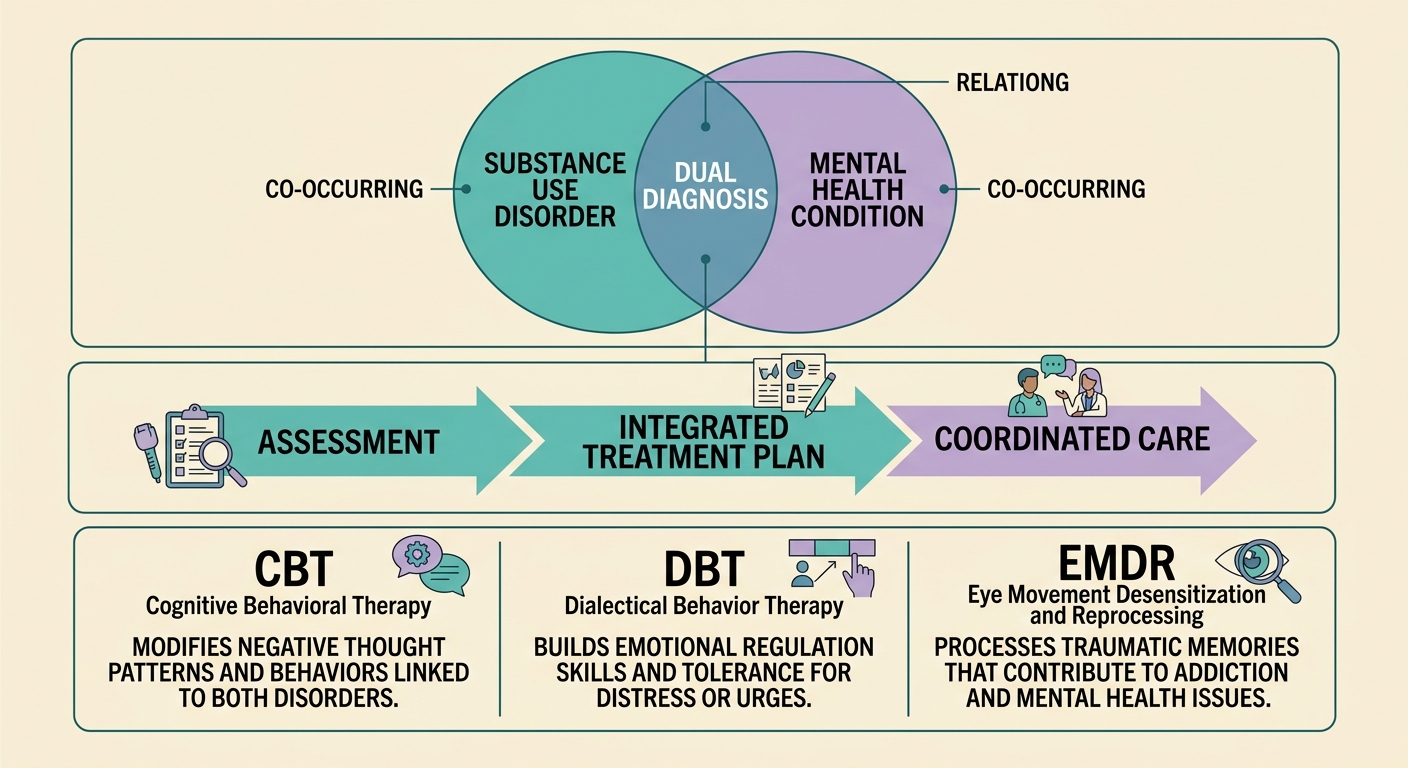
Dual diagnosis infographic with integrated treatment overview
Building on this foundation, we can now examine why treating both conditions together matters so much.
The Importance of Integrated Treatment
When someone faces both addiction and a mental health condition, treating each problem in isolation often falls short. According to the Substance Abuse and Mental Health Services Administration (SAMHSA), integrated treatment--where both disorders are addressed at the same time--significantly reduces relapse rates and improves long-term recovery outcomes. This approach recognizes that substance use and mental health symptoms can drive each other, so tackling them together creates a more complete healing path. At Rosewood Recovery, our co-occurring disorder treatment in Newtown is grounded in this integrated philosophy. We design care plans that weave together addiction therapy and mental health support, because ignoring one condition can undermine progress in the other. While individual results vary based on personal circumstances and engagement, SAMHSA's research underscores that coordinated care offers the best chance for sustained wellness. This integrated philosophy opens the door to a variety of evidence-based therapies that target both conditions effectively.
Types of Evidence-Based Therapies Used
The mental health therapy we offer in Newtown draws on proven methods that address addiction and mental health together. Cognitive Behavioral Therapy (CBT) helps individuals identify and reshape negative thought patterns that fuel substance use and emotional distress. Dialectical Behavior Therapy (DBT) builds skills for emotional regulation, distress tolerance, and interpersonal effectiveness, essential for maintaining sobriety and stability. For those whose addiction is rooted in trauma, Eye Movement Desensitization and Reprocessing (EMDR) provides a structured way to process painful memories and reduce their impact on current behavior. At Rosewood Recovery, we integrate these evidence-based practices with holistic and somatic techniques, creating a mind-body approach that supports deeper healing. Our Partial Hospitalization (PHP), Intensive Outpatient (IOP), and General Outpatient (OP) programs are tailored to meet you where you are. While no therapy can guarantee a specific outcome for every individual, these methods are widely endorsed and have helped many people build a foundation for recovery. This integrated, whole-person approach sets the stage for sustainable change. We invite you to explore how these therapies can support your journey toward wellness in Newtown, Pennsylvania.
How Mental Health Therapy Supports Recovery from Addiction and Co-Occurring Conditions
Beyond medical detox and counseling, mental health therapy forms the core of lasting recovery. At Rosewood Recovery, our mental health therapy Newtown program integrates evidence-based practices with holistic care to address addiction and co-occurring conditions. Recovery Begins Here, and we are committed to walking alongside you every step of the way.
Holistic Healing for Mind and Body
True healing embraces the whole person, not just symptoms. Our holistic approach at Rosewood Recovery incorporates somatic practices like yoga, breathwork, and meditation directly into treatment plans. These modalities help regulate the nervous system, lower cortisol, and build the emotional resilience needed to navigate recovery challenges. By learning to anchor themselves in the present moment, clients reduce stress and develop healthier coping strategies that support long-term sobriety. This mind-body connection lays a powerful foundation for deeper therapeutic work and sustained well-being. These practices also foster interoception and trauma-informed somatic skills that aid emotional processing.
Addressing Co-Occurring Conditions Effectively
When depression, anxiety, and substance use coexist, they reinforce each other in a destructive cycle. Treating them simultaneously under one integrated plan is essential for meaningful progress. Our dual diagnosis therapy in Newtown ensures that both mental health and addiction receive equal attention, preventing the gaps that often lead to relapse. Clinical consensus overwhelmingly supports this approach, showing that integrated care consistently produces higher patient satisfaction and fewer setbacks than sequential treatment. By unifying therapy goals, we help clients untangle the root causes of their struggles and build a stable, hopeful future. Our interdisciplinary teams coordinate therapy collaboratively with medication management and family support when appropriate.
Long-Term Recovery Outcomes with Integrated Care
Sustained wellness depends on a continuum of support that adapts as needs change. Our integrated care pathways--Partial Hospitalization Program (PHP), Intensive Outpatient Program (IOP), and General Outpatient Program (OP)--create a graduated, structured environment where clients can gradually reclaim independence while receiving consistent therapeutic guidance. Many clients experience improved mental health stability and stronger sobriety rates when they move through these levels, each designed to reinforce the gains of the previous phase. Aftercare options like alumni groups and local community resources help sustain recovery gains. This step-down framework, grounded in co-occurring disorder treatment in Newtown, allows individuals to practice new skills in real-world settings while maintaining access to professional care. This integrated foundation helps our clients not only achieve sobriety but thrive--setting the stage for a lifetime of wellness. If you're ready to start your treatment, we invite you to schedule a consult call with our team.
What to Expect During Mental Health Therapy at Rosewood Recovery
Now that you have a clearer picture of our approach to mental health care, let's walk through what you can expect when you choose the mental health therapy Newtown relies on at Rosewood Recovery. From your very first call to our center, our team is dedicated to making this process as welcoming and transparent as possible.
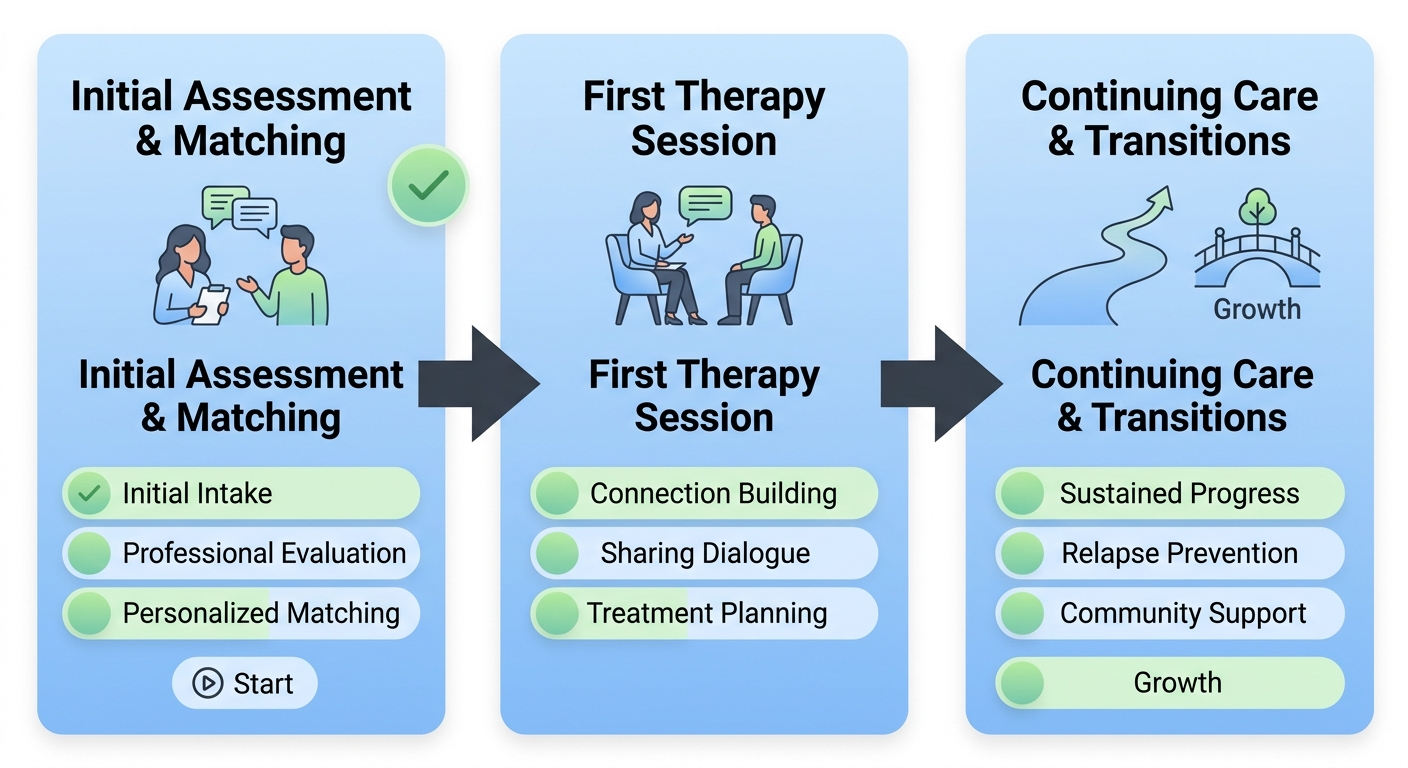
Mental health therapy journey from assessment to continuing care
Initial Assessment and Program Matching
Your journey begins with a comprehensive clinical evaluation, typically lasting 60 to 90 minutes and conducted by a licensed clinician. We review your medical history, screen for mental health concerns, and discuss any substance use patterns to create a complete picture of your needs. Based on this intake, we match you with the right level of care: our Partial Hospitalization Program (PHP) provides structured full-day support; our Intensive Outpatient Program (IOP) offers several group and individual sessions per week; and our General Outpatient Program (OP) allows for flexible scheduling as you integrate recovery into daily life. Holistic and somatic therapies are built into every level from day one.
Our evaluation also screens for mood disorders like depression. For those who need specialized care, we also offer dedicated tracks for depression treatment Newtown PA can trust. If you are facing both substance use and a mental health challenge, our dual diagnosis therapy Newtown residents have found effective is woven into your personalized plan, ensuring that all aspects of your well-being are addressed.
Your First Therapy Session
Your first mental health therapy Newtown session will focus on building a strong foundation of trust and understanding. We understand that starting therapy can feel intimidating, so we take the time to answer every question and help you settle in. We begin with standard paperwork--intake forms, consent for treatment, insurance verification, and a HIPAA privacy notice--so you can feel informed and secure. Then you will meet your therapist. This initial meeting is all about rapport; your clinician will ask about your personal history, your current challenges, and what you hope to achieve through treatment.
Together, you will co-create a treatment plan that outlines short-term goals and the strategies you'll use to meet them. This plan is a living document; we review it regularly and adjust it as you grow. Our goal is to make sure you feel heard, respected, and truly a partner in your own healing.
Continuing Care and Transition
Recovery is not a single event but a continuum. At Rosewood Recovery, you begin at the level of intensity that matches your needs--whether that's full-day PHP, several-day IOP, or weekly OP--and as you gain stability, we help you step down to a less intensive setting. This gradual transition reinforces your coping skills and builds confidence so you can maintain progress in everyday life. Holistic and somatic therapies remain integrated throughout every stage of care, supporting your mind, body, and spirit.
Our continuum also ensures that any co-occurring disorder treatment Newtown offers continues seamlessly. If your needs shift, we adjust your plan without interruption. We celebrate every step forward, but please remember that individual results are not guaranteed and depend on many factors including commitment to treatment. As you gain stability, we'll work with you to adjust your care--ensuring your journey toward happiness and freedom continues without interruption.
If you're ready to start your treatment, call us today to schedule a consult call and begin your journey towards happiness and freedom. Recovery Begins Here.
Maximizing the Benefits of Mental Health Therapy in Newtown, Pennsylvania
Understanding the value of mental health therapy in Newtown is an excellent first step. To truly benefit, you need practical strategies for choosing the right therapist, navigating insurance, and staying engaged in treatment. Let's explore how to maximize your therapeutic journey.
Choosing the Right Therapist for Your Needs
Finding a therapist who fits your needs is essential for effective mental health therapy. We recommend verifying that any provider holds active credentials such as LCSW, LPC, LMFT, or PsyD and is licensed in Pennsylvania. Therapists who specialize in dual diagnosis therapy in Newtown or co-occurring disorder treatment in Newtown are better equipped to address both mental health and substance use concerns simultaneously. A strong therapeutic rapport built on trust and open communication is the single most important factor for successful therapy outcomes. Take time to find a therapist whose approach aligns with your personal values and recovery goals. Before committing, schedule a brief 15-minute phone consultation to gauge therapeutic rapport and communication style. When you're ready to move forward, you can search for mental health treatment near me that fits your needs. Don't hesitate to ask about their experience with co-occurring condition treatment in Newtown during the consultation. A therapist who specializes in co-occurring conditions can help you build a strong foundation for recovery.
Navigating Insurance Coverage for Mental Health Therapy
Using your insurance benefits correctly can make therapy more accessible. Start by reviewing your plan's Summary of Benefits and Coverage (SBC) for outpatient mental health services. Pay attention to copays, deductibles, and any session limits. Under federal law enforced by the U.S. Department of Labor, the Mental Health Parity and Addiction Equity Act (MHPAEA) ensures your plan cannot impose stricter limits on mental health benefits than it does on medical or surgical coverage. To confirm your coverage, call the member services number on your insurance card and ask: "Do I have coverage for outpatient mental health therapy?" "Are there any pre-authorization requirements?" and "What are my in-network and out-of-network benefits?" If your plan denies a claim, remember that you have the right to appeal and the Department of Labor offers resources to help you enforce parity. Taking these steps before your first appointment prevents surprises and keeps the focus on healing.
Engaging in the Therapeutic Process
Active participation is the key to getting the most out of mental health therapy in Newtown. Be completely honest with your therapist about your substance use history, emotional challenges, and any resistance you feel--openness accelerates progress. Consistently complete therapeutic homework, such as journaling, practicing coping skills, or attending support groups; these reinforce what you learn in session. View therapy as a collaborative partnership: ask questions, share feedback on what's working or not, and update your treatment goals regularly with your treatment team. We encourage you to treat therapy like any other important appointment--show up consistently and be present. If something isn't working, let your therapist know so you can adjust the approach together. This partnership empowers you to take ownership of your recovery and can help you begin your journey towards happiness and freedom.
With a therapist and insurance plan ready, you're set to start your treatment and begin your journey. Schedule a consult call with our team to learn more. Recovery Begins Here.
Take the Next Step Toward Mental Wellness
Recovery Begins Here. If you've been searching for mental health therapy in Newtown, you've found a place of hope and healing. Our compassionate team is ready to walk alongside you. We blend evidence-based practices with holistic and somatic therapies to support healing of mind, body, and spirit, and we offer personalized care that meets you where you are.
Our no-obligation consultation makes it easy to take the first step. Simply reach out to schedule a call where a dedicated team member will listen to your needs and discuss options. We offer a full continuum of care, including partial hospitalization (PHP), intensive outpatient (IOP), and general outpatient programs, each designed to meet you where you are in your recovery journey. Whether you're seeking dual diagnosis therapy in Newtown or co-occurring disorder treatment in Newtown, our integrated approach addresses both mental health and substance use challenges. Our holistic and somatic therapies address the root causes of distress, complementing our clinical offerings. We invite you to discover mental health treatment near me that truly fits your needs.
Recovery is possible, and we are here to support you every step of the way. Begin your journey towards happiness and freedom by contacting us today. Schedule a consult call to learn more about our programs and discuss what may be right for you. Individual results are not guaranteed and depend on many factors including commitment to treatment.


