

Table of Contents
The Three C's of Sobriety: Cause, Control, and Cure
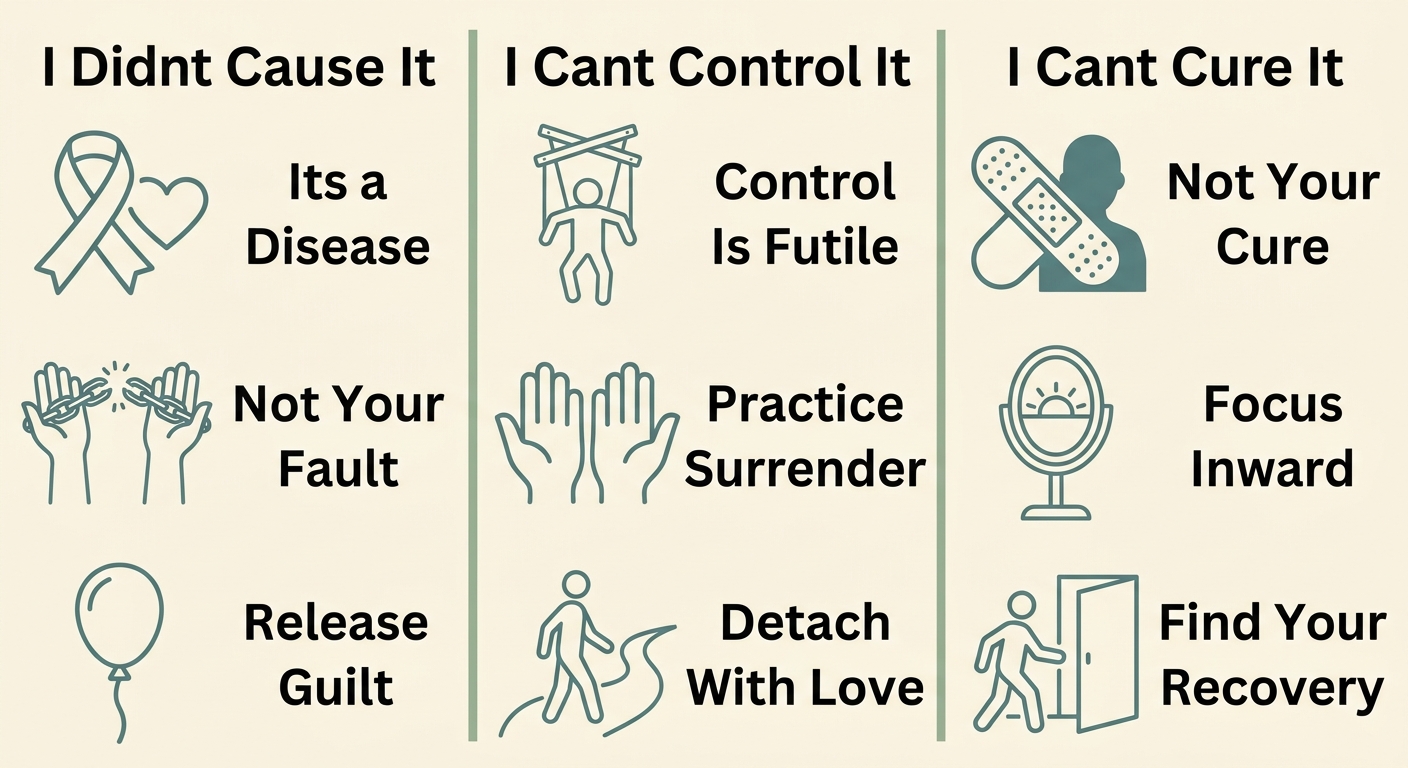
If you’ve ever wondered what the three C’s of sobriety are, the answer is simple: we didn’t cause it, we can’t control it, and we can’t cure it. These principles offer loved ones a way to release the heavy weight of guilt and the urge to fix or rescue someone struggling with alcohol use disorder. Rooted in Al-Anon’s peer support model, the Three C’s reframe helplessness into clarity and compassion, helping us understand that alcoholism is a recognized disease, not a moral failing.
Al-Anon has developed some guidelines that can assist family members and friends to take steps toward healthier boundaries as well as inner peace. As we review each of these three “C’s” in sequence, we will find that they can help us let go of misplaced responsibility and focus instead on our own well-being, even if the road is unclear. This program encourages us to recognize enablers like making excuses or protecting a drinker from their consequences. We then take action to remove ourselves from any form of enabling behavior, which allows us and the drinker to begin our healing journey.
Understanding the Core Meaning of the Three C's
What are the three “C”s of sobriety? The answers are easy enough - I didn’t cause it, I can’t control it, and I can’t cure it. Those who struggle in this way find hope and support through the Al-Anon approach to helping family and friends cope when their loved one suffers from alcohol dependency. Once they embrace those three phrases, they are freed from the weight of feeling guilty, confused and fearful about their feelings towards the alcoholic member of their life.
I didn’t cause it
Alcoholism is recognized as a disease by the American Medical Association, which means family members are not to blame for a loved one’s drinking. This fact is central to the first C: “I Didn’t Cause It.” Family members may well believe they have caused or contributed to the alcoholism in some way through something said or done. However, the illness has causes outside of family influence, such as genetics, brain chemistry, and environment. Acknowledging this truth shifts the focus from self-blame to understanding that the drinker’s choices belong to them alone.
I can’t control it
When family members are unable to control it (the second C), the limit for how much they can influence things has been reached. No amount of pleading, bargaining, or enabling changes the course of the disease. Attempts to control a loved one’s drinking—whether by hiding bottles, making excuses, or paying their debts—only prolong the chaos and delay their potential readiness for help. It encourages family members to step back and focus on their own well-being instead of trying to manage someone else’s behavior. It’s a difficult but necessary step toward healthier boundaries and personal peace.
I can’t cure it
The third C, I can’t cure it, reminds us that no one can force another person to stop drinking. Recovery is a deeply personal journey that each individual must undertake for themselves. Family members often wish they could “fix” the situation, but the reality is that healing begins when they accept their own powerlessness over the disease. This acceptance frees them to concentrate on their own growth, setting the stage for sustainable change in their lives and relationships.
The Three C’s aren’t simply about removing that burden of fear and guilt. They can actually help family members grow and recover as well. When family members take their attention off what the drinker is doing and pay more attention to their own needs, they’re free to build a life in a way that brings them healing through clarity and compassion. That’s how this works: this shift is the first step toward healing not only for themselves but for the whole family.
How Cause, Control, and Cure Shape Family Healing
When a loved one struggles with substance use disorder, families often ask what the three C’s of sobriety are to find a way forward. The Three C’s—I didn’t cause it, I can’t control it, and I can’t cure it—offer a simple yet powerful framework to shift perspective from blame to healing. These principles free families from guilt, chaos, and the exhausting cycle of trying to fix what isn’t theirs to fix.
Releasing Guilt: "I Didn’t Cause It"
Alcoholism is recognized by the American Medical Association as a disease, not a moral failing. Unfortunately, many family members assume that they’re responsible for what happened, and feel like they failed in some way because maybe things would’ve been different if they’d acted differently when confronted with the addict’s behavior. That misplaced guilt weighs heavily, coloring every interaction with frustration and shame. The first “C”, “I didn’t do it”, isn’t a statement at all, but rather an invitation to let go of this illusion of personal power.
It in no way excused any bad behavior or irresponsibility exhibited by them. In fact, the power was taken away from her and put squarely back upon them once again for their own recovery journey. One Al-Anon member stated she learned she did not cause her daughter to be addicted to drugs, allowing her to move beyond the “whys” about why her daughter acted as she did. The ability to forgive doesn’t eliminate the hurt caused by a loved one’s actions, but allows some room to feel compassion for both our loved one who has a problem and ourselves as well.
Letting Go of Control Without Giving Up on Your Loved One
The more we try to hold the tide, the more it spills over. Trying to monitor our loved ones who have addictions, making excuse after excuse, or doing what they should be doing for themselves just adds more pain to the already difficult journey. As Marilea C. Rabasa says when writing about her daughter's relapse cycle, all these things just make everything worse.
Surrender, though often understood as the opposite of active participation, means that we actually take control over our lives again. We set healthy boundaries, detach ourselves from outcomes, and separate our identities from the illnesses of those we love. In support groups, they explain that when we’re detached from someone else, we’re not abandoning them; rather, we are freeing both people to heal separately and at their own pace. That doesn’t mean we should give up all hope, but it does mean we shouldn’t allow others’ recovery to become our mission.
Versions of the Three C's Across Recovery Programs
Different recovery traditions have adapted the Three C’s to fit the needs of their communities, reflecting how universal these principles are in practice. Whether framed as a daily mantra or a lifelong practice, the core message remains: families are not responsible for the addiction, nor can they fix it.
| Version | The Three C's | Who It Serves | Primary Purpose |
|---|---|---|---|
| Traditional Al-Anon | I didn’t cause it, I can’t control it, I can’t cure it | Family members and friends of those with alcoholism | Releasing guilt, control, and cure-taking to focus on personal recovery |
| Personal daily adaptation (Mildred H.) | Do not complain, compare, or criticize | Members practicing daily serenity | Cultivating gratitude and serenity one day at a time |
| Fourth C (Anna’s extension) | Cease enabling and rescuing behaviors | Family members caught in the addiction cycle | Breaking patterns that contribute to the addiction |
Each version offers a different lens, but they share a common thread: healing begins when families stop trying to carry the weight of someone else’s recovery. For those asking what the three C’s of sobriety are, the answer isn’t just in the words—it’s in how they reshape daily choices and relationships.
Which version you choose often depends on what stage your own journey is at. If you're feeling overwhelmed with guilt, the more traditional Al-Anon may offer the clarity you need. If daily interactions feel fraught with criticism or comparison, Mildred H.'s adaptation could provide a gentle guide. And if enabling has become a habit, Anna's fourth C might be the nudge to step back and reclaim your own life. The right version isn’t about perfection; it’s about progress and finding the tools that meet you where you are.
The Three C’s aren’t a magic solution, but they are a starting point—a way to reclaim peace of mind while staying connected to a loved one in recovery.
Applying the Three C's in Daily Life and Family Support
People looking what are the three c's of sobriety, sometimes wonder what they should be doing with them from day-to-day. These guidelines, 'I didn't cause it, I can't control it, I can't cure it,' are more than mere lessons in understanding. Rather, they help us to shape new behaviors when interacting with members of their family. Doing away with enabling, which constitutes the fourth C, makes these rules active tasks aimed at protecting the family member while also preserving our own health.
Supporting a Loved One Without Enabling
This does not mean taking over someone else’s recovery but being there with respect to his/her choice. Being detached is not being unkind. It implies that we cannot control how they go through a disease and thus, should let the natural results set in. When we stop rescuing—covering for missed work, paying legal fees, or making excuses—we allow natural consequences to unfold. This isn’t about punishing them but letting them grow. Additionally, we begin living life again by fixing our own problems, setting boundaries, and removing ourselves from the disease. The transition from feeling guilty to feeling kind towards ourselves starts at the moment we realize that what happens to their loved ones does not fall under our control.
Building Healthy Coping Habits Through Peer Support
While group therapy provides many benefits for family members in recovery, peer fellowships such as these provide much more than simply a meeting time. Across the country, there are more than 5,000 individual meetings available. These meetings allow parents to talk about what they’re going through, learn from those who’ve been there before and help each other to understand the concept of powerlessness over addiction. When appropriate, professional counseling is also beneficial to enhance parents' recovery efforts and provide tools necessary to lead their own lives. Parents can participate in programs offered at the Rosewood Recovery such as the Partial Hospitalization Program (PHP), Intensive Outpatient Program (IOP) or the General Outpatient Program. Both options present parents with different types of recovery and decision making strategies. Regardless of whether they get involved through peer fellowship or professional guidance, parents’ main purpose in participating should be to find ways to maintain balance in their own lives.
Recognizing Enabling Versus Healthy Support
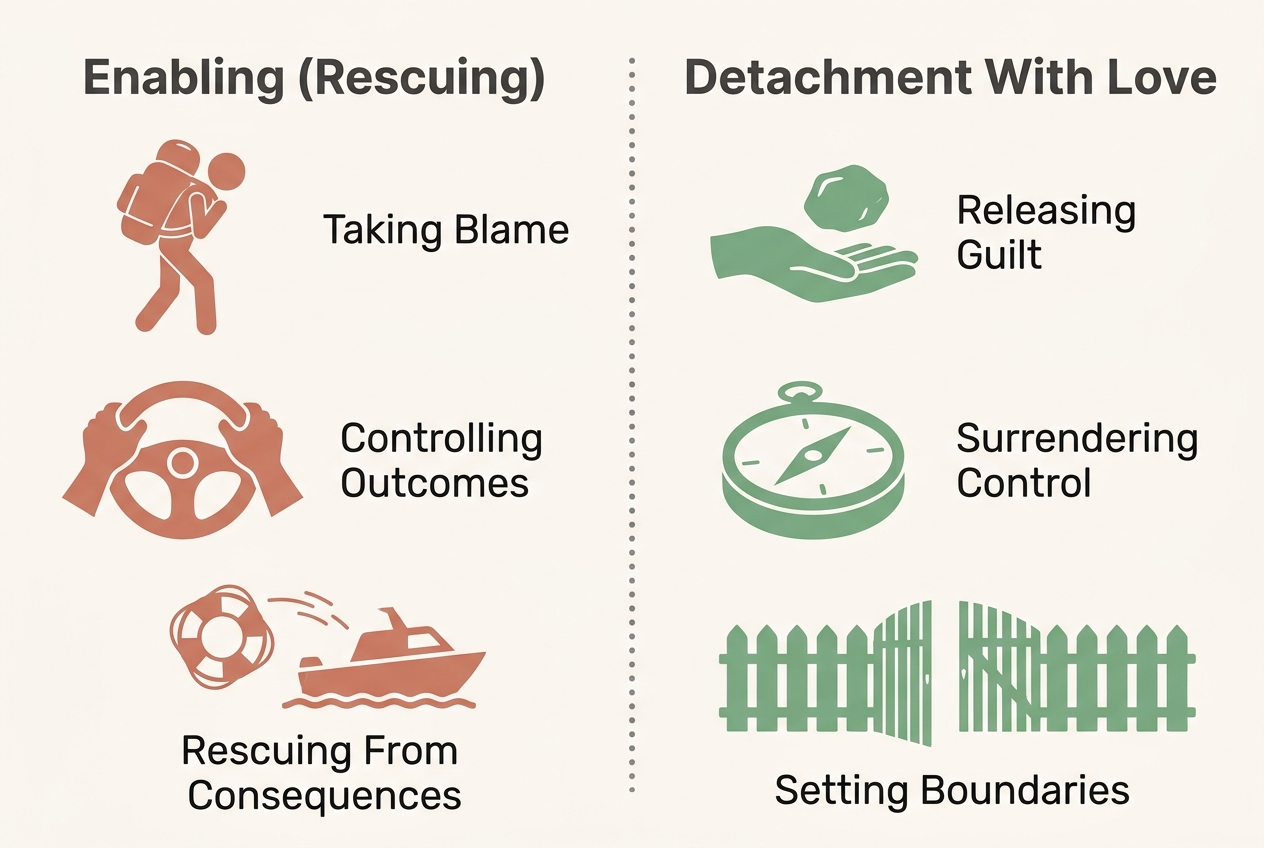
Clear thinking starts here. Here are some examples of ways that we may help rather than rescue other people, taken from family recovery literature. Try using this chart as a way to spot patterns in what you say and do.
| Behavior Pattern | Enabling (Rescuing) | Detachment With Love |
|---|---|---|
| Taking responsibility for a loved one’s sobriety | Making excuses for missed obligations | Releasing guilt and blame |
| Attempting to control outcomes | Shielding from natural consequences | Acknowledging limitations |
| Rescuing from crises | Paying debts or legal fees | Setting boundaries while offering emotional support |
Shifting from the left column to the right isn’t a one-time decision; it’s an ongoing practice. Professional guidance can help families make this change safely, especially when peer support alone feels insufficient. If you’re ready to explore additional support, our team is here to help you start your treatment conversation.
Beyond the Three C's: Boundaries, Relapse Prevention, and Self-Compassion
People asking what the three C's of sobriety are will learn that this information is really just a start for them. Learning these things means accepting that we did not create it, nor could we stop it, or cure it and therefore the thing left is to see what we can do something about. Set boundaries, relapse preventions and compassion. It isn't about what - but rather how you apply those principles into your daily habits to be able to move from overwhelmed to serene.
The first step in internalizing The Three C’s is to release any guilt or shame associated with being a family member. We begin to understand substance use disorder as a disease, not a character defect or moral failure, allowing us to let go of any blame and work towards setting proper boundaries for ourselves. Rather than attempting to “fix” another person’s life decisions, we can take steps to improve our own lives and protect them. Doing this, rather than others’, results in strengthened relationships and peace of mind.
One way Mildred H.'s personal adaptation is helpful in that it eliminates a second set of the three C's: Complaint, comparison, criticism. She does not complain about herself or anyone else, nor does she compare herself or anyone else with other people. It helps keep her focused on what she can do instead of what she cannot change. The fellowship's philosophy of "one day at a time" and living "serenely," is reflected in her statement that when we accept what we can't change and trust that things will work out eventually, then we have found serenity.
The foundation of relapse prevention for family and friends includes having the same outlook as the addict. By accepting that the individual in trouble has to follow his/her own way back, we don't pursue results nor try to push him/herself through. If there's another relapse, we respond with compassion rather than frustration, remembering that recovery isn't linear; our role isn't to control the journey—it's to walk beside it with steady support.
When we speak to ourselves like we might if we were speaking kindly to a friend in their shoes, self-compassion increases. Rather than beating up on ourselves for all our failures, we try to be kind and understanding toward ourselves. We realize that we're doing our best given what a hard job it is being an addict. The boundaries, forgiveness, and kindness we extend to ourselves create the base from which we can start to heal - this time not only the addict, but everybody who has been affected.
Common Questions About the Three C's of Sobriety
It’s true even when the alcoholic has treatment tools such as boundaries, and relapse prevention that these questions arise: what the three C's of sobriety are. As Al-Anon teaches, the message we get from the disease of alcoholism is that we didn’t create this problem, we can’t fix it or change how our loved ones behave or drink.
Is alcoholism considered a disease? Yes. According to the American Medical Association it’s classified that way. We should be more concerned about our personal health issues.
Some folks say that we have a fourth “C” which stands for ceasing our behavior that enables the addict’s using habit.
The fellowship does NOT provide professional counselling. It is a mutual-support fellowship, not intended to take the place of professional care.
Another principle here is anonymity - in other words, that everyone can be open about their ideas without having to worry about revealing who they actually are.
Begin Your Journey Towards Happiness and Freedom
The first of the three C's of recovery is you did not cause it. The second is that you can't control it. The third part is that you cannot cure it. Letting go of these beliefs frees family members from their feelings of self-blame and the energy-robbing effort to correct problems they really could not solve. Allowing oneself to let go does NOT equal accepting the addict as he /she really is but rather enabling recovery of self in order to take care of ourselves. There is help both by participating in groups such as these and receiving professional assistance if required in PA. Please contact our staff at Rosewood Recovery if we may be able to assist with your family.
Find Compassionate Family Support Today
Understanding the Three C's of sobriety, you didn't cause it, you can't control it, and you can't cure it, can be the first step toward releasing guilt and reclaiming your own wellbeing. As we've explored, accepting these truths opens the door to healthier boundaries, self-compassion, and a renewed focus on what you can actually change. But you don't have to navigate this journey alone. Alongside peer support groups, professional family-focused care can help you and your loved one move forward with confidence. Rosewood Recovery in Newtown, Pennsylvania offers outpatient programs and a dedicated team ready to listen. Reach out when you're ready to start that conversation. Support is closer than you might think.
Find Compassionate Family Support Today