


.png)

.png)
.png)
Table of Contents
Recognizing the Signs of Addiction
Once you understand how addiction develops, the next step is knowing what to look for. Recognizing the signs of addiction early can help individuals seek support before challenges become more severe. These red flags often appear as behavioral changes, physical symptoms, and emotional shifts.
Common behavioral signs include:
- Neglecting responsibilities at work, school, or home
- Withdrawing from social activities and relationships
- Engaging in secretive or risky behaviors to hide substance use
Alongside these behavioral changes, physical withdrawal symptoms can emerge. For example, alcohol use may lead to tremors or shakes, while opioid withdrawal often brings flu-like symptoms, according to NIAAA research. Emotional signs like mood swings or irritability may also appear, though these alone do not confirm addiction.
If these signs of addiction are present, professional evaluation is essential. Keep in mind that only a licensed professional can diagnose a substance use disorder; recognizing these red flags is a starting point for seeking help. For nationwide support, explore the SAMHSA substance use resources or contact our team for a confidential assessment. Recognizing these signs is the first step – we can help you begin your journey towards happiness and freedom. Our team in Pennsylvania provides comprehensive addiction treatment, from PHP to outpatient care, tailored to your needs. Recovery Begins Here – reach out to our team today to schedule a consult call. If you or a loved one is struggling, we’re here to help you take that first step.
This information is for educational purposes and not a substitute for professional medical advice. Results may vary based on individual patient factors and circumstances.
Behavioral Changes and Physical Signs of Addiction
Recognizing the signs of addiction is the first step toward getting help for ourselves or someone we care about. Substance use disorders rarely appear all at once—they often begin with subtle behavioral and physical changes that can gradually escalate into more severe, life-disrupting patterns. In this section, we explore how these indicators evolve from early, manageable signals to advanced symptoms that demand immediate professional attention.
Comparing Early vs. Advanced Addiction Signs
The table below illustrates how addiction signs can progress across behavioral, physical, social, and psychological domains. Each category includes examples of early warning signs alongside more disruptive advanced symptoms.
| Category | Early Warning Signs | Advanced Symptoms |
|---|---|---|
| Behavioral | Secrecy, neglecting duties | Illegal acts, job loss |
| Physical | Fatigue, sleep changes | Tremors, jaundice, withdrawal |
These signs are not exhaustive, and every person’s experience with addiction is unique. Treatment outcomes depend on patient engagement and individual circumstances.
When we look at early signs of addiction, behavioral changes such as secrecy about activities and neglecting responsibilities are common. Many individuals begin to withdraw from hobbies or social circles that don’t involve substance use. According to the NIAAA alcoholism resources, alcohol use disorder often first appears through drinking more than intended or continuing to drink despite recurring social problems—meeting just two or three of these diagnostic criteria can signal a mild disorder. Physical signs at this stage are often subtle: shifts in appetite, trouble sleeping, or unexplained fatigue. By learning to identify these early signs of addiction, we can help ourselves or a loved one seek support before the situation worsens.
As addiction deepens, the signs become more disruptive and harder to hide. Physical symptoms progress to include withdrawal symptoms like nausea, sweating, and, in some cases, tremors or jaundice. Advanced psychological signs may involve paranoia, hallucinations, or severe depression. Socially, a person may completely isolate from family and lose their job or housing. At Rosewood Recovery in Newtown, Pennsylvania, our holistic treatment programs integrate mind-body practices—such as yoga, mindfulness, and somatic therapy—alongside clinical care to address this full range of symptoms. We do not guarantee specific outcomes; individual results are not guaranteed and depend on many factors including commitment to treatment. All our services are delivered in a confidential setting that complies with HIPAA privacy requirements.
Understanding these signs helps us identify the need for professional support. In the next section, we explore how specific substances may present unique symptoms that require tailored approaches to care.
Understanding Behavioral Shifts and Withdrawal Indicators
Recognizing the signs of addiction early can make a critical difference in getting the right help. We understand how confusing and isolating these moments can feel. Please note that this information is for educational purposes and not a substitute for professional medical advice; always consult with a healthcare provider for guidance tailored to your situation.
Behavioral Changes: More Than Just Mood Swings
Behavioral changes are often the first observable warning signs that something deeper is unfolding. Sudden mood swings, secretive actions, stealing money or valuables, and a marked loss of interest in hobbies or relationships are prevalent across all substance types. These shifts are not random personality changes—they stem from profound psychological changes. Mood swings reflect neurotransmitter dysregulation as the brain attempts to compensate for the chemical impact of substances. Secrecy frequently arises from shame or a fear of discovery, leading individuals to hide their use from loved ones. Stealing can signal a compulsion driven by an overwhelming urge to obtain the next dose, while loss of interest, or anhedonia, shows how the brain’s reward system becomes hijacked by the substance.
We see these behavioral warning signs as important signals rather than moral failings. By understanding the underlying psychology, families in Pennsylvania can approach the situation with greater empathy and awareness.
Withdrawal Symptoms and Their Progression
Withdrawal symptoms emerge when substance use is reduced or stopped, and they reveal the body’s acute dependence. Alcohol withdrawal commonly produces tremors, sweating, and nausea, often beginning within hours of the last drink and intensifying over the first few days. Opioid withdrawal brings on muscle aches, diarrhea, and insomnia, paired with psychological distress such as anxiety and intense cravings. Stimulant withdrawal typically manifests as crushing fatigue, depression, and increased appetite, accompanied by irritability and a powerful craving for the drug.
These physical and psychological symptoms can be dangerous without medical oversight, which is why we always emphasize medically supervised detox. The intensity of withdrawal symptoms is another clear sign of addiction that demands attention. Many individuals find that participating in holistic addiction treatment programs can address the full spectrum of withdrawal discomfort—body, mind, and spirit—while building a foundation for lasting recovery.
The interplay between behavioral shifts and withdrawal indicators can overwhelm families trying to piece together what’s happening. The infographic below provides a clear visual distinction, and the comparison table that follows breaks down specific examples.
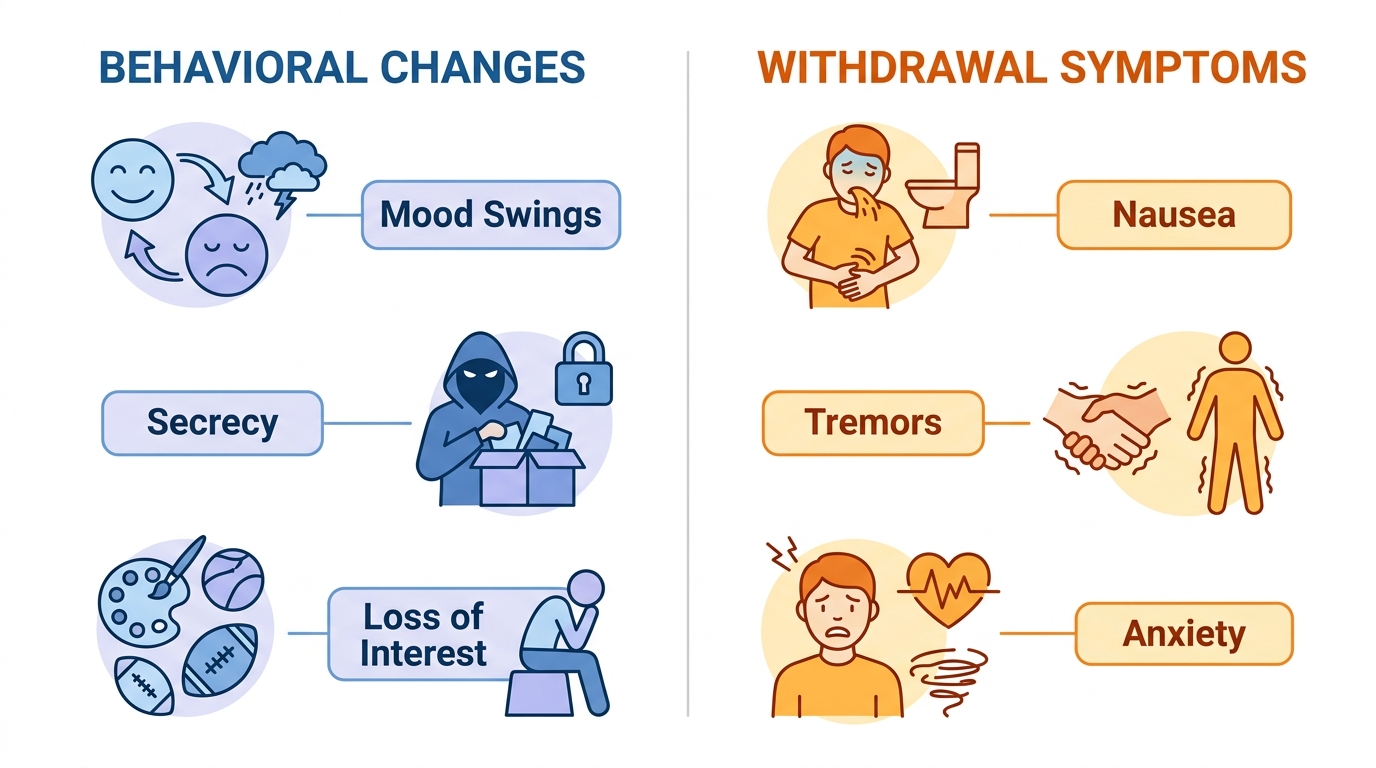
Comparison infographic of behavioral shifts and withdrawal indicators.
To deepen understanding, here’s a side-by-side comparison of common behavioral changes and their corresponding withdrawal symptoms. This contrast helps in identifying addiction early and recognizing when to seek professional support.
| Behavioral Shifts | Physical Withdrawal Signs |
|---|---|
| Sudden Secrecy | Tremors and Shaking |
| Mood Swings | Nausea and Sweating |
While behavioral changes often strain relationships and create distance, withdrawal symptoms demonstrate the body’s powerful physical reaction when the substance is absent. Both categories can escalate without intervention, making it essential to connect the dots.
How Behavioral Changes Affect Relationships
When addiction takes hold, the closest bonds are often the first to suffer. Trust erodes rapidly when a loved one becomes secretive or steals to support their habit. Unpredictable mood swings and aggressive outbursts generate constant conflict, leaving family members walking on eggshells. Over time, the person may withdraw emotionally, isolating themselves from those who care most. We know how painful it is to watch someone you love change, and we believe healing is possible for the whole family.
Family therapy can help rebuild relationships and educate loved ones about addiction as a disease, not a character flaw. Through counseling, families learn healthy communication strategies and boundaries, which in turn support the recovery journey. Our family therapy services, available in Bethlehem, Pennsylvania and throughout the Lehigh Valley, are designed to mend the trust that addiction breaks. When families heal together, we see a powerful foundation for lasting wellness. Recognizing these signs is vital, but the real journey begins with compassionate support. We invite you to begin your journey towards happiness and freedom—Recovery Begins Here.
Spotting Addiction Signs in Teenagers and Adults
Recognizing the signs of addiction is the first step toward getting help. Whether you’re worried about a teenager experimenting with substances or an adult whose life is unraveling, understanding the behavioral changes and patterns can empower you to act. Early intervention matters, but the way these signs present can look very different depending on someone’s age.
Recognizing Substance Use in Teenagers
Adolescence brings rapid change, so it’s important to know when typical moodiness crosses into something more serious. Here are five warning signs we often see:
- A sudden change in peer group – your teen may abandon lifelong friends and start spending time with a new crowd that seems secretive or riskier.
- A drop in grades or loss of interest in school – homework goes undone, test scores fall, and the motivation to attend class fades.
- Increased secrecy or lying about whereabouts – explanations don’t add up, and you may notice missing time or inconsistent stories.
- Lack of motivation or withdrawal from hobbies – the sports, clubs, or creative outlets they once loved are suddenly ignored.
- Physical changes – bloodshot eyes, unexplained weight loss or gain, and a general decline in hygiene can all be clues.
It’s true that many of these behaviors can overlap with normal adolescent development. The difference is intensity and duration. When multiple signs persist for weeks and interfere with daily functioning, it’s time to pay closer attention. At this stage, families can benefit from professional guidance. If you notice these signs in your teen, consider addiction family therapy in Bethlehem as a supportive first step. This approach helps address the relational wounds that substance use creates, giving everyone a healthier path forward.
Addiction Indicators in Adults
Adults often hide substance use longer than teens because of work obligations, family responsibilities, and social stigma. The signs may look different, but they are just as serious. Common indicators include:
- Financial problems – unexplained borrowing, missing bills, or sudden requests for money can be red flags.
- Marital conflict or neglect of family responsibilities – arguments increase, important commitments are missed, and the household feels unstable.
- Legal trouble – a DUI charge, an arrest for possession, or ongoing legal disputes may signal a deeper issue.
- Job loss or frequent absenteeism – performance slips, deadlines are missed, and days off pile up without a clear explanation.
- Withdrawal symptoms – when a person tries to cut back, they may experience physical symptoms like nausea, shaking, or intense cravings, indicating a physiological dependence.
Because adults have more to lose, they may become experts at covering up the problem until a crisis occurs. At Rosewood Recovery, we offer a continuum of care to meet adults where they are. Our Partial Hospitalization Program (PHP), Intensive Outpatient Program (IOP), and General Outpatient Program each provide a different level of support, woven with holistic and somatic therapies that treat the whole person.
Comparing Addiction Signs: Teenagers versus Adults
Addiction doesn’t look the same at every age. The table below illustrates how key signs manifest differently in adolescents and adults.
| Area of Impact | Teenagers | Adults |
|---|---|---|
| Social | Peer group changes | Marital conflict |
| Responsibility | Academic decline | Job loss/absenteeism |
These patterns rarely exist in isolation; often, multiple signs cluster together. If you or someone you love is showing a combination of these indicators, we encourage you to schedule a consult call with our team. Recovery Begins Here. Begin your journey towards happiness and freedom by starting your treatment today. Please remember that individual results vary—commitment to treatment and personal factors matter. This information is for educational purposes and is not a substitute for professional medical advice.
Knowing When Addiction Signs Require Professional Help
We understand that recognizing the signs of addiction can be difficult, especially when you or a loved one is caught in a gray area between occasional use and something more serious. Not every warning sign automatically means you need residential treatment; substance use patterns exist on a continuum, and many people benefit from simply evaluating where their habits fall. The following comparison table provides a clear framework to help you distinguish between indicators that may be manageable at home and those that suggest it’s time to seek professional support.
| Indicator | Manageable at Home | Requires Professional Help |
|---|---|---|
| Use Pattern | Occasional/Experimental | Daily/Compulsive Use |
| Impact | Situational Stress | Persistent Relationship Ruptures |
Looking at each row can help you map your own situation. Starting with frequency of use, occasional weekend use may be manageable, but daily intake often indicates dependence. When you examine impact on daily life, behavioral changes such as withdrawing from family may begin as situational but become persistent, signaling the need for professional attention. For withdrawal, mild withdrawal symptoms like irritability can often be eased at home, whereas severe physical or psychological reactions demand immediate, medically supervised care. Finally, a pattern of repeated failed quit attempts suggests that willpower alone may not be enough, and structured treatment could provide the missing piece.
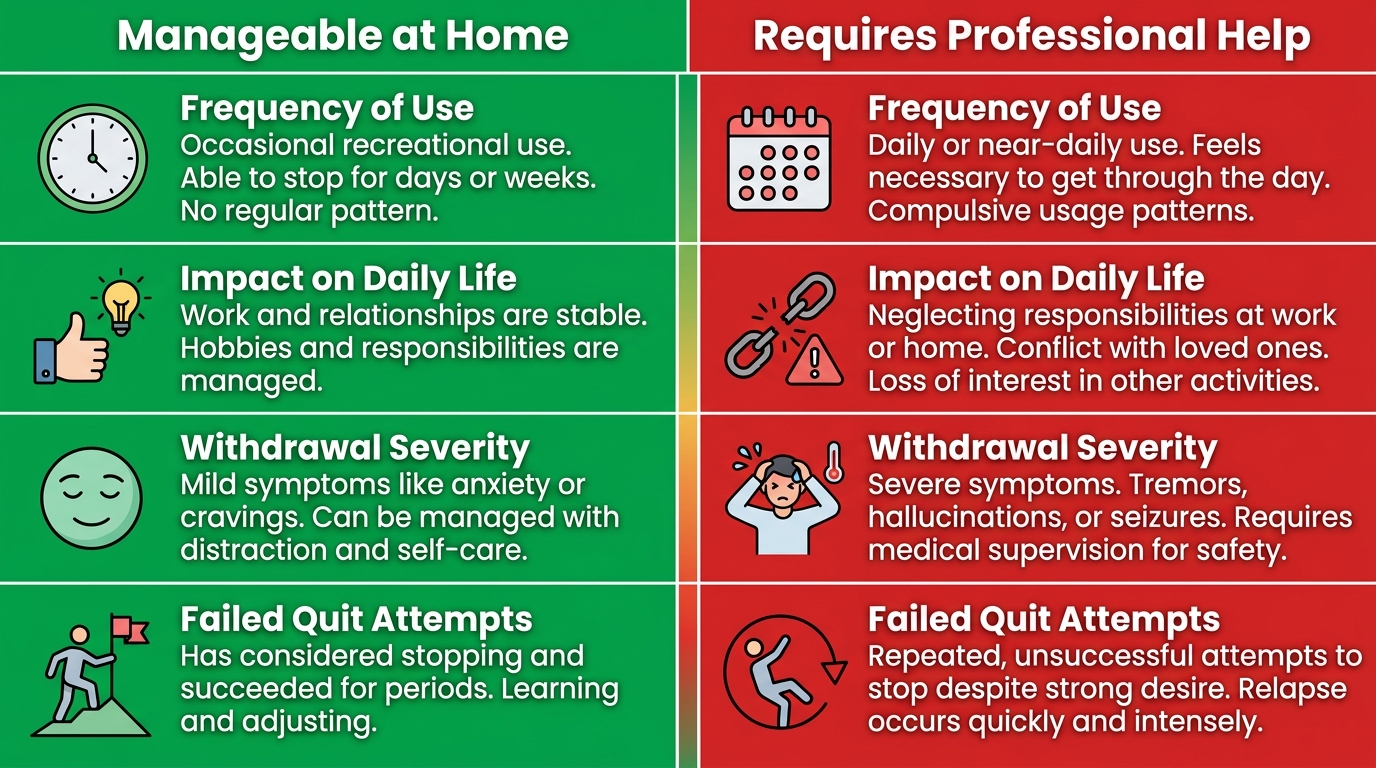
Signs requiring professional help for addiction recovery
If these crisis indicators feel familiar, we want you to know that help is available. At Rosewood Recovery, we believe Recovery Begins Here, and our team is committed to guiding you toward a healthier future. Reach out to us at our drug rehab in Richboro, Pennsylvania to begin your journey towards happiness and freedom. Please note that results may vary based on individual patient factors and circumstances. This information is for educational purposes and not a substitute for professional medical advice.
Frequently Asked Questions About Addiction Warning Signs
Now let’s address some common questions about signs of addiction.
What behavioral changes suggest addiction?
Common behavioral changes like secrecy, withdrawal from family, sudden mood swings, and neglecting responsibilities can signal a problem.
What physical symptoms indicate withdrawal?
Withdrawal symptoms such as nausea, shaking, and anxiety when not using a substance are key warning signs.
How can I tell casual use from addiction?
Addiction isn’t about frequency—it’s about pattern and impact. When use causes harm and you can’t stop, it’s likely addiction.
Are warning signs different for executives?
According to Hashtag.org, executives often hide use and maintain work performance, so signs of addiction may be subtle.
This information is for educational purposes and not a substitute for professional medical advice.
If you’ve noticed these signs, we’re here to help. Recovery Begins Here.
Empowering Yourself with Knowledge About Addiction Signs
Recognizing the signs of addiction early can make a significant difference in the recovery process. At Rosewood Recovery, we believe that understanding common indicators—such as sudden behavioral changes, social withdrawal, or noticeable withdrawal symptoms—may help you or a loved one take a meaningful first step. We also know that being informed reduces fear and uncertainty. Common behavioral changes often include secretive actions, neglecting responsibilities, or mood fluctuations that feel out of character. Physical signs like fatigue, changes in appetite, or unexplained health issues can also point toward a growing problem. This knowledge is empowering because it allows for earlier intervention and more compassionate support. This information is for educational purposes and not a substitute for professional medical advice.


