

Table of Contents
What Is Rule 62 in Sobriety?
"Rule" No. 62 of sobriety is a bit of silly advice from Alcoholics Anonymous folklore, telling members not to take themselves too seriously, and coming out of a humorous story about an ambitious West Virginia chapter’s failed foundation project. "Rule" 62 appears nowhere in AA’s official literature, it’s just something the organization’s faithful have dreamed up over the years as they’ve gathered around their favorite stories of recovery. The saying grew out of a joke about how the people at one Charleston, West Virginia meeting designed an elaborate foundation that included a clubhouse, a hospital, a rehabilitation center and a research center. Co-founder Bill W., according to AA’s official FAQ, told the meeting that similar projects done before had run into problems. But the people who had come up with this one pressed on anyway.
During the struggles, one member of the initiative sent out cards to AA groups across the country. The outside read “Charleston AA Group Rule 62,” a playful suggestion that there were 61 preceding rules. Inside, the message was simply: “Don’t take yourself so damn seriously.” That humorous card captured the lesson of humility that the recovery community values deeply. The experience showed how easy it is to get wrapped up in grand plans and lose sight of what truly matters—staying grounded and supportive of one another. The anecdote behind this rule offers a powerful lesson in humility, and in recovery, a little perspective goes a long way. Recovery Begins Here.
The Story Behind Rule 62 in Alcoholics Anonymous
Early in the 1940’s, members of an Alcoholics Anonymous group in Middleton, West Virginia envisioned an ambitious, all-encompassing service centre. They dreamed of a service centre for everything including club house, hospital, treatment facility and employment. In order to manage this huge project they drew up 61 sets of rules and regulations. The East London AA Archives describe how the members became consumed by administrative complexity, creating detailed protocols that mirrored a corporate bureaucracy far more than a fellowship of mutual support.
The enthusiastic group nonetheless asked their co-founder Bill W., A.A.’s original co-founder for advice about moving forward. According to Alcoholics Anonymous World Services, Bill W. told them not to proceed, warning that similar large-scale auxiliary projects had historically created serious organizational difficulties. The West Virginia group proceeded regardless, and interpersonal conflicts quickly arose. As people argued over egos, distressed letters started flowing into the A.A. Office in New York City. Later, the Alcoholics Anonymous Central Long Island Entity (AACLE) would describe how the very thing designed to solve problems was tearing the fellowship apart.
One member printed up 500 little cards similar to a golf score card on which he wrote "Charleston AA Group Rule 62" on the front, and "Don't take yourself so damn seriously!" on the inside. The AA East London Archives confirm that the cards were mailed to the New York office as a humorous admission that their grand scheme had collapsed. For anyone curious about Rule 62 in Alcoholics Anonymous, this simple gesture captured the essence: a willingness to laugh at oneself and let go of rigid control.
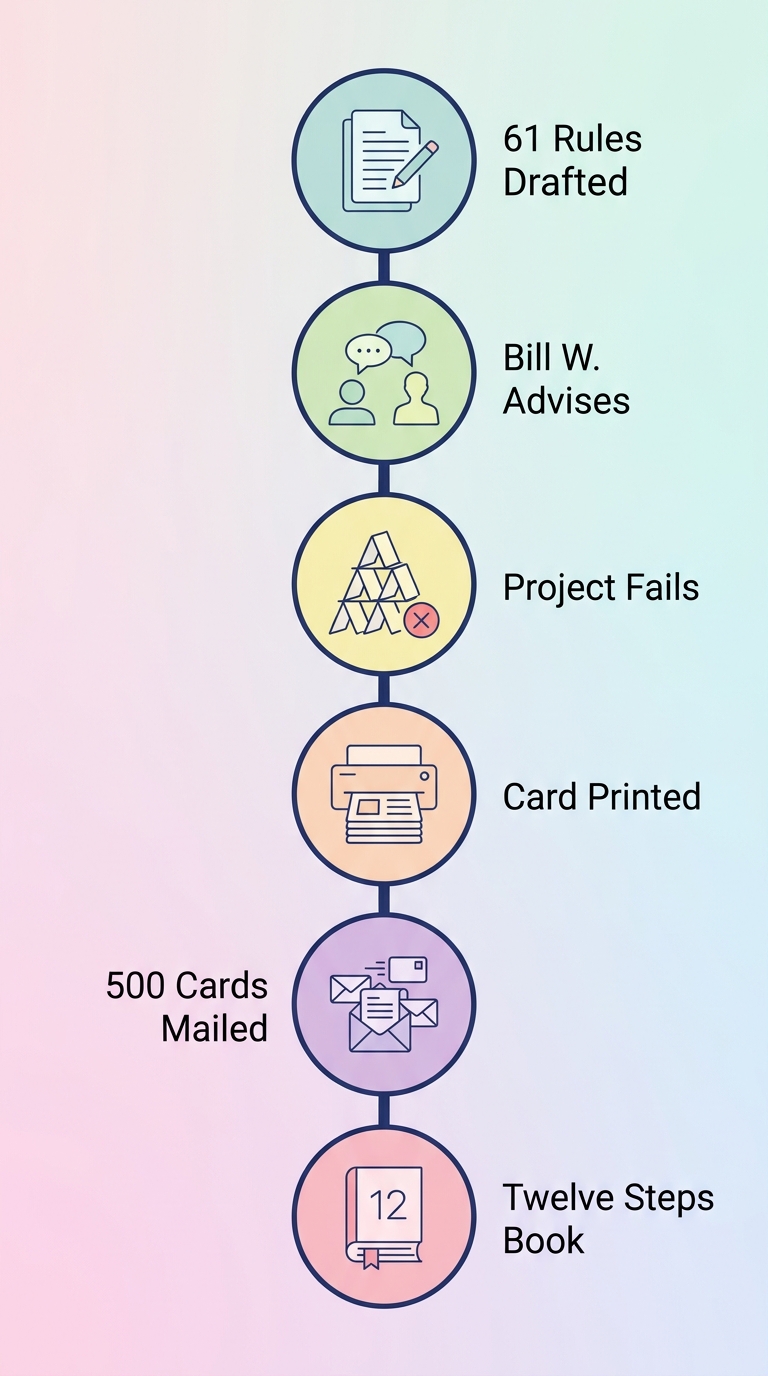
The story eventually found a permanent place in A.A.’s official literature, appearing in the Twelve Steps and Twelve Traditions on pages 148-149. Both the AA East London Archives and AACLE highlight how this anecdote illustrates the Fourth Tradition—the right of each group to be autonomous and even to be wrong. In that light, Rule 62 stands as a lasting reminder that humility and humor are essential in recovery. Rather than clinging to an impossible project, the Middleton group’s members accepted their limits and shared a lesson that has echoed through decades of A.A. fellowship.
Humility, Humor, and the Power of Not Taking Yourself Too Seriously
This was all caused by a local AA group from West Virginia whose good intentions became overly rigid. When they made up 61 rules governing a big service center, a message that stuck for everyone was, don't take yourself seriously. This story illustrates the delicate balance between earnest commitment.
The Middleton Group’s 61-Rule Mistake
In the early 1940s, a group of AA members in Charleston, West Virginia—often called the Middleton Group—envisioned a comprehensive center that would combine a clubhouse, a hospital, rehabilitation, and research. As the AA East London Archives document, they drafted 61 precise rules to govern the operation, convinced that detailed governance would ensure success. AA co-founder Bill W. cautioned them, warning from his own experience that such elaborate projects often face significant hurdles. The rigid framework created internal friction and proved unworkable. Conflict erupted, and the project collapsed. In the aftermath, the group realized their exhaustive rulebook had been counterproductive, planting the seed for a much simpler lesson.
How ‘Don’t Take Yourself So Damn Seriously’ Became Rule 62
After the project fell apart, one member decided to share the insight. They printed 500 small cards—about the size of a golf scorecard—with the outside labeled "Charleston AA Group Rule 62" and the inside bearing the phrase "Don't take yourself so damn seriously." According to the Alcoholics Anonymous General Service Office, members quickly recognized their own egotism in the message and embraced it with relief. The story appears on pages 148–149 of the book Twelve Steps and Twelve Traditions, and the East London Archives highlight how this moment illustrates Tradition Four's assurance that groups have the right to be wrong. What started as a playful joke became a permanent touchstone for humility.
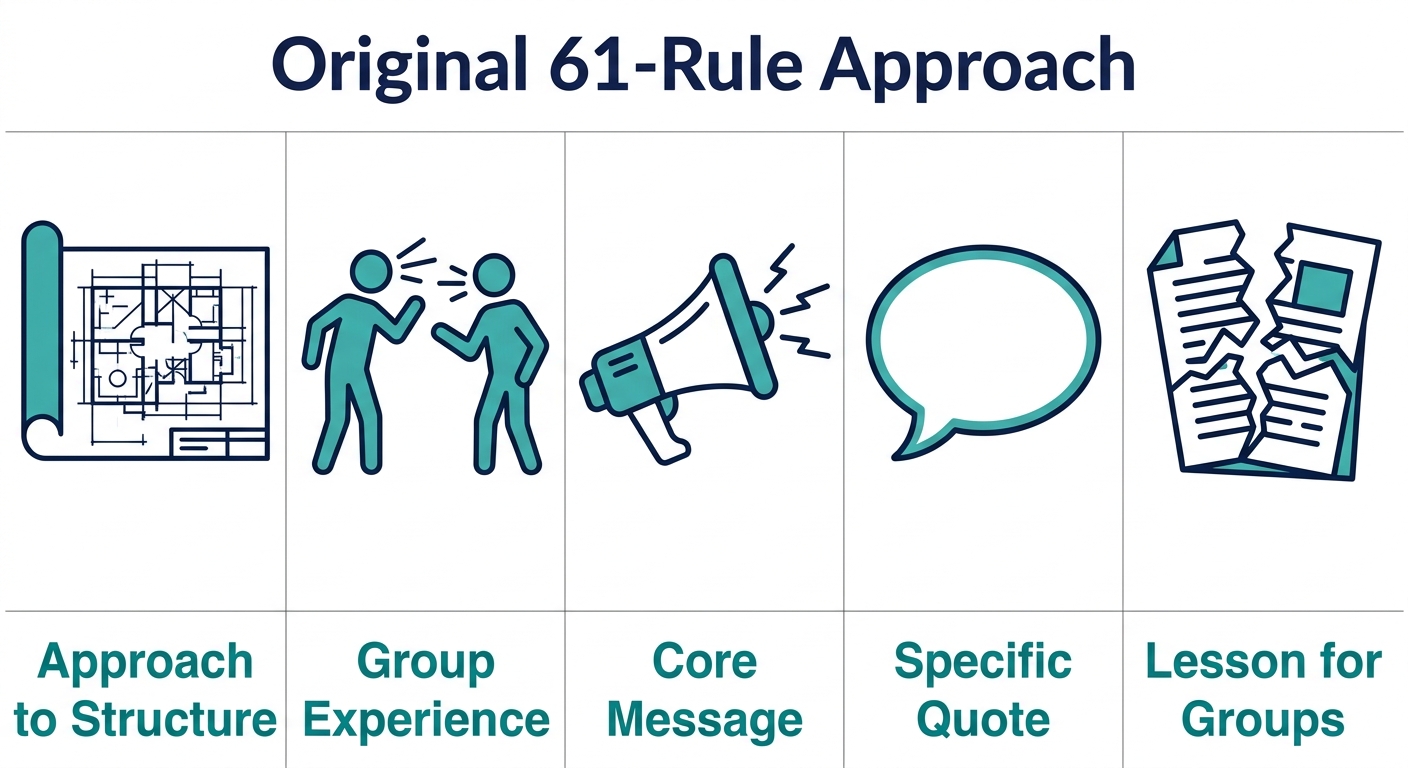
The following table shows how two very different approaches to service shaped the group's experience.
| Aspect | Original 61-Rule Approach | Rule 62 Philosophy |
|---|---|---|
| Approach to Structure | 61 rules covering every detail | One simple principle: don’t take yourself too seriously |
| Group Experience | Internal tension, counter-productive effort | Relief and lasting perspective |
| Core Message | Control and rigidity | Flexibility and humility |
| Specific Quote | (none; lost in conflict) | “Don’t take yourself so damn seriously” |
| Lesson for Groups | Rules alone can’t solve problems | Groups have the right to be wrong (Tradition Four) |
This shift from rigid control to gentle self-awareness.
Balancing Seriousness and Lightness in Recovery
We’ve taken recovery seriously, but the lesson from West Virginia shows us there’s room to be less serious. Without an appreciation for humor and humility, we’re likely to become brittle, exhausted. This was the point of that silly card years ago, to attack the ego. If you’ll let go of a narrow concept about your self, you might give yourself room to heal. The point wasn’t just a nostalgic anecdote, though. Humility may also help us tackle some of life’s more pressing issues.
Practical Ways to Apply Rule 62 in Everyday Recovery
Rule 62 isn’t just another little bit of AA wisdom: it’s something we should be using every day in our recovery, ever since we came up with this silly little card on an old A.A. Group meeting. We try to remember that we’re only humans who don’t always get things right and have a lot of problems, but that doesn’t mean we shouldn’t heal them gently.
Finding Humor in Daily Challenges
Recovery requires us to relearn how to react normally and in most situations, laughing is one method that works quite well to break bad cycles. If we walk into a room and forget what we came for, for example, and then start berating ourselves, if we stop to laugh for just a moment, this stops things before they get worse. It's the little pause, allowing us to take a step back and question what happened, rather than berate ourselves over it. This last part helps out immensely more towards recovery.
Being honest about our mistakes isn’t just hard for us, but we know that sharing something like this, in moderation, could defuse feelings of shame. To be clear, it’s about laughing at a particular, contained time, instead of lessening the gravity of what we’ve done wrong in the past. By doing this, we’re still being truthful yet it makes things slightly easier on us.
- Notice small moments that surprise you and give yourself permission to smile.
- Frame everyday slips as learning points, not moral failures.
- Use “Rule 62” as a quick verbal cue to take a breath and choose a lighter response.
Keeping Recovery Meetings Light Without Losing Focus
Healthy meetings balance being serious in our work and friendly when talking generally. The leader might open meetings with some casual chitchat before we begin the steps. For example, she may comment on something funny that happened earlier during her day. Laughing after sharing from the heart says everyone feels safe, we feel seen, and people can share without the façade of having to remain stiff and formal all the time.
A facilitator can encourage levity without derailing the agenda by acknowledging moments of relief ("That made me smile, thank you"), then guiding us back to focused reflection.We avoid rigid, implicitly solemn atmospheres, because those can shut down the candid exchange recovery depends on.
Lightness can be well accepted if it comes as a result of connection, but it should not interrupt, nor divert somebody’s honest work. With such balance in mind, meetings may be effective and respectful at once.
When Seriousness Is Necessary: Boundaries with Rule 62
Humor begins to break down when we rely on laughter instead of feeling certain feelings. If everyone makes fun out of themselves when another member vulnerably opens their heart, the ability of anyone else in that community to open up can be stunted. This causes us to question our own motives for laughing; are we seeking to ease others’ pain, or ease our own.
Sometimes it can take silence, focus, and some quiet time to answer that. It means giving up our smile for a bit and just being in whatever we're feeling. Or, sometimes it might be simply saying out loud, "Today I'm not doing well," because admitting you need time doesn't make any problem better. It just makes us more honest.
It also works at Rosewood Recovery where our clinical staff have this balance between being seriously engaged and connecting authentically. This environment helps residents feel comfortable engaging as they begin their journey toward sobriety.
How Professional Treatment Programs Incorporate Rule 62 Principles
Its origin, as recounted by the AACLE, traces back to an early AA group in the hinterlands that drafted 61 elaborate rules for a proposed facility before distilling their effort into a 62nd admonition: “Don’t take yourself so damn seriously.” This anecdote, noted in the Twelve Steps and Twelve Traditions, illustrates the Fourth Tradition’s emphasis on group autonomy and humility.
At Rosewood Recovery in Newtown, Pennsylvania, we embed this philosophy into every level of care. Our Partial Hospitalization Program (PHP) uses humor in group therapy to help individuals confront addiction without the weight of debilitating shame.
Our Intensive Outpatient Program (IOP) continues this theme while clients balance clinical structure with daily responsibilities. Facilitators model lighter perspective-taking and help clients reframe setbacks without self-condemnation.
Our General Outpatient Program (OP) reinforces self-compassion as clients reintegrate fully into daily life. We weave perspective-taking and practical, humility-based coping strategies into relapse-prevention planning so clients can navigate workplace stress, family dynamics, and social pressures without reverting to isolating patterns.
The following table illustrates how Rosewood Recovery’s levels of care deliberately incorporate the spirit of this guiding principle.
| Treatment Level | How the Principle Is Applied | Key Benefit |
|---|---|---|
| Partial Hospitalization Program (PHP) | Group therapy uses humor to normalize struggles and dismantle the shame that fuels isolation. | Reduced shame and a stronger therapeutic alliance that encourages openness. |
| Intensive Outpatient Program (IOP) | Facilitators reframe setbacks calmly, modeling a lighter perspective so clients adopt the same approach. | Improved treatment engagement and consistent session attendance. |
| General Outpatient Program (OP) | Self-compassion exercises and perspective-taking are woven into relapse-prevention planning. | Greater resilience and a sustainable ability to navigate daily stressors without self-judgment. |
Each level builds on the same insight: when people stop taking themselves so seriously, they create the psychological safety needed to heal.
Frequently Asked Questions About Rule 62 in Recovery
Many people in recovery encounter “Rule 62.”
Where did Rule 62 come from?
According to Alcoholics Anonymous lore, a West Virginia group planned a foundation against co-founder Bill W.’s advice. A member sent a card labeled "Charleston AA Group Rule #62" with the inside message: "Don’t take yourself so damn seriously!"
What does Rule 62 in recovery mean?
In recovery, Rule 62 is an informal reminder to stay humble and keep perspective. It’s not an official guideline but a playful nudge to lighten seriousness.
Why is Rule 62 important for maintaining sobriety?
Rule 62 invites us to step back, laugh at our imperfections, and engage with our community in a more genuine, balanced way.
There’s also some joy in rule #62 that urges us to grow into our successes whilst remembering how to be humble and have a little fun too.
Embracing Lightheartedness on Your Recovery Journey
Getting our minds around why Rule #62 works might lighten up some dark moments in life. This rule was added because members in West Virginia found that their earlier list of 61 strict rules didn't work. Instead of taking this too seriously, someone mailed them a card stating, Don't be so damn serious.
A light attitude on what happens when you sober up fosters humility and self-compassion and acknowledges that there can be many types of recovery, which can turn out differently depending on an individual's willingness to change, as well as help from others who can assist in working toward goals. This information is for educational purposes and is not a substitute for medical advice.
Get Professional Support for Recovery
Understanding the lesson of Rule 62—not taking yourself too seriously—can bring lightness to your recovery journey. Professional treatment programs can integrate this same principle of humility and humor to foster healing. The facility in Newtown, Pennsylvania, offers a supportive environment that blends clinical care with holistic and somatic therapies. Their team works with adults facing substance use and co-occurring mental health challenges, tailoring treatment to each individual. If you or a loved one is ready to take the next step, reaching out to Rosewood Recovery can provide the guidance you need. You can call them at (267) 651-4817 or explore their programs online to begin your path toward lasting recovery.
Get Professional Support for Recovery